How X-Ray Imaging Technology Works Inside Modern Baggage Scanners
-

- September 10th, 2026
- 5,389 views
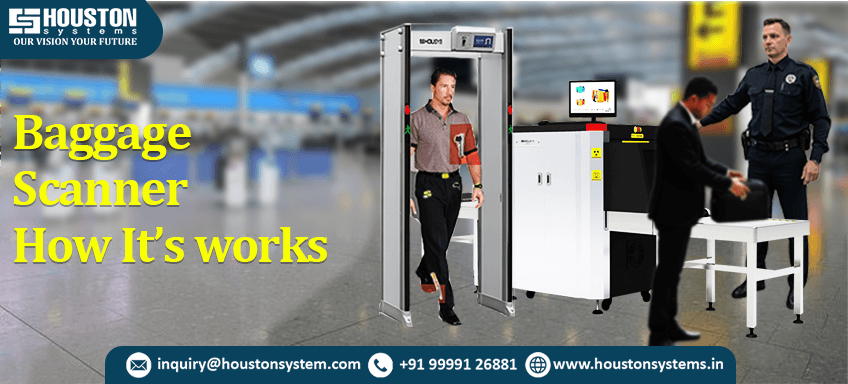
Every day, security teams screen thousands of bags, parcels, backpacks, and pieces of luggage across airports, transportation hubs, government facilities, commercial buildings, and public venues. In many of these environments, screening must be completed quickly without disrupting the movement of people or creating operational bottlenecks.
Achieving this balance requires more than simply checking the contents of a bag. Security personnel need a way to evaluate items that cannot be examined through external observation alone.
This is where X-ray imaging technology plays a critical role.
While most people see baggage scanners as equipment that produces images on a monitor, the technology serves a much broader purpose. It provides visibility into enclosed items, supports decision-making during screening procedures, and helps organizations maintain efficient operations in environments where large numbers of people and belongings must be processed every day.
Understanding how X-ray imaging technology works helps explain why it remains one of the most widely used tools in modern security screening programs.
Why Visibility Is Essential During Security Screening
Many items carried into a facility cannot be properly evaluated from their exterior appearance.
A suitcase, backpack, parcel, or delivery package may appear ordinary while containing a wide variety of objects inside.
Without a method of viewing internal contents, security personnel would be forced to rely heavily on manual inspections. While manual checks may sometimes be necessary, performing them on every item would significantly slow screening operations and create challenges in high-traffic environments.
X-ray imaging technology helps address this problem by allowing security teams to evaluate the contents of carried items without opening them.
The result is greater visibility while maintaining operational efficiency.
The Science Behind X-Ray Imaging
At its most basic level, X-ray imaging works by directing controlled X-ray energy through an object.
As the energy passes through a bag and its contents, different materials interact with it in different ways.
Some materials allow more energy to pass through, while others absorb a larger portion of it.
These differences create information that can be measured by detectors inside the screening system.
The collected data is then processed and transformed into an image that operators can review.
Although the process sounds complex, it occurs within seconds, allowing screening operations to continue without significant interruption.
What Happens Inside the Scanner
When an item enters a baggage scanner, several processes occur in rapid succession.
Step One: Item Movement
The conveyor system transports the bag through the inspection tunnel at a controlled speed.
Consistent movement helps ensure that the contents are scanned accurately throughout the inspection process.
Step Two: X-Ray Transmission
The scanner generates X-ray energy that passes through the bag and its contents.
As the energy encounters different objects, it is affected according to the characteristics of the materials inside.
Step Three: Detection
Specialized detectors collect information after the X-rays pass through the screened item.
This information reflects how various objects interacted with the X-ray energy during the scanning process.
Step Four: Image Generation
Software converts the collected data into a visual image that appears on an operator's display.
This image provides information about the contents of the screened item and supports further evaluation.
The entire process typically occurs in a matter of seconds.
Why Different Materials Appear Differently
One of the most important aspects of X-ray imaging is that different materials interact with X-ray energy in different ways.
This variation helps create distinctions within the image that operators review during screening procedures.
However, the purpose is not simply to generate a picture.
The value comes from providing information that helps security personnel assess relationships between objects, identify unusual arrangements, and determine whether additional inspection may be necessary.
In other words, imaging technology provides visibility, but interpretation remains an essential part of the screening process.
The Human Role in Image Interpretation
Despite advances in imaging technology, baggage screening remains a combination of technology and human decision-making.
The scanner generates information, but operators are responsible for interpreting what they see and determining whether further inspection is required.
This human element is important because screening decisions often depend on context rather than image data alone.
For example, an image may reveal multiple objects inside a bag, but understanding how those objects relate to one another requires operator assessment.
Modern screening systems help provide visibility, but trained personnel remain an important part of effective security operations.
Why Imaging Quality Matters in Real-World Screening
Image quality directly influences the effectiveness of the screening process.
In busy environments, security personnel often review large numbers of screened items throughout the day.
Clear, consistent imaging helps operators evaluate contents more efficiently while reducing the likelihood of uncertainty during inspections.
This becomes particularly important in environments such as:
Airports
Transportation facilities
Government buildings
Commercial complexes
Public event venues
When large volumes of items must be screened, the ability to review images efficiently contributes to both security objectives and operational performance.
A Real-World Screening Example
Consider a busy airport checkpoint during a peak travel period.
Hundreds of passengers may pass through a screening area within a relatively short timeframe.
Each traveler places bags, backpacks, laptops, and personal belongings onto a conveyor system for inspection.
As items move through the scanner, X-ray imaging technology generates information about the contents of each bag. Operators review the resulting images and determine whether any item requires additional attention.
Without imaging technology, every bag would require a manual inspection, significantly increasing wait times and disrupting passenger movement.
The technology helps security teams maintain visibility into screened items while supporting the operational demands of a high-volume environment.
Similar processes are used in government facilities, transportation hubs, corporate offices, and other controlled-access locations.
Looking Beyond the Image
The image displayed on a monitor is often the most visible part of the screening process, but it represents only one component of a larger system.
Effective screening relies on multiple elements working together, including:
Imaging technology
Detection systems
Image processing software
Operational procedures
Trained personnel
Each component contributes to the overall effectiveness of the screening process.
Understanding this broader perspective helps explain why modern baggage scanners are often viewed as integrated security tools rather than simple imaging devices.
Why X-Ray Imaging Remains Central to Modern Screening Operations
Security environments continue to evolve, but the need for efficient visibility remains constant.
Organizations must evaluate carried items, maintain operational efficiency, and support security objectives without creating unnecessary disruption.
X-ray imaging technology helps meet these requirements by providing a practical method of viewing the contents of bags, parcels, and luggage without requiring extensive manual inspection.
Its ability to support both security and operational efficiency is one reason it continues to play a central role in screening programs across a wide range of industries.
Final Thoughts
X-ray imaging technology enables security personnel to evaluate the contents of bags and carried items through a process that combines X-ray transmission, detection systems, image processing software, and human interpretation.
While the generated image is often the most visible outcome, the true value of the technology lies in the visibility it provides and the decisions it supports. By helping security teams assess enclosed items efficiently, modern baggage scanners contribute to screening operations that balance security requirements with the practical realities of managing people, luggage, and daily facility operations.