Three 4D Massage Chair Buyers, Three Different Priorities
-

- Published Updated
- 1,649 views
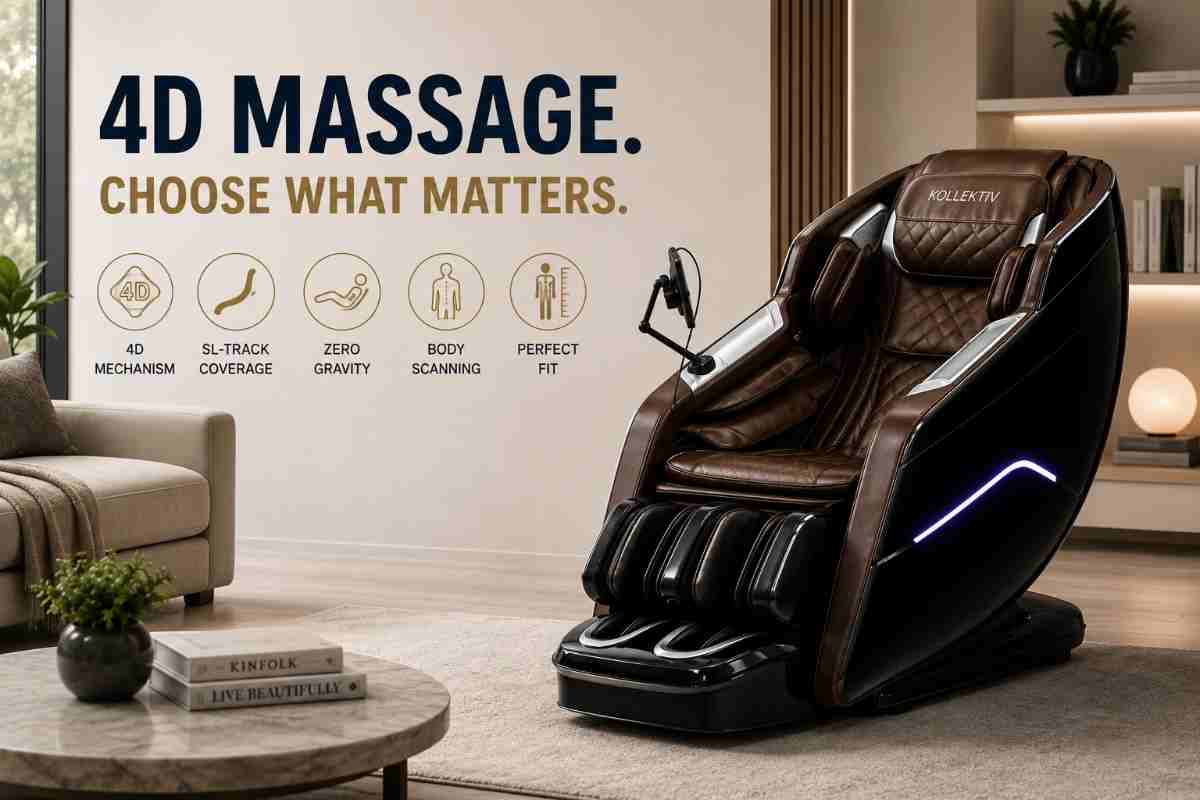
Direct answer: an SL-track chair curves from your neck down through your back and continues along the curve of your glutes and upper hamstrings, so it covers more of your body than a straight S-track. For a home chair meant for full-body sessions, SL-track is the more useful default.
S-track chairs follow the natural S-curve of your spine but usually stop around the lower back. SL-track extends that path further down, which matters if you want the massage to reach your glutes and hips rather than stopping at your waist. Most of Kollecktiv’s current 4D models, including the Kollecktiv G18 and the Kollecktiv 208, use SL-track designs for that reason.
Track length is worth checking too, since a longer track generally means more of your torso is reachable without you having to reposition. If full-body coverage from shoulders to hips is the goal, this is one of the few specs worth comparing closely between models.
Handed the same spec sheet, two different buyers can walk away with completely different — and equally correct — decisions. The specific features that matter most in a massage chair purchase depend heavily on who's actually sitting in it and how they plan to use it. Rather than ranking every spec in the abstract, this piece follows three realistic buyer profiles through their decision-making process, showing how the same lineup produces different right answers depending on what each buyer actually needed.
Buyer One: The Desk Worker Managing Daily Shoulder Tension
The situation: Eight-plus hours at a desk most days, tension consistently concentrated in the neck and shoulders rather than spread evenly across the body. Previous experience with a basic massage chair left this buyer feeling like sessions never quite reached the right spot.
What mattered most: Track coverage specifically through the upper back and shoulders, plus a mechanism capable of targeting one area rather than running a generic full-body pass every time. Body scanning accuracy also mattered here — since tension was localized, a scan that placed the rollers even an inch off meant the massage missed the actual problem area.
Where this buyer landed: The dual-mechanism design on the Kollecktiv 208 turned out to be the deciding factor — being able to run a whole, partial, or spot-targeted session meant shoulder-focused days could get shoulder-focused treatment instead of a one-size-fits-all full-body program that spent equal time on areas that weren't actually the problem.
The lesson: For someone with genuinely localized tension, targeting flexibility outweighed almost every other spec on the sheet, including track length and price.
Buyer Two: The Runner Managing Calf and Foot Fatigue
The situation: Regular long-distance training, with recovery needs concentrated almost entirely in the calves and feet rather than the back. Standing height on the shorter side, which had made previous chair shopping frustrating due to footrests and rollers built around a taller default frame.
What mattered most: Dedicated calf and foot mechanics beyond standard airbag compression, plus a genuinely accommodating height range on the lower end — a common gap in a category often designed around a taller-than-average user.
Where this buyer landed: The Kollecktiv G18 fit both needs directly — the 60° power calf and foot stretch and ankle rocking and rotation massage addressed the specific recovery need, while its height range starting at 4'2" solved the fit problem that had ruled out other chairs entirely.
The lesson: For this buyer, general full-body specs like SL-track length mattered less than two very specific mechanical features most other chairs didn't offer at all, combined with a height range most competitors simply didn't cover.
Buyer Three: The First-Time Buyer Wanting Broad, Reliable Coverage
The situation: No strong preference between full-body relaxation and any single problem area — general interest in trying a 4D chair for overall stress relief without a specific injury or recovery need driving the decision. Budget-conscious, but not willing to sacrifice the core 4D mechanism just to save money.
What mattered most: A genuine 4D roller system with reasonable program variety, solid SL-track coverage, and a fair price relative to feature set — none of the more specialized features (dual mechanisms, calf-specific stretching) were relevant to a buyer without a specific complaint to solve for.
Where this buyer landed: Browsing Kollecktiv's 4D Massage Chair collection directly made the most sense here, comparing entry points into genuine 4D technology rather than jumping straight to a specialized flagship model. This buyer ultimately wanted something closer to what the broader Massage Chair Collection offers at accessible pricing, rather than paying for specialized mechanics aimed at problems this buyer didn't have.
The lesson: Not every buyer benefits from the most feature-loaded chair available — for genuinely general use, a well-built standard 4D chair covers the fundamentals without paying for specialization that would go unused.
What These Three Profiles Have in Common
Despite landing on different chairs, all three buyers followed the same underlying process: identify the actual use case first, then let that use case determine which spec matters most, rather than starting from a spec sheet and working backward. None of them started by asking "which chair has the most features" — they started by asking "what does my body actually need," and let that answer narrow the field.
It's also worth noting that price tier alone didn't determine satisfaction in any of these cases. Buyer Three, spending the least, ended up just as satisfied as Buyers One and Two, because the chair matched the actual need rather than simply costing less.
A Quick Self-Assessment Based on These Profiles
If you're trying to place yourself among these three buyer types, a few questions help:
- Is your tension concentrated in one specific area, or spread generally? Concentrated tension points toward targeting flexibility, similar to Buyer One.
- Do you have a specific recovery need — like calf or foot fatigue — that general full-body programs haven't fully addressed? That points toward specialized mechanics, similar to Buyer Two.
- Are you shopping for general relaxation without a specific complaint driving the decision? That points toward a solid standard 4D chair, similar to Buyer Three.
For buyers whose needs lean toward serious full-body coverage and reach regardless of price tier, it's also worth browsing the Full Body Massage Chair range directly, since track length and reach matter more to some buyers than any of the three specific factors above.
Checking Current Pricing Before You Decide
Whichever profile matches your situation, it's worth checking the current massage chair sale page before finalizing a decision, since pricing across these tiers shifts with seasonal promotions and the gap between a specialized chair and a standard one is sometimes smaller than the list prices alone suggest.
FAQ
How do I know which massage chair features actually matter for me? Start with your actual use case — where tension concentrates, what recovery need you're solving for, or whether you're shopping for general relaxation — rather than starting from a spec sheet and working backward from the most feature-loaded option.
Is a more expensive massage chair always the better choice? Not necessarily. The right chair is the one that matches your specific use case; a less expensive chair that fits a general-use case well can deliver more satisfaction than a specialized, pricier chair aimed at a problem you don't actually have.
What should someone with localized shoulder or back tension prioritize? Targeting flexibility — the ability to run whole-body, partial, or spot-focused sessions — tends to matter more for concentrated tension than overall track length or price.
What should someone focused on calf or foot recovery prioritize? Dedicated calf and foot mechanics beyond standard airbag compression, along with confirming the chair's height range genuinely fits their frame rather than assuming a "full body" label covers it.
What should a first-time buyer without a specific complaint prioritize? A genuine 4D roller mechanism with solid SL-track coverage and reasonable program variety at a fair price, without paying extra for specialized features aimed at problems they don't have.
Final Thoughts
The right 4D massage chair isn't the one with the longest feature list — it's the one that matches how a specific person's body and habits actually work. These three profiles cover common starting points, but the underlying approach is what matters most: figure out the actual need first, then let that need point toward the right chair, rather than comparing spec sheets in the abstract and hoping the right answer falls out.