Trusted Advertising Agency | Deedok IT Solutions
-

- Published Updated
- 2,328 views
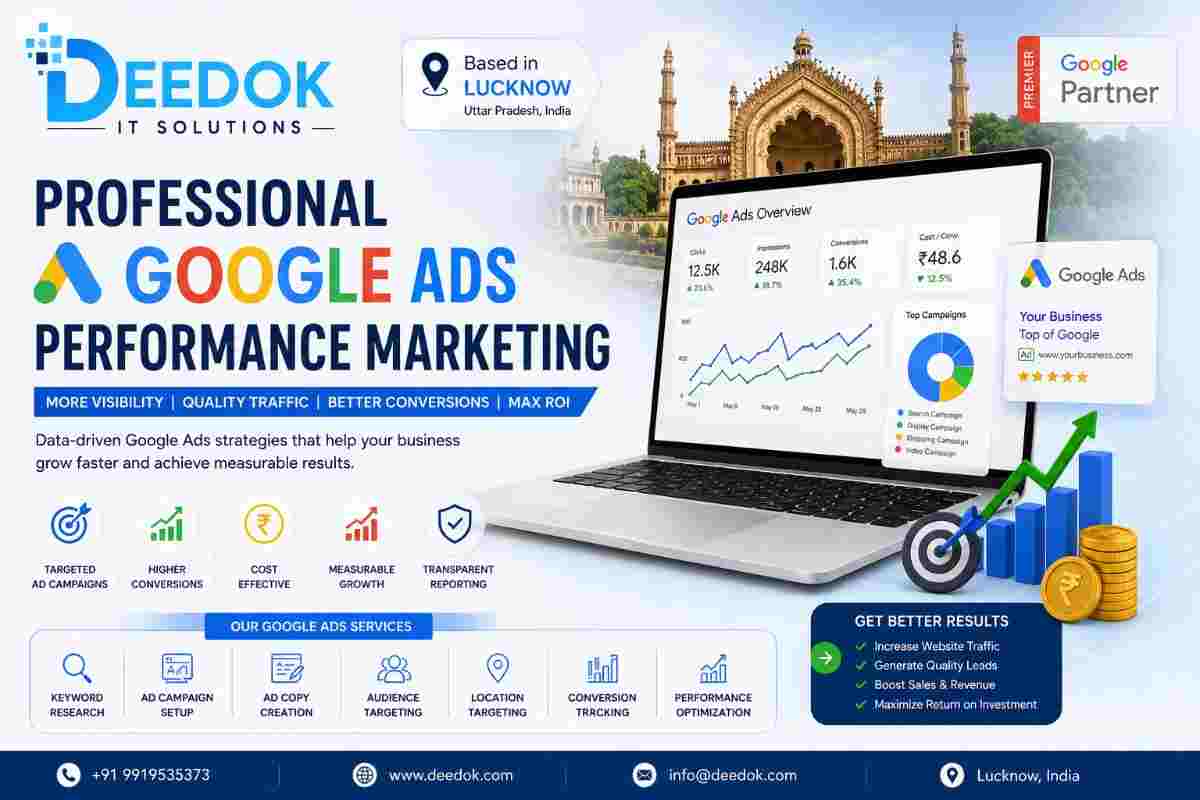
 In a competitive digital market, getting your business noticed is only the beginning. The real challenge is reaching the right people with the right message at the right time. This is where a reliable advertising strategy can make a meaningful difference.
Deedok IT Solutions provides advertising solutions designed to help businesses improve their online reach, promote their products and services, attract potential customers, and build a stronger digital presence. As a Trusted Advertising Agency, we focus on understanding the business first and then creating advertising strategies that match its goals, audience, industry, location, and budget.
Advertising should not simply be about getting more clicks or showing an advertisement to as many people as possible. A successful campaign needs a clear purpose. It should connect with the people who are most likely to be interested in what your business offers and guide them toward a useful action.
Whether your goal is to generate leads, increase website traffic, promote products, build brand awareness, reach local customers, or support online sales, a well-planned advertising campaign can become an important part of your digital marketing strategy.
What Is a Trusted Advertising Agency?
A trusted advertising agency helps businesses plan and manage promotional campaigns across suitable advertising channels. The agency works with the business to understand its goals and develops campaigns that are relevant to its audience.
Modern advertising can include search advertising, social media advertising, display campaigns, remarketing, ecommerce advertising, local advertising, and other paid digital marketing activities.
A professional advertising approach generally includes:
- Understanding the business
- Identifying the target audience
- Researching the market
- Studying competitors
- Selecting suitable advertising platforms
- Creating advertising messages
- Setting campaign goals
- Managing budgets
- Tracking important actions
- Reviewing performance
- Testing different approaches
- Improving campaigns over time
The exact strategy depends on what the business wants to achieve.
Why Businesses Need Professional Advertising
Many businesses have good products and services but struggle to reach enough potential customers.
Simply having a website or social media profile does not guarantee that people will discover the business. Advertising can help place a business in front of relevant audiences while they are searching, browsing, researching, or considering a purchase.
Professional advertising can support businesses in several ways:
| Business Need | How Advertising Can Help |
|---|---|
| Brand Awareness | Introduce your business to new audiences |
| Lead Generation | Encourage potential customers to make enquiries |
| Website Traffic | Bring relevant visitors to your website |
| Product Promotion | Highlight products and offers |
| Local Reach | Connect with customers in selected locations |
| Online Sales | Support ecommerce customer journeys |
| Customer Acquisition | Reach potential new customers |
| Remarketing | Reconnect with previous website visitors |
The key is to match the advertising activity with the actual business objective.
Advertising Starts With a Clear Goal
Before launching a campaign, it is important to know what you want the campaign to accomplish.
Different businesses may have completely different objectives.
For example:
- A startup may want to build awareness.
- A local service business may want more enquiries.
- An ecommerce company may want more product sales.
- A professional service provider may want consultation requests.
- An established company may want to enter a new market.
- A new brand may want to introduce its products.
A clear goal makes it easier to decide which advertising channel, audience, message, and measurement approach should be used.
Customized Advertising Strategies
There is no single advertising strategy that works for every business.
A campaign for an ecommerce store will look different from a campaign for a local service provider. Similarly, a B2B company may require a different approach from a consumer-focused brand.
Our advertising strategies can be customized according to:
- Business type
- Industry
- Products or services
- Target customers
- Location
- Competition
- Marketing goals
- Advertising budget
- Customer journey
- Existing online presence
This customized approach helps keep advertising focused and relevant.
Google Ads and Paid Search Advertising
Search advertising can be valuable because it allows businesses to reach people who are actively looking for specific products or services.
For example, someone searching for a particular service may already have a need and could be considering different providers.
A well-structured Google Ads campaign can focus on relevant searches and guide users toward a suitable landing page.
Campaign planning may include:
- Keyword research
- Search intent analysis
- Campaign structure
- Ad group planning
- Ad copy
- Location targeting
- Audience targeting
- Budget management
- Negative keywords
- Conversion tracking
- Performance analysis
- Ongoing optimization
The objective is to make the advertising relevant to the user's search and the business's offering.
Keyword Research for Advertising
Keywords play an important role in search advertising.
However, choosing keywords should involve more than simply selecting popular search terms.
The important question is:
Does this search represent someone who may genuinely need our product or service?
Relevant keywords can include:
- Service-based keywords
- Product keywords
- Location-based searches
- Long-tail keywords
- Commercial searches
- High-intent searches
- Problem-based searches
- Industry-specific searches
Understanding search intent helps businesses avoid spending their budget on searches that are unlikely to produce meaningful results.
Writing Effective Ad Copy
People usually scan advertisements quickly.
This means the message needs to communicate the important information clearly.
Good advertising copy should answer basic questions such as:
- What are you offering?
- Who is it for?
- What problem does it solve?
- Why is it relevant?
- What should the customer do next?
An effective advertisement may include:
- A clear headline
- A useful description
- Relevant benefits
- A strong value proposition
- Business-specific information
- A clear call to action
The language should be easy to understand and should match the expectations created by the advertisement.
Social Media Advertising
Social media advertising allows businesses to reach audiences while they are using social platforms.
These campaigns can be useful for both established brands and businesses that are still building awareness.
Social media advertising can support:
- Brand awareness
- Product promotion
- Lead generation
- Website traffic
- Event promotion
- Special offers
- Remarketing
- Audience engagement
Creative content is especially important on social platforms.
Images, videos, headlines, captions, and calls to action should work together rather than sending different messages.
Creative Advertising Solutions
Advertising needs creativity, but creativity should also have a purpose.
An attractive advertisement may catch attention, but the audience should also understand what the business is offering.
Our creative advertising approach can focus on:
- Clear visual communication
- Brand consistency
- Strong headlines
- Simple messaging
- Relevant images
- Short-form video concepts
- Promotional messages
- Product-focused creatives
- Service-focused creatives
- Clear calls to action
The goal is to make the advertisement memorable while keeping the main message easy to understand.
Audience Research and Targeting
Reaching everyone is rarely the best advertising strategy.
Businesses usually have a specific group of people who are more likely to need their products or services.
Audience research can consider:
| Audience Factor | Why It Matters |
|---|---|
| Location | Helps reach relevant areas |
| Age Group | Helps define suitable audiences |
| Interests | Can identify potential customer interests |
| Search Behavior | Shows what users are looking for |
| Customer Needs | Helps shape the advertising message |
| Buying Intent | Helps identify users closer to action |
| Previous Interaction | Supports remarketing opportunities |
The goal is to make advertising more relevant instead of simply increasing audience size.
Local Advertising
Local businesses often depend on customers within a specific geographical area.
A restaurant, salon, clinic, educational institute, repair service, real estate business, or local professional may not need nationwide advertising.
Instead, the campaign can focus on specific:
- Cities
- Areas
- Locations
- Service zones
- Local searches
- Nearby audiences
Location-focused advertising can help businesses concentrate their budget on audiences that are more relevant to their services.
Lead Generation Advertising
For many service businesses, the main purpose of advertising is to generate enquiries.
A lead can be someone who:
- Fills out a contact form
- Calls the business
- Requests a quotation
- Books an appointment
- Requests a consultation
- Sends a message
- Asks for more information
Lead generation advertising should be connected to a clear customer journey.
The advertisement attracts attention, the landing page provides information, and the call to action encourages the visitor to take the next step.
Advertising for Ecommerce Businesses
Ecommerce advertising often focuses on products and customer purchases.
Customers may discover products through search engines, social media, display campaigns, or remarketing.
An ecommerce advertising strategy may include:
- Product promotion
- Category promotion
- Search campaigns
- Shopping-focused advertising
- Social media campaigns
- Remarketing
- Promotional campaigns
- Product landing pages
- Conversion tracking
Product information should be clear enough to help customers understand what they are buying.
Landing Page Optimization
An advertisement is only one part of the customer journey.
After clicking an ad, visitors should reach a page that matches the message they saw.
A good landing page should have:
- A clear headline
- Relevant information
- Simple navigation
- Mobile-friendly design
- Strong visual structure
- Useful benefits
- Clear calls to action
- Easy contact options
- Fast and convenient user experience
For example, if an advertisement promotes a particular service, the visitor should ideally arrive on a page specifically related to that service.
Conversion Tracking
Clicks and impressions can tell us how many people interacted with an advertisement, but businesses often need to know what happened after the click.
Conversion tracking can help identify valuable actions.
These may include:
| Conversion | Example |
|---|---|
| Lead | Customer submits an enquiry |
| Call | Customer contacts the business |
| Purchase | Customer buys a product |
| Booking | Customer schedules an appointment |
| Form Submission | Customer completes a form |
| Sign-Up | Customer registers |
| Download | Customer downloads a resource |
Tracking these actions helps businesses better understand campaign performance.
Managing Advertising Budgets
Advertising budgets vary from business to business.
Some companies may have a limited monthly budget, while others may be able to invest more heavily in paid campaigns.
Regardless of the budget, careful planning matters.
Budget management can include:
- Prioritizing important campaigns
- Selecting relevant keywords
- Avoiding unnecessary traffic
- Testing audiences
- Reviewing campaign performance
- Adjusting spending
- Monitoring conversion costs
- Focusing on business priorities
The objective is not simply to spend more. It is to use the available budget thoughtfully.
Negative Keyword Management
In search advertising, some searches may look similar to your target keywords but have nothing to do with your actual business.
Negative keywords can help reduce exposure to irrelevant searches.
For example, if a business sells a particular paid service, it may not want advertisements to appear for searches related to free alternatives, jobs, training, or unrelated topics.
Regular review of search terms can help improve campaign relevance.
Performance Monitoring
Advertising campaigns should be monitored after launch.
Performance can change due to competition, seasonal demand, audience behavior, creative fatigue, changes in search behavior, and other factors.
Regular monitoring can include:
- Keyword performance
- Ad performance
- Audience performance
- Location performance
- Conversion activity
- Landing page behavior
- Campaign costs
- Overall campaign trends
The information gathered can help identify areas that need improvement.
Continuous Campaign Optimization
A campaign should not be considered finished simply because it has been launched.
Advertising is an ongoing process of learning and improvement.
Optimization may involve:
- Testing new ad messages
- Removing weak keywords
- Adding relevant keywords
- Adjusting audiences
- Improving landing pages
- Reviewing locations
- Adjusting budgets
- Testing different calls to action
- Improving creative assets
- Analyzing conversion data
Small improvements made consistently can contribute to a more organized advertising strategy.
Remarketing Advertising
Not every visitor is ready to become a customer immediately.
A person may visit your website, look at your products or services, and leave because they need more time to decide.
Remarketing can help businesses reconnect with suitable previous visitors.
It can be used for:
- Previous website visitors
- Product viewers
- Service-page visitors
- Potential customers
- Returning users
Remarketing messages should remain useful and relevant rather than repeatedly showing the same advertisement without a clear purpose.
Advertising for Startups
Startups often need to build awareness while carefully managing their resources.
Advertising can help a new company introduce its products or services to relevant audiences.
A startup campaign may focus on:
- Brand awareness
- Website traffic
- Lead generation
- Product promotion
- Local reach
- Audience testing
The strategy can begin with focused campaigns and expand as the business gains more information about its audience.
Advertising for Small Businesses
Small businesses often need practical advertising solutions that focus on real customer opportunities.
Instead of trying to reach everyone, a small business may benefit from focusing on:
- Important services
- High-intent searches
- Specific locations
- Relevant customer groups
- Strong landing pages
- Clear calls to action
This focused approach can make advertising easier to manage and evaluate.
Advertising for Established Businesses
Established businesses may have more complex marketing requirements.
They may want to promote:
- New products
- New services
- New locations
- Seasonal offers
- Special campaigns
- Market expansion
- Customer acquisition
- Brand awareness
An experienced advertising strategy can connect these individual campaigns with the company's broader digital marketing goals.
B2B Advertising
Business-to-business advertising often requires a different approach from consumer advertising.
B2B customers may take more time to research and compare solutions before making a decision.
B2B advertising can focus on:
- Business problems
- Professional solutions
- Service benefits
- Industry-specific needs
- Lead generation
- Consultation requests
- Demonstrations
- Enquiries
The messaging should be clear and focused on the actual challenges faced by the target business audience.
Advertising and SEO
Advertising and search engine optimization are different channels, but they can work together.
SEO focuses on organic search visibility, while paid advertising allows businesses to promote specific products, services, offers, or landing pages.
| SEO | Paid Advertising |
|---|---|
| Focuses on organic visibility | Focuses on paid visibility |
| Long-term strategy | Campaign-based strategy |
| Builds website content | Promotes selected pages |
| Supports organic traffic | Supports targeted paid traffic |
| Requires ongoing optimization | Requires campaign management |
Using both approaches can create a more complete search marketing strategy.
Advertising and Social Media Marketing
Advertising can also work alongside organic social media marketing.
Organic social media helps businesses build a consistent presence and communicate with their audience, while paid social advertising can extend the reach of selected content or campaigns.
Together, they can support:
- Brand visibility
- Audience engagement
- Product promotion
- Lead generation
- Website traffic
- Customer communication
Advertising and Content Marketing
Useful content can support advertising campaigns by helping customers understand products and services.
For example, a business might advertise a service and direct users to a page that explains:
- What the service includes
- Who it is for
- How it works
- Common customer questions
- Benefits
- Next steps
This approach can make the customer journey more informative.
Advertising Across Different Industries
Advertising strategies can be adapted for many types of businesses.
| Business Type | Possible Advertising Goal |
|---|---|
| Ecommerce | Product sales |
| Local Business | Calls and enquiries |
| IT Company | Lead generation |
| Professional Services | Consultation requests |
| Education | Student enquiries |
| Real Estate | Property enquiries |
| Retail | Product promotion |
| Startup | Brand awareness |
| B2B Company | Business leads |
| Service Provider | Customer enquiries |
The strategy should always be adapted to the audience and business model.
A Simple Advertising Process
A clear process makes advertising easier to manage.
Step 1: Understand the Business
We begin by understanding your products, services, customers, industry, and goals.
Step 2: Research the Audience
We identify the people who are most relevant to your business.
Step 3: Study the Market
Competitors and market conditions can provide useful insights.
Step 4: Choose Advertising Channels
The right platforms are selected based on the campaign objectives.
Step 5: Create the Campaign
Ads, keywords, audiences, landing pages, and other campaign elements are prepared.
Step 6: Launch and Monitor
Campaign performance is reviewed after launch.
Step 7: Optimize
Campaign elements are adjusted based on performance and available insights.
Step 8: Review
The campaign is evaluated against its original business goals.
Common Advertising Mistakes Businesses Should Avoid
Even a good advertising platform can produce poor results if campaigns are not planned properly.
Some common mistakes include:
- Advertising without a clear objective
- Targeting an overly broad audience
- Choosing irrelevant keywords
- Using unclear ad copy
- Sending users to unrelated landing pages
- Ignoring mobile users
- Not tracking conversions
- Spending without monitoring
- Failing to review search terms
- Never testing different messages
- Focusing only on clicks
- Ignoring the customer journey
Avoiding these mistakes can help businesses create more organized campaigns.
What Should You Look for in an Advertising Agency?
Choosing an advertising partner is an important decision.
A good agency should understand that every advertising budget represents an investment for the business.
Before choosing an agency, consider whether it:
- Understands your business goals
- Researches your target audience
- Explains its strategy clearly
- Provides campaign monitoring
- Understands conversion tracking
- Considers landing page experience
- Communicates regularly
- Manages budgets carefully
- Uses data to make improvements
- Provides clear performance information
Trust develops when communication is clear and expectations are realistic.
Why Choose Deedok IT Solutions?
Deedok IT Solutions takes a business-focused approach to digital advertising. We understand that advertising is not just about creating attractive advertisements; it is about creating a complete customer journey from the first impression to the desired action.
Our advertising solutions can include:
- Google Ads
- PPC advertising
- Search advertising
- Social media advertising
- Lead generation
- Ecommerce advertising
- Local advertising
- Remarketing
- Audience targeting
- Keyword research
- Ad copy
- Landing page strategy
- Conversion tracking
- Budget management
- Campaign optimization
We focus on practical strategies that are easy to understand and can be adapted as your business grows.
A Human Approach to Advertising
At the end of the day, advertising is about people.
Every impression, click, enquiry, and purchase comes from someone who has a particular need, question, problem, or goal.
That is why advertising should not simply talk about what a company sells. It should communicate why that product or service may be useful to the customer.
A human-focused advertising strategy asks:
- What does the customer need?
- What problem are they trying to solve?
- What information are they looking for?
- Why would they choose this business?
- What action should they take next?
When advertisements answer these questions clearly, they can become more useful and meaningful.
Building Long-Term Advertising Success
Successful advertising is rarely about one advertisement or one campaign.
Markets change. Competitors introduce new offers. Customer preferences evolve. Search behavior changes. Advertising platforms also continue to develop.
Because of this, businesses need to remain flexible.
A long-term advertising approach involves:
- Testing
- Learning
- Measuring
- Improving
- Adapting
- Refining
The more a business learns about its audience and campaign performance, the better it can make future advertising decisions.
Trusted Advertising Agency for Business Growth
A Trusted Advertising Agency should do more than place advertisements. It should help businesses understand where their advertising efforts are going, who they are trying to reach, what message they are communicating, and how campaign performance is being evaluated.
With the right strategy, digital advertising can support different business goals—from building awareness and increasing website traffic to generating leads, promoting products, attracting local customers, and supporting online sales.
A successful advertising campaign brings together several important elements:
- Clear objectives
- Audience research
- Relevant keywords
- Strong messaging
- Suitable advertising platforms
- Effective creative content
- Relevant landing pages
- Conversion tracking
- Careful budget management
- Continuous optimization
When these elements work together, advertising becomes more than simply paying for visibility. It becomes a structured part of the overall digital marketing strategy.
Conclusion
Finding the right advertising partner can help businesses approach digital advertising with greater confidence and clarity.
Whether you are a startup trying to introduce your brand, a small business looking for more enquiries, an ecommerce company promoting products, a local business reaching nearby customers, or an established organization entering a new market, advertising can provide valuable opportunities when it is planned carefully.
The key is to focus on relevance rather than just reach.
Instead of asking only how many people saw your advertisement, ask whether the advertisement reached the right audience, communicated the right message, created interest, and encouraged a meaningful action.
That is the foundation of a thoughtful advertising strategy.
Build a Stronger Advertising Strategy
A successful digital advertising campaign starts with understanding your business and your customers.
Define your goals, identify your audience, choose the right channels, create useful messaging, monitor campaign performance, and continue improving based on what you learn.
With a clear strategy and consistent optimization, businesses can create advertising campaigns that support stronger visibility, better customer connections, quality opportunities, and sustainable online growth.
Choose a Trusted Advertising Agency that understands your goals, respects your budget, and focuses on creating advertising solutions around your business needs.