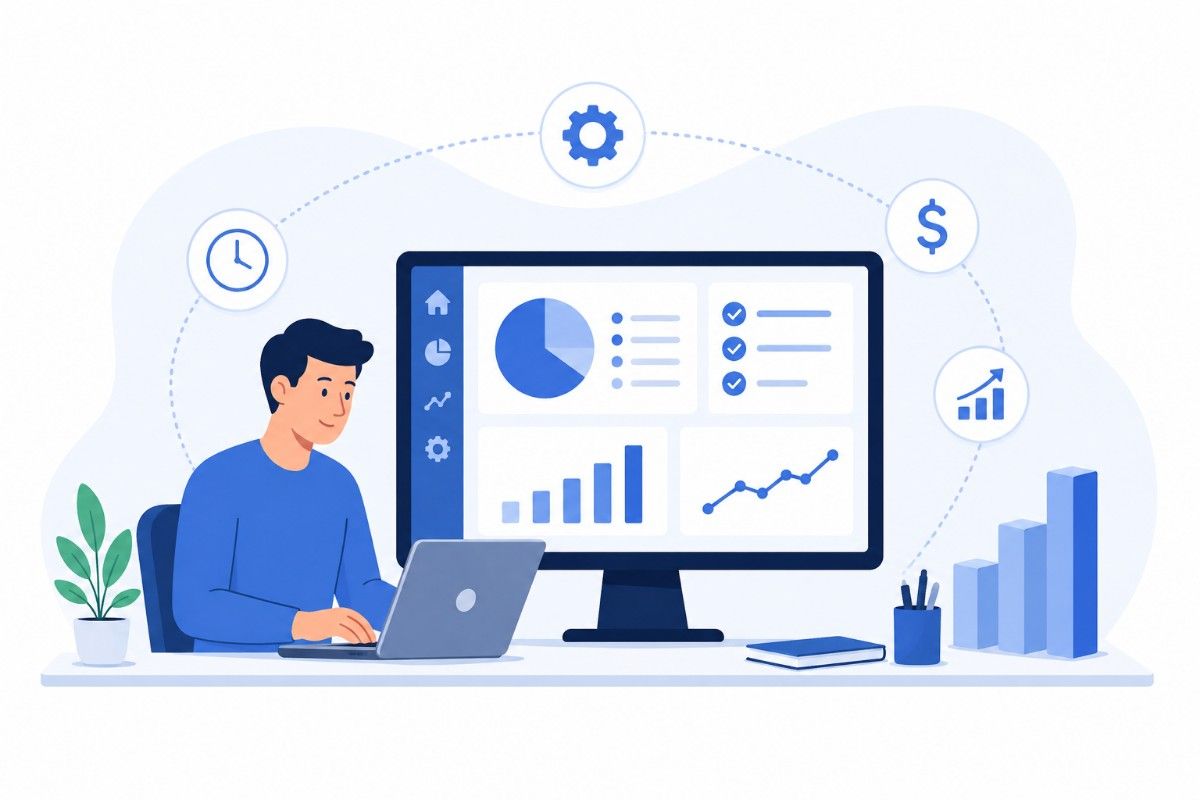
Top AI Agents Use Cases: How Intelligent Automation is Transforming Businesses in 2026
-
- May 02nd, 2026
- 7,812 views
Introduction
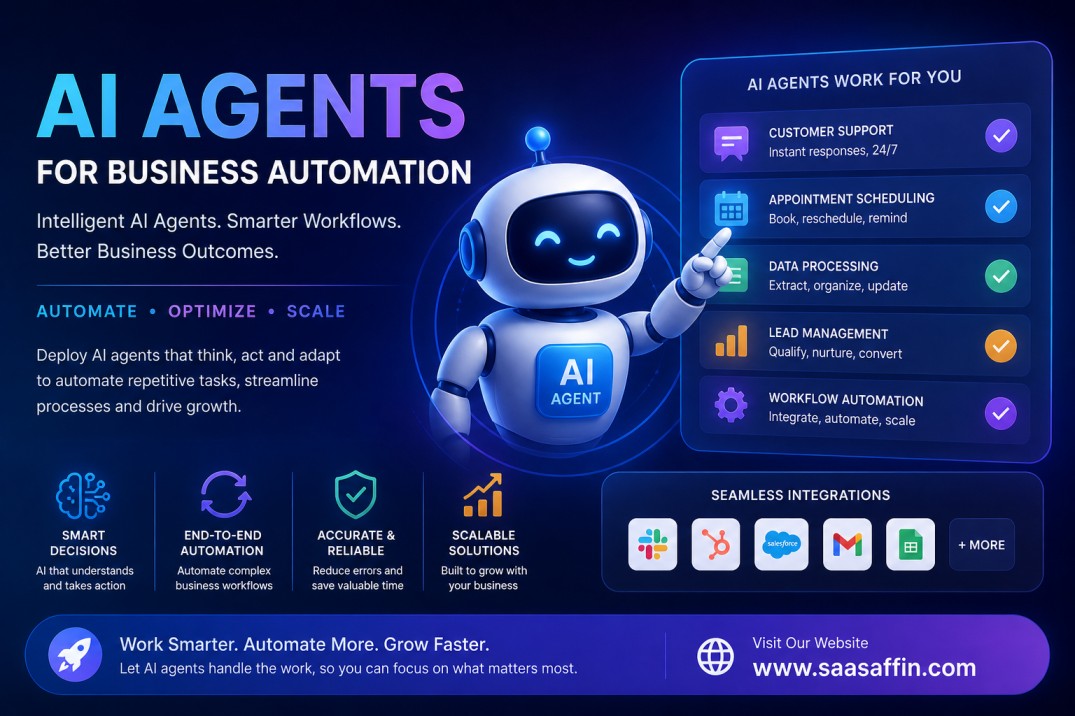
Artificial Intelligence is evolving rapidly, and one of the most impactful innovations today is AI agents. Unlike traditional automation tools, AI agents can make decisions, learn from data, and execute tasks with minimal human intervention. From customer service to complex business operations, AI agents are reshaping industries.
In this blog, we’ll explore the most powerful AI agents use cases, how they work, and why businesses are increasingly relying on them for growth and efficiency.
What Are AI Agents?
AI agents are intelligent systems that can perceive their environment, process information, and take actions to achieve specific goals. They go beyond simple rule-based automation by incorporating machine learning, natural language processing, and decision-making capabilities.
Top AI Agents Use Cases
1. Customer Support Automation
One of the most common use cases of AI agents is in customer service. AI-powered chatbots and virtual assistants can:
- Handle customer queries 24/7
- Provide instant responses
- Resolve common issues without human intervention
This reduces support costs and improves customer satisfaction.
2. Sales and Lead Generation
AI agents can automate and optimize the sales funnel by:
- Identifying high-quality leads
- Personalizing outreach messages
- Scheduling meetings automatically
They help businesses close deals faster while reducing manual effort.
3. Marketing Automation
AI agents are transforming digital marketing strategies by:
- Running targeted ad campaigns
- Analyzing customer behavior
- Generating personalized content
They ensure better ROI by continuously learning and optimizing campaigns.
4. Business Process Automation
AI agents streamline internal operations such as:
- Data entry and processing
- Workflow management
- Report generation
This improves efficiency and allows teams to focus on strategic tasks.
5. E-commerce Personalization
In the e-commerce sector, AI agents enhance user experience by:
- Recommending products based on user behavior
- Automating inventory management
- Handling order tracking and support
This leads to increased conversions and customer retention.
6. Financial Services and Fraud Detection
AI agents are widely used in finance for:
- Detecting fraudulent transactions
- Automating risk assessment
- Managing portfolios
They analyze large datasets in real time to improve accuracy and security.
7. Healthcare Assistance
In healthcare, AI agents support professionals by:
- Assisting in diagnosis
- Managing patient records
- Scheduling appointments
They improve operational efficiency and patient care quality.
8. Human Resource Management
AI agents help HR teams by:
- Screening resumes
- Conducting initial interviews
- Managing employee onboarding
This speeds up recruitment and reduces bias in hiring.
9. IT and DevOps Automation
AI agents play a crucial role in IT operations by:
- Monitoring system performance
- Detecting anomalies
- Automating troubleshooting
They reduce downtime and enhance system reliability.
10. Autonomous Decision-Making Systems
Advanced AI agents can make independent decisions in:
- Supply chain management
- Logistics optimization
- Resource allocation
These systems improve efficiency and reduce operational costs.
Benefits of AI Agents
- Increased Efficiency: Automates repetitive tasks
- Cost Reduction: Minimizes manual labor
- Scalability: Handles large volumes of work
- Improved Accuracy: Reduces human errors
- 24/7 Availability: Works without interruptions
Challenges of AI Agents
While AI agents offer numerous benefits, there are some challenges:
- Data privacy concerns
- High initial implementation cost
- Dependence on quality data
- Ethical considerations
Businesses must address these challenges to maximize the potential of AI agents.
Future of AI Agents
The future of AI agents looks promising. With advancements in machine learning and automation, AI agents will become more autonomous, intelligent, and capable of handling complex tasks. Businesses that adopt AI agents early will gain a competitive advantage in the digital economy.
Additional Insights on AI Agents Use Cases
As AI technology continues to mature, the scope of AI agents is expanding beyond traditional business functions. Companies are now integrating AI agents into creative workflows, product development, and even strategic planning. These agents can analyze market trends, predict customer needs, and recommend data-driven decisions in real time.
Moreover, the rise of multi-agent systems—where multiple AI agents collaborate—enables more complex problem-solving across departments. This is particularly valuable for large enterprises managing diverse operations. As integration with tools and platforms improves, AI agents will become more accessible to small and medium-sized businesses as well.
Additionally, AI agents are becoming more context-aware and adaptive, enabling them to deliver highly personalized experiences across industries. From education to real estate, their applications are rapidly growing. As businesses continue to embrace digital transformation, AI agents will play a central role in driving agility, improving decision-making, and maintaining a strong competitive edge in an increasingly automated world.
Conclusion
AI agents are no longer a futuristic concept—they are a present-day reality transforming industries worldwide. From customer service to decision-making systems, the AI agents use cases are vast and continuously expanding.