Free AI Image Tools That Actually Handle Hindi and Tamil Text
-

- Published Updated
- 221 views
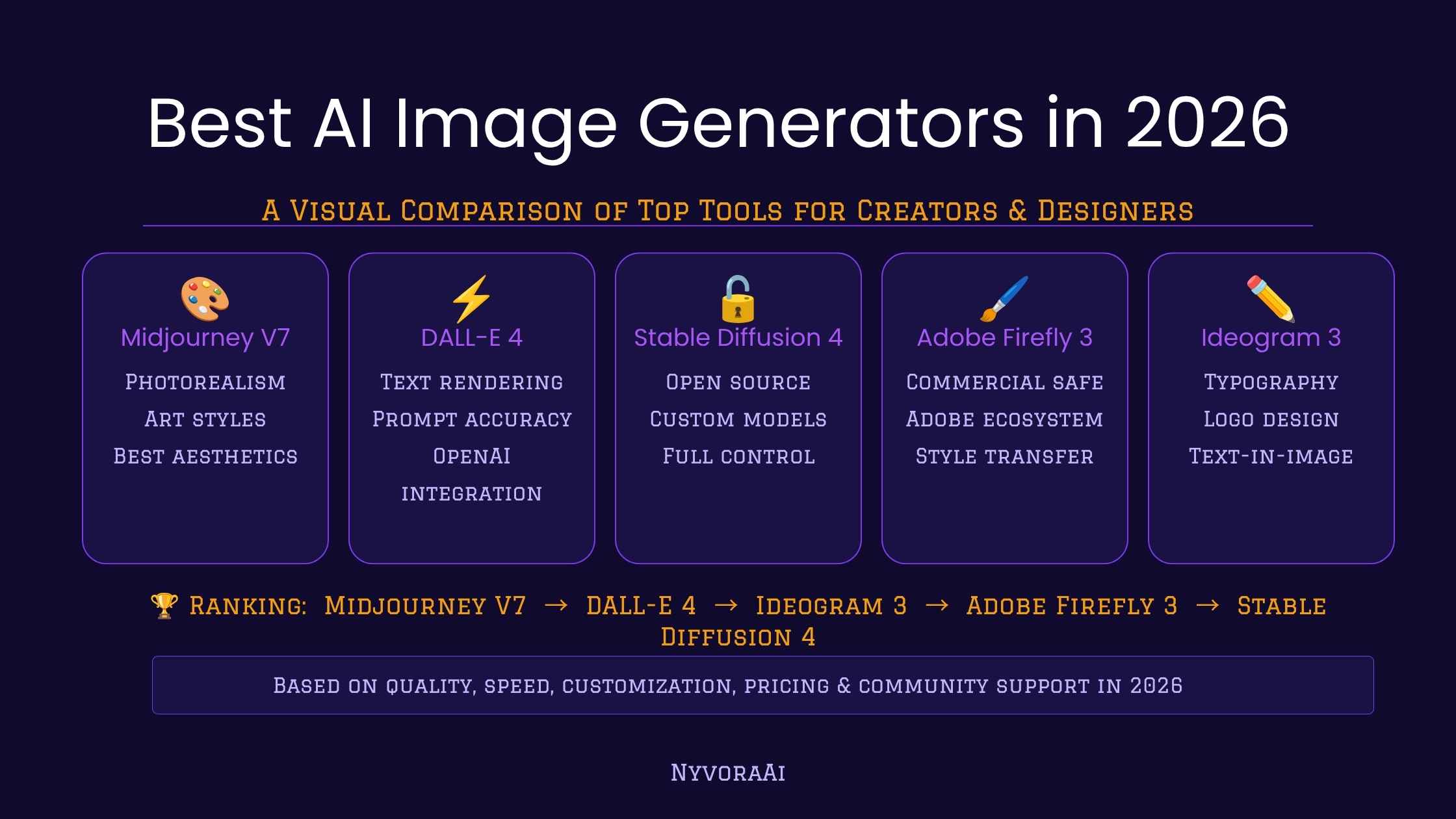
If you've tried generating product images or social media creatives with AI tools for Indian clients, you've hit the script wall. English text renders cleanly, but the moment your prompt includes Hindi, Tamil, Bengali, or Gujarati text—a shop name, a festival greeting, a price in rupees—the output turns into a scrambled mess. Matras detach from consonants, conjunct characters collapse, and the nukta vanishes entirely. You end up recreating the text layer in Canva anyway, which defeats the purpose of using AI generation in the first place.
This limitation has made AI image tools a partial solution at best for Indian freelancers and small businesses operating in regional languages. The creative composition is fine, the color grading is fine, but the text—which is often the most important element on a promotional graphic—requires manual rework on nearly every output.
Where the Multilingual Fix Stands
GPT Image 2, released April 2026, made significant progress on multilingual rendering. Its reasoning-first architecture plans text content before generating pixels, achieving roughly 99% accuracy at headline sizes. This covers Latin, Indic, East Asian, and Arabic writing systems—and critically, includes Devanagari and other Indic scripts at display sizes.
The remaining gap is size-dependent. Below approximately 14pt equivalent—the scale used for price tags, terms and conditions text, contact details on business cards, and event listing specifics—accuracy drops significantly. For Indian creators producing festival sale banners, restaurant menus in regional languages, or wedding invitation mockups, this small-text failure zone covers most of the text that actually appears on the final design.
Arena blind testing in August 2026 revealed two checkpoints—mona-lisa-1 (logged August 9) alongside luna-lisa-alpha (August 20)—widely attributed to GPT Image 2.5. The key improvement: luna-lisa-alpha reportedly maintains text accuracy down to approximately 8pt equivalent, including non-Latin scripts. Separately, a Codex code reference to "imageGen25" reinforces the upgrade, citing improved output fidelity and noise correction.
If this improvement holds for Indic scripts at production scale, the practical impact for Indian freelancers is substantial. A Diwali sale banner with Hindi pricing, a restaurant menu card with Tamil dish names, or a business card with a Gujarati tagline could be generated in a single pass without text rework.
Beyond Text: Skin Tone and Edit Durability
Two additional improvements from the Arena data directly benefit Indian creative workflows.
The mona-lisa-1 checkpoint shows improved skin rendering under mixed lighting—subsurface scattering that produces natural-looking melanin variation instead of the flat, plastic-looking highlights that current models produce on darker skin tones. For fashion and beauty content targeting Indian audiences, this is the difference between images that look authentic and images that immediately read as AI-generated.
The noise accumulation fix matters for workflows where a single base design gets adapted across multiple formats—a common pattern for festival campaigns that need Instagram story, WhatsApp status, and Facebook post versions of the same creative. Currently, each adaptation pass degrades quality slightly. The 2.5 checkpoints maintain visual integrity across ten-plus consecutive modifications.
Practical Access Without Subscription Overhead
Indian freelancers and micro-businesses typically operate on tight margins. Monthly subscriptions to AI image platforms at international pricing (₹1,500–2,500/month) are hard to justify for intermittent use. Credit-based platforms offer a better fit: you pay proportionally to actual output rather than maintaining a monthly commitment during lean periods.
Consider a freelance graphic designer in Pune serving five or six local businesses. Each client needs perhaps three to four social media creatives per month—maybe twenty images total. At subscription rates, that's ₹75–125 per image in fixed costs regardless of whether it's a busy month or a quiet one. Credit-based pricing keeps the per-image cost constant and eliminates idle-month waste.
gptimage25.io runs on this credit model—no account registration required, with credits consumed proportional to the output resolution and quality tier selected. Standard-quality outputs at moderate resolution use minimal credits, while 4K outputs for print-quality work consume more. The service is built on OpenAI's GPT Image model lineup and switches to the 2.5 model automatically when it reaches the API.
Release Timing
GPT Image 2 moved between its Arena debut and official API access in roughly a fortnight. Luna-lisa-alpha appeared August 20, making early September the earliest likely window, with DevDay (September 29) as the alternative announcement date.
The timing is relevant for Indian creators because the September–November festival season (Navratri, Dussehra, Diwali, Chhath Puja) is the highest-demand period for promotional graphics. Clients need festival sale banners, greeting cards, and social media creatives in regional languages at volume. A model that handles Hindi and Tamil text accurately at caption sizes would land just as demand peaks—ideal timing for freelancers to test and adopt the upgraded output quality.
For freelancers serving Indian SMBs and regional-language clients, the arrival of reliable small-text rendering in Indic scripts would transform AI image generation from a layout-only tool into a complete creative production solution. The Arena data is encouraging—but the real test will be production-scale generation with actual Hindi, Tamil, and Bengali text at caption sizes. Preparing prompt templates with your most common regional-language use cases now means you can validate accuracy the day the new model goes live.
---