AI Workout Planner for Beginners: Build a Safe Home Fitness Plan
-

- Published Updated
- 366 views
An AI workout planner for beginners can generate a simple, progressive plan that fits available equipment, time, and goals. This guide explains how to set up a safe home program, what inputs matter, and how to evaluate the plan the AI creates.
- Use clear goals and basic inputs (time, equipment, fitness level) to get usable AI plans.
- Follow a named checklist (SMART-FIT framework) to verify safety and progression.
- Start with bodyweight workouts and 2–4 sessions per week, add load or sets gradually.
AI workout planner for beginners: what it delivers and what to expect
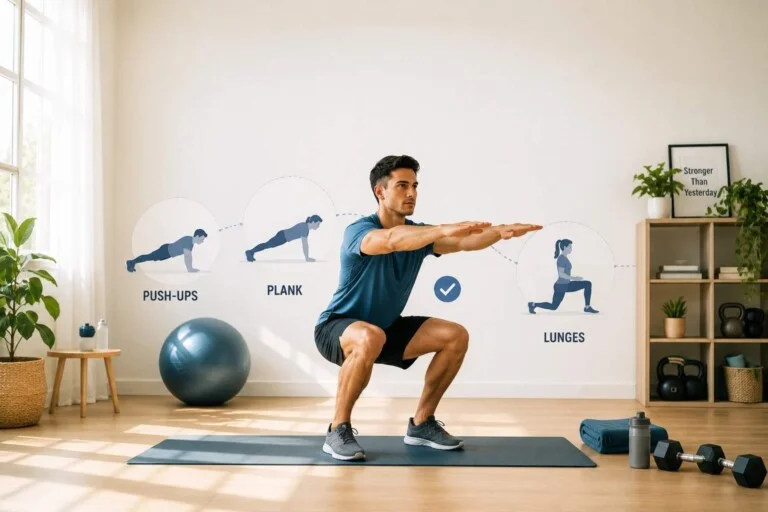
An AI workout planner for beginners maps goals to sessions, suggests exercises (bodyweight or with basic equipment), and sequences warm-ups, strength, and cardio. It often uses rules like progressive overload, frequency, and recovery windows to create a weekly schedule. Use the plan as a structured template, not a replacement for professional guidance when there are medical concerns.
How an AI workout planner creates a home workout plan for beginners
Inputs that matter
Key inputs: current fitness level, injuries/limitations, target days per week, session length, equipment, and primary goal (strength, fat loss, mobility). The planner translates these into sets, reps, intensity, and rest. Include simple details like whether a resistance band or pair of dumbbells is available.
What the AI optimizes for
Common optimization targets include balanced muscle groups, session time, progressive overload over weeks, and recovery between sessions. Look for mention of core principles such as progressive overload, movement variety, warm-up, and cooldown.
SMART-FIT framework: a quick checklist to validate any AI plan
Use the SMART-FIT framework to check AI outputs before following them:
- Specific: Are goals and exercises specific to ability and equipment?
- Measurable: Does the plan define sets, reps, time, or intensity?
- Achievable: Are session lengths and frequency realistic for the schedule?
- Recovery: Is there planned rest and lower-intensity days?
- Transition: Does the plan include progressive steps for load or volume?
- Form & Safety: Are cues or regressions suggested to protect joints?
- Integration: Are mobility and warm-up included each session?
- Trackable: Does the plan suggest metrics to monitor (RPE, weight, reps)?
Step-by-step: set up a custom AI fitness schedule
- Choose a goal: strength, endurance, weight loss, or general health.
- Enter honest inputs: fitness level, time, equipment, injuries.
- Pick a weekly frequency (start 2–4 days for beginners).
- Ask the AI to prioritize form, warm-ups, and mobility cues.
- Review the plan with the SMART-FIT checklist and adjust intensity or days if needed.
Real-world example
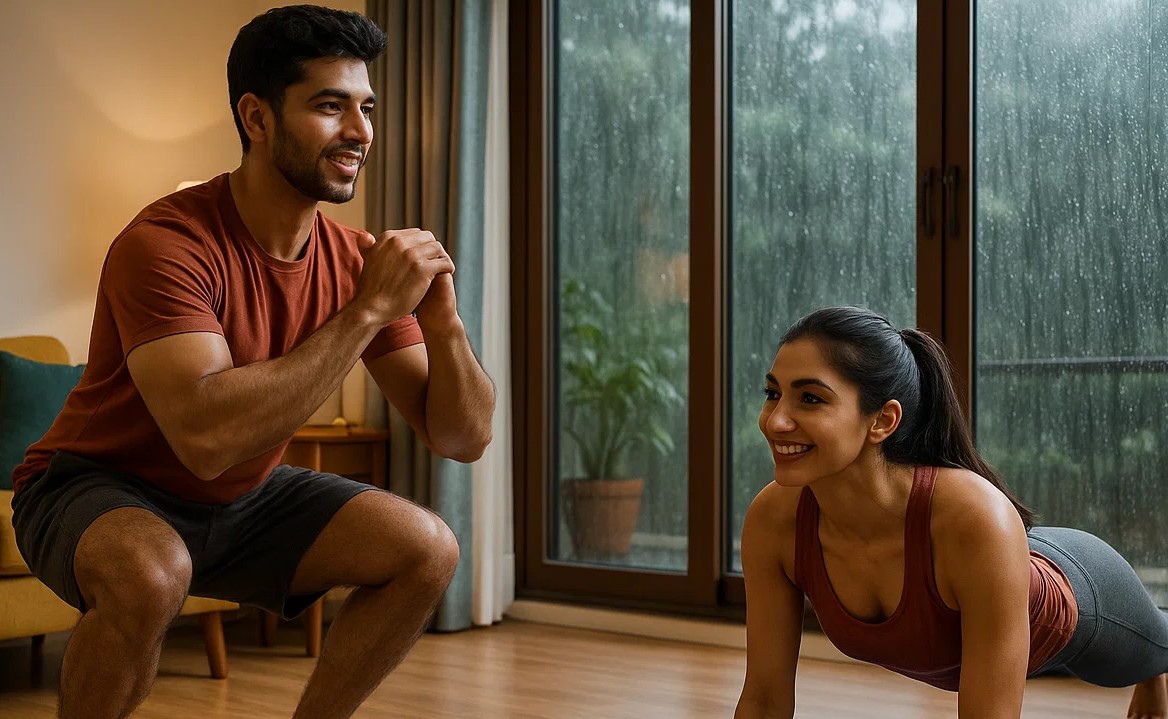
Scenario: Emma, 35, new to structured exercise, 30 minutes available five mornings a week, no equipment. Using an AI planner she selects "general fitness" and "bodyweight only." The output is: Monday—full-body circuit (squats, push-ups from knees, glute bridges, plank) 3 rounds; Wednesday—mobility + low-intensity cardio 25 min; Friday—lower-body focus plus core. The plan increases repetitions or adds a round every two weeks. Emma tracks RPE (rate of perceived exertion) and adds a resistance band when sessions feel easy.
Practical tips for beginners using an AI workout planner
- Start modest: choose 2–3 sessions per week if new and build up to 4.
- Prioritize consistency over intensity: complete the session fully before increasing load.
- Track two metrics: session adherence and an objective measure (time, reps, or distance).
- Request regressions and progressions in the AI output so modifications are on hand.
Trade-offs and common mistakes
Trade-offs to consider
Fully automated plans save time but may miss individual technique cues. Simpler bodyweight routines are safe and require no gear but progress more slowly than weighted training. More sessions speed progress but raise risk of burnout—balance frequency with recovery.
Common mistakes
- Overtrusting intensity recommendations without monitoring fatigue or sleep.
- Skipping warm-ups and mobility elements suggested by the planner.
- Neglecting progressive overload—sticking to the same routine without incremental challenge.
Safety, guidelines, and one external resource
Follow established activity benchmarks and consult a clinician for chronic conditions. For general physical activity recommendations, refer to the WHO physical activity guidelines which outline minimum weekly activity levels for adults.
How to measure progress and when to adjust
Track session completion, reps or time, and perceived effort. If a workout consistently feels too easy after two weeks, ask the AI to increase load or add a set. If soreness or fatigue accumulates, reduce volume or add a rest day.
FAQ
How does an AI workout planner for beginners choose exercises?
It maps available equipment and goals to reliable movement patterns (push, pull, hinge, squat, carry, core), then selects regressions or progressions and organizes them by session length and frequency.
Is a custom AI fitness schedule safe without prior fitness experience?
A custom AI fitness schedule can be safe if inputs are accurate and the plan includes regressions, warm-ups, and recovery. Stop and seek professional medical advice for pain or medical conditions.
Can beginners use an AI planner for weight loss?
Yes—AI can structure consistent activity and progressive resistance, but weight loss also requires dietary changes. Treat the AI plan as the exercise component of a broader lifestyle approach.
How long before a beginner sees results from a beginner bodyweight workouts at home routine?
Expect measurable improvements in energy and movement quality within 3–4 weeks, and strength or body-composition changes within 8–12 weeks with consistent effort and progressive challenge.
What basic gear improves results for a home workout plan for beginners?
Minimal useful items: a resistance band, a pair of adjustable dumbbells, and a mat for floor work. These expand exercise options and progression paths without requiring a gym.