How Alternative Business Loans Help Improve MSME Cash Flow
-

- Published Updated
- 3,366 views
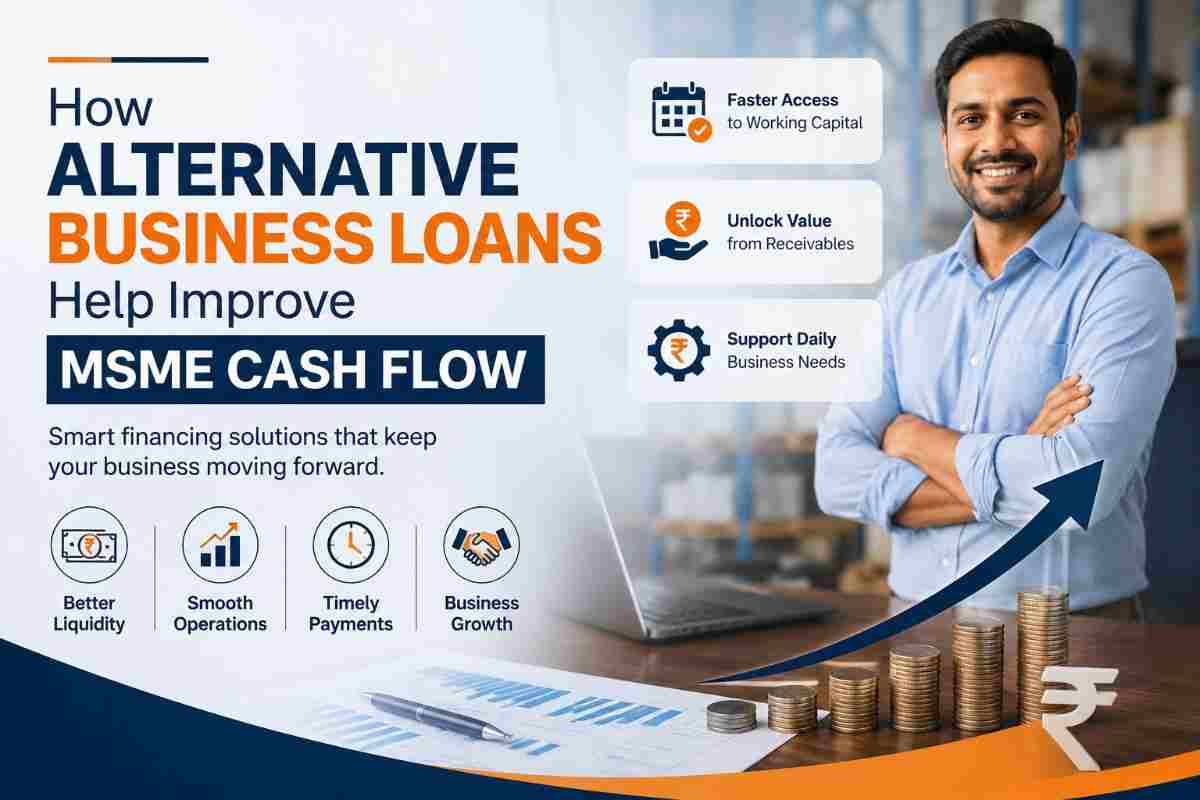
Cash flow is one of the biggest concerns for small and medium businesses. An MSME can have regular customers, strong sales and a healthy order book, yet still struggle to pay suppliers, employees or other expenses if customer payments are delayed.
This is where alternative business loans can help. They give MSMEs more ways to access funds without depending only on traditional bank loans. Depending on the business requirement, options such as invoice financing, working capital finance, business lines of credit, unsecured business loans and other forms of alternative financing can help businesses manage short-term cash requirements.
For MSMEs that sell goods or services to businesses on credit, invoice-based financing can be particularly useful because it allows them to access funds against eligible receivables instead of waiting for the full payment period.
What Are Alternative Business Loans?
Alternative business loans are financing options available outside the traditional business loan model offered by banks.
These financing solutions can be provided through NBFCs, fintech platforms, invoice financing platforms and other financial institutions. The eligibility and assessment process may differ depending on the type of financing.
Some common alternative financing options include:
Invoice financing
Invoice factoring
Working capital financing
Business lines of credit
Unsecured business loans
Digital business loans
Equipment financing
Government-backed MSME financing
The right option depends on the business's cash flow, funding requirement, repayment capacity and the reason for borrowing.
Why Cash Flow Is Important for MSMEs
Cash flow is the money available to a business after considering its incoming and outgoing payments.
For example, an MSME may supply products worth ₹10 lakh to a corporate customer. The customer may have a 60-day payment cycle. Although the MSME has completed the sale, the ₹10 lakh is not immediately available for use.
During those 60 days, the business may still need to:
Purchase raw materials
Pay employees
Pay suppliers
Manage transportation costs
Pay rent and utilities
Maintain inventory
Accept new orders
This creates a gap between sales and cash availability.
Alternative financing can help MSMEs manage this gap.
1. Helps Unlock Cash Stuck in Unpaid Invoices
Delayed payments are one of the most common causes of cash flow pressure for MSMEs.
When invoices remain unpaid for 30, 60 or 90 days, a business may have money on paper but not enough cash in its bank account.
Invoice financing provides a way to access funds against eligible outstanding invoices. Instead of waiting until the customer makes the payment, the MSME can use the value of its receivables to improve short-term liquidity.
This can be especially useful for suppliers that regularly sell to large businesses on credit.
2. Helps Businesses Manage Daily Expenses
An MSME has regular expenses regardless of when customers make payments.
Payroll, raw materials, electricity, transportation, rent and supplier payments cannot always be postponed.
Alternative business financing can provide additional working capital to meet these expenses while the business waits for its receivables.
This helps prevent temporary cash shortages from affecting normal operations.
3. Helps Businesses Take Larger Orders
Growth can create its own cash flow problem.
Suppose a manufacturer receives a large order from a new customer. To fulfil it, the manufacturer needs to purchase additional raw materials and increase production.
However, most of its current cash may already be tied up in outstanding invoices.
Alternative financing can provide the additional working capital required to fulfil the new order. As a result, the business does not have to turn down growth opportunities simply because cash is temporarily unavailable.
Learn more at: https://www.rxil.in/alternative-business-loans/
4. Reduces Dependence on Traditional Business Loans
Traditional loans can be useful for long-term business requirements, but they may not always be the right solution for a short-term cash flow gap.
For example, a business waiting for payment on approved invoices may not want to take a long-term loan to cover a temporary requirement.
Invoice-based financing can provide a more closely matched financing option because the funding is linked to actual business receivables.
This can help MSMEs use different financing options for different financial needs.
5. Supports Better Supplier Payments
Suppliers are an important part of every MSME's business operations.
If a company consistently delays supplier payments because of cash flow problems, it can affect relationships and future supplies.
Better access to working capital helps businesses make payments on time and maintain smoother relationships with suppliers.
This is particularly important for manufacturers and distributors that depend on regular supplies to fulfil customer orders.
6. Helps Manage Seasonal Cash Requirements
Not every business has the same cash flow throughout the year.
Retailers may need additional inventory before festive seasons. Manufacturers may require more raw materials when demand increases. Exporters may face higher costs during periods of increased orders.
Alternative financing can provide additional funds during these periods.
Instead of maintaining a large cash balance throughout the year, businesses can explore financing options when their actual cash requirement increases.
7. Makes Cash Flow More Predictable
A business becomes easier to manage when the owner has a clear view of available cash.
However, long customer payment cycles can make cash flow difficult to predict.
Receivables financing can help shorten the gap between completing a sale and receiving funds. This gives the business more control over its working capital.
Better cash flow visibility can help owners plan inventory purchases, supplier payments and upcoming expenses more effectively.
8. Helps MSMEs Handle Unexpected Expenses
Unexpected expenses can put additional pressure on a small business.
Equipment repairs, urgent raw material purchases, increased transportation costs or sudden increases in customer orders can require additional funds.
Having access to an appropriate financing facility can help an MSME handle such situations without disrupting regular operations.
However, businesses should avoid borrowing more than they can comfortably repay.
9. Can Support Business Growth
Healthy cash flow gives businesses more flexibility to invest in growth.
An MSME with sufficient working capital may be better positioned to:
Expand production
Hire additional employees
Purchase inventory
Enter new markets
Accept larger orders
Upgrade equipment
Build stronger supplier relationships
Alternative financing does not automatically guarantee growth, but timely access to funds can remove one of the common barriers to expansion.
How TReDS Can Help MSMEs Improve Cash Flow
For MSMEs supplying goods or services to eligible corporate buyers, TReDS can be an important alternative financing option.
Trade Receivables Discounting System, or TReDS, is a digital platform that facilitates financing of eligible MSME trade receivables.
The basic process is simple. An MSME raises an invoice for goods or services supplied to a buyer. After the invoice is accepted by the buyer, financiers can provide bids for financing the receivable. The MSME can then choose a suitable bid and receive funds before the original payment due date.
This helps the MSME unlock working capital that would otherwise remain tied up in receivables.
RXIL operates a TReDS platform that connects MSME sellers, buyers and financiers through a digital financing process. For eligible transactions, this can help businesses access working capital against approved receivables and manage their cash flow more effectively.
How to Choose the Right Alternative Financing Option
Before choosing an alternative business loan or financing solution, an MSME should consider:
Funding requirement
Determine how much money the business actually needs. Avoid taking a larger facility simply because it is available.
Purpose of funding
The best option can depend on whether the money is needed for working capital, unpaid invoices, equipment, inventory or business expansion.
Cost of financing
Compare interest, discount charges, processing fees and other applicable costs before making a decision.
Repayment terms
Make sure the repayment schedule matches the business's expected cash inflows.
Eligibility
Check whether the business meets the requirements of the selected financing option.
Final Thoughts
Cash flow problems can affect even profitable MSMEs. A business may have strong sales but still face financial pressure when customer payments are delayed or expenses increase unexpectedly.
Alternative business loans give MSMEs more options to manage these situations. Invoice financing can help unlock money tied up in receivables, while working capital loans, lines of credit and other financing options can support different business requirements.
For MSMEs that regularly supply eligible corporate buyers on credit, TReDS-based financing can be another useful way to improve liquidity. By accessing funds against eligible receivables, businesses can reduce the waiting period for customer payments and use their working capital more effectively.
The key is to choose financing based on the actual cash flow requirement, repayment capacity and business cycle. When used responsibly, alternative financing can help MSMEs maintain day-to-day operations, take new orders and create a stronger foundation for sustainable growth.
FAQs
What are alternative business loans for MSMEs?
Alternative business loans are financing options other than traditional bank loans. They can include invoice financing, factoring, working capital finance, business lines of credit and unsecured business financing.
How do alternative business loans improve cash flow?
They provide access to funds when cash is temporarily tied up in unpaid invoices or when business expenses are higher than available cash. This can help MSMEs continue operations without waiting for every customer payment.
Can invoice financing help with delayed payments?
Yes. Invoice financing allows eligible businesses to access funds against outstanding invoices, helping reduce the cash flow gap created by delayed customer payments.
Is TReDS an alternative to a traditional business loan?
TReDS can be an alternative financing route for eligible MSME receivables. Instead of taking a conventional loan for general purposes, an MSME can use eligible trade receivables to access funds before the buyer's payment due date.
How can MSMEs choose the right alternative financing option?
MSMEs should consider the purpose of funding, amount required, financing cost, repayment terms, eligibility and their regular cash flow cycle before selecting an option.