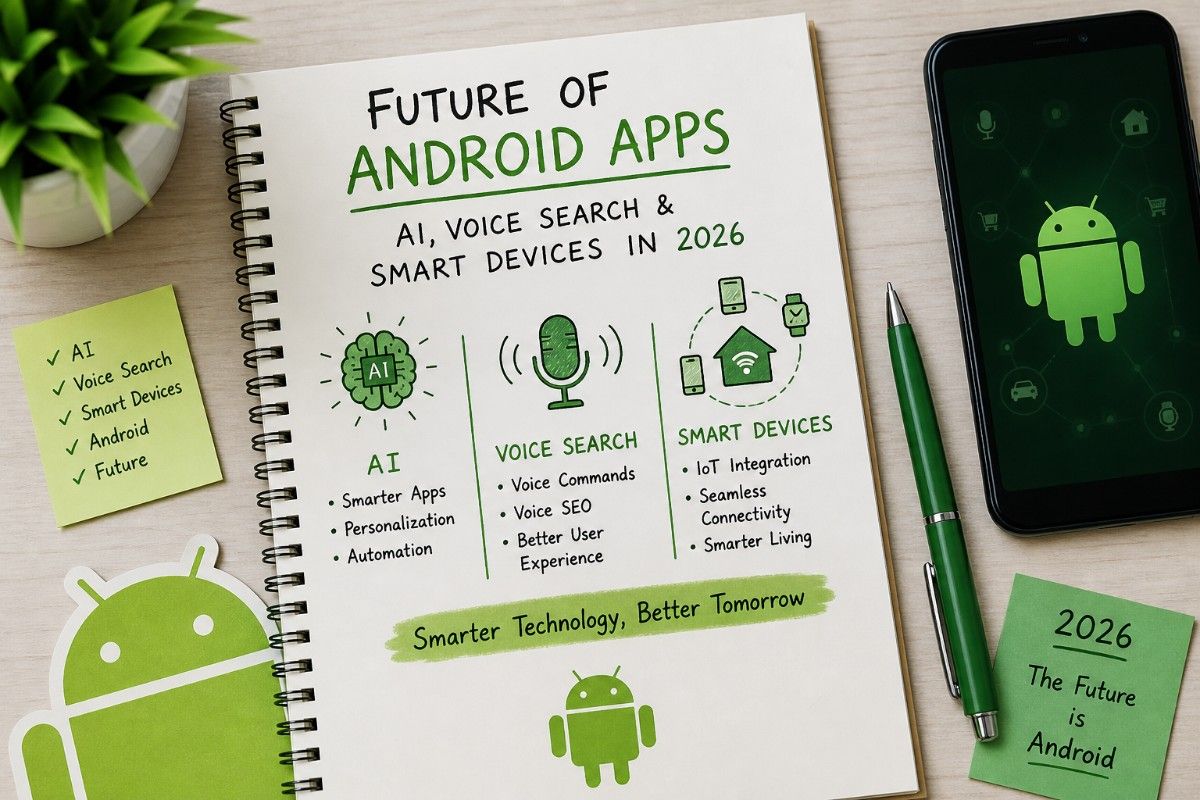
Future of Android Apps: AI, Voice Search & Smart Devices in 2026
-

- May 06th, 2026
- 7,636 views
Introduction
I see Android apps changing faster than ever. So, Android app development services a few years ago, apps were simple tools. Now they act like smart assistants that understand users, respond to voice, and connect with AI. In 2026, three technologies shape this future—Artificial Intelligence (AI), voice search, and smart devices. If you run a business or plan to build an app, you need to understand where things are heading. Android application development service in India is growing faster with the latest trends.
The Evolution of Android Apps
I remember when apps only performed basic functions. Today, users expect more. They want apps that load fast, understand their needs, and offer personalized experiences.
At Memento technologies, we provide Android apps for smart phones, tablets, smart TVs, and the latest generation of android- powered devices.
Modern Android apps focus on:
1. Speed and smooth performance
2. Personalized content
3. Smart automation
User expectations continue to grow. People don’t just use apps—they rely on them daily. This shift pushes developers to create smarter and more intuitive solutions.
Role of Artificial Intelligence in Android Apps
AI stands at the center of modern app development. I see it turning ordinary apps into intelligent platforms.
Apps now track user behavior and offer personalized suggestions. For example, shopping apps recommend products based on browsing history. Streaming apps suggest content based on user preferences.
AI also improves communication through chatbots and virtual assistants. These features handle customer queries instantly, which saves time and improves user satisfaction.
Key benefits of AI in Android apps include:
Smarter recommendations
Task automation
Better security with fraud detection
I find AI especially useful for businesses. It helps them understand users better and deliver exactly what customers want.
Impact of 5G on Android App Development
- Faster app performance and loading speed
- Real-time features like live streaming and gaming
- Better connectivity for smart devices
- Improved user experience with low latency
Rise of Voice Search in Mobile Apps
Voice search continues to grow rapidly. I notice more users speaking to their devices instead of typing. It feels faster and more convenient.
Voice assistants like Google Assistant have changed how people interact with apps. Users now expect voice-enabled features in mobile applications.
Voice search impacts app development in several ways:
Developers need to add voice command functionality
Apps must support natural language processing
Content must adapt for voice-based queries
In a country like India, multilingual voice support plays a huge role. People prefer using their local language while searching or giving commands.
I believe voice technology will become a standard feature in most apps very soon.
Smart Devices & Android App Integration
Smart devices are everywhere now. From smart TVs to fitness bands, everything connects through apps.
I see Android apps acting as control centers for these devices. Users can manage home appliances, track health data, and even control cars through mobile apps.
Common examples include:
Smart home automation apps
Fitness and health tracking apps
Connected vehicle applications
This ecosystem creates a seamless experience. Users can switch between devices without losing control or data.
For businesses, this opens new opportunities. They can build apps that integrate with multiple devices and offer more value to users.
Key Benefits for Businesses
I notice clear advantages for businesses that adopt these technologies early.
Better user engagement through personalized experiences
Higher conversion rates due to smart recommendation.
Stronger customer relationships
Competitive advantage in the market
Apps no longer just provide services—they build long-term connections with users.
Importance of User Experience (UX) in Future Apps
- Simple and intuitive design matters more than ever
- Personalized UI based on user behavior
- Voice-friendly and accessible interfaces
- Faster navigation and minimal loading time
Challenges in Future Android App Development
* While the future looks exciting, I also see some challenges
* Data privacy remains a major concern
* Advanced features increase development costs
* Developers need specialized skills
* Different devices create compatibility issues
* Businesses must plan carefully to overcome these challenges.
How Businesses Can Prepare for 2026
I suggest focusing on a few key strategies to stay ahead:
Invest in AI-driven features
Optimize apps for voice search
Design apps with user experience in mind
Work with skilled Android developers
Businesses that adapt early will gain a strong advantage.
Conclusion
I believe the future of Android apps lies in intelligence, convenience, and connectivity. AI makes apps smarter, voice search makes them easier to use, and smart devices make them more powerful.
Apps will no longer act as simple tools. They will become essential parts of daily life.
If you plan to build an Android app, now is the right time to embrace these technologies and stay ahead of the competition.
FAQs
1. What is the future of Android app development in 2026?
The future focuses on AI integration, voice search, and smart device connectivity to create smarter and more user-friendly apps.
2. How is AI used in Android apps?
AI helps apps provide personalized recommendations, automate tasks, and improve security.
3. Why is voice search important for mobile apps?
Voice search offers faster and more convenient interaction, which improves user experience.
4. What are smart device integrations in Android apps?
These integrations allow apps to connect and control devices like smart homes, wearables, and vehicles.