Practical Guide: Using an Astrology App for Health Prediction and Disease Timing
-

- Published Updated
- 310 views
An astrology app for health prediction promises timing insights by mapping natal charts, transits, and progressions to symptom windows. This guide explains what such an app can practically provide, how to judge its methods, and concrete steps to use it safely alongside conventional medical care.
- Astrology apps can highlight correlation patterns (transits, lunar cycles) but cannot diagnose disease.
- Use the ASTRO-HEALTH Checklist to evaluate predictive claims and privacy safeguards.
- Combine astrological timing with medical risk factors; prioritize evidence-based tests for red flags.
How an astrology app for health prediction works
Most apps take a natal chart, calculate planetary transits and progressions, and map those to symptom categories (headache, digestive issues, mood shifts). Some include user symptom logs or wearable data to find recurring patterns. If the app claims disease timing, it typically relies on correlation rules (Mars with inflammation, Moon with cyclical symptoms) and statistical summaries rather than clinical validation.
Key components and terms
Natal chart and transits
The natal chart provides a baseline: planets' positions at birth. Transits are current planetary positions relative to the natal chart; progressions are symbolic forward-moves. These are the primary mechanisms a disease timing app uses to generate windows of elevated vulnerability.
Data inputs: symptom logs, wearables, and health history
Useful inputs include daily symptom severity, medication changes, sleep and activity from wearables, and immutable risk factors like age or chronic diagnoses. Apps that ignore basic health history produce weaker predictive signals.
What an astrology-based disease timing app can and cannot do
- Can: identify repeating timing patterns, suggest days for heightened monitoring, and prompt users to track symptoms systematically.
- Cannot: provide medically validated diagnoses, replace lab testing, or reliably predict disease onset without clinical evidence and prospective validation.
Evaluation framework: ASTRO-HEALTH Checklist
Use this checklist before relying on any disease timing app.
- Accuracy claims: Look for peer-reviewed evidence or clearly labeled observational findings.
- Sources: Check whether symptom-rule mappings are documented and transparent.
- Timeframe clarity: Does the app specify windows (hours, days, weeks) and uncertainty?
- Risk integration: Are medical risk factors (age, family history) included?
- Observational validation: Is there anonymized aggregate data showing repeatability?
- - HIPAA/privacy: Does the app encrypt data and publish a privacy policy?
- Explainability: Are predictions accompanied by the transit or chart features driving them?
- Alerts for red flags: Does the app advise medical follow-up for severe symptoms?
- Limitations disclosed: Are uncertainties and non-medical status clearly stated?
- Testing plan: Is there a way to export data for independent analysis?
Real-world example: timing migraine flares
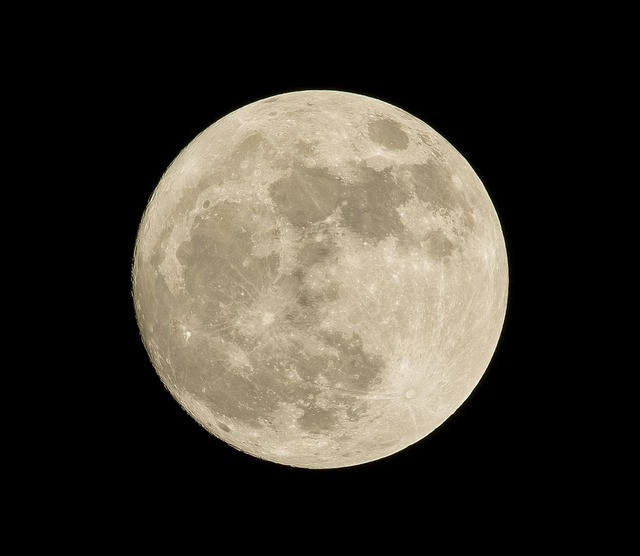
Scenario: A user tracks migraine intensity daily and logs sleep, caffeine, and menstrual cycle. The app maps migraine peaks to lunar phases and Neptune transits to the natal chart. If a consistent pattern emerges—migraine severity rising within 24–48 hours of full moon and certain transits—the app flags a high-probability window. Recommended actions might include increased hydration, avoiding known triggers, and scheduling pain-management measures. The app should also remind the user that recurrent severe migraines warrant clinician evaluation and possible diagnostic imaging or preventive therapy.
Practical tips for safe use
- Keep a structured symptom log for at least 60–90 days before trusting timing patterns.
- Cross-check astrological signals with medical risk factors—age, family history, medications—before acting.
- Use app alerts as prompts for monitoring, not as substitutes for urgent care; call emergency services for acute red-flag symptoms.
- Export and back up raw data so clinicians or researchers can review patterns independently.
Trade-offs and common mistakes
Trade-offs
Predictive detail versus clinical safety: apps that provide precise timing (hour-by-hour) often overstate confidence. Simpler weekly windows acknowledge uncertainty and reduce false alarms. Privacy versus personalization: richer personalization requires more health data and stronger privacy protections.
Common mistakes
- Equating correlation with causation—matching a transit to a symptom surge does not prove a causal link.
- Ignoring baseline medical risk factors—astrological signals should not override known clinical risk.
- Relying on anecdotal validation—personal confirmation bias can create apparent patterns where none exist.
Validation, ethics, and data protection
Any app that claims health prediction should publish validation methods and privacy safeguards. For health-related decisions, evidence-based public health guidance matters; organizations like the World Health Organization emphasize transparency and the use of validated methods when making health predictions. Strong apps provide anonymized aggregate results, allow data export, and include clear disclaimers about non-medical status.
When to consult a clinician
Astrological timing that highlights increased vulnerability is useful as a monitoring cue. Immediate clinical evaluation is warranted when objective red flags appear: sudden neurological deficit, uncontrolled bleeding, severe chest pain, or fever with signs of systemic infection. Use predictive apps to inform monitoring, not as a gatekeeper for emergency care.
FAQ
Can an astrology app for health prediction diagnose disease?
No. An astrology app for health prediction can suggest timing patterns and prompt monitoring but cannot replace medical diagnosis. Diagnosis requires clinical evaluation, exams, and tests.
How accurate are disease timing apps using medical astrology?
Accuracy varies. Look for apps that publish observational validation and transparent methods. Expect useful pattern detection in repeatable, cyclical symptoms but low reliability for predicting new disease onset without clinical evidence.
What data should be collected for reliable timing suggestions?
Daily symptom severity, timestamps, medication changes, sleep, activity, and key medical history improve signal quality. Longer, consistent logs (60–90 days) give better pattern detection.
How should privacy and data export be handled?
Prefer apps that encrypt data at rest and in transit, publish a clear privacy policy, and allow anonymized data export for independent review.
When should astrological warnings prompt medical follow-up?
If an app predicts a high-vulnerability window and objective symptoms escalate (new neurological signs, severe pain, breathing issues, or other clinical red flags), seek medical care immediately rather than relying on timing predictions.