Improving Stock Control With Barcode Inventory Technology
-

- Published Updated
- 16 views
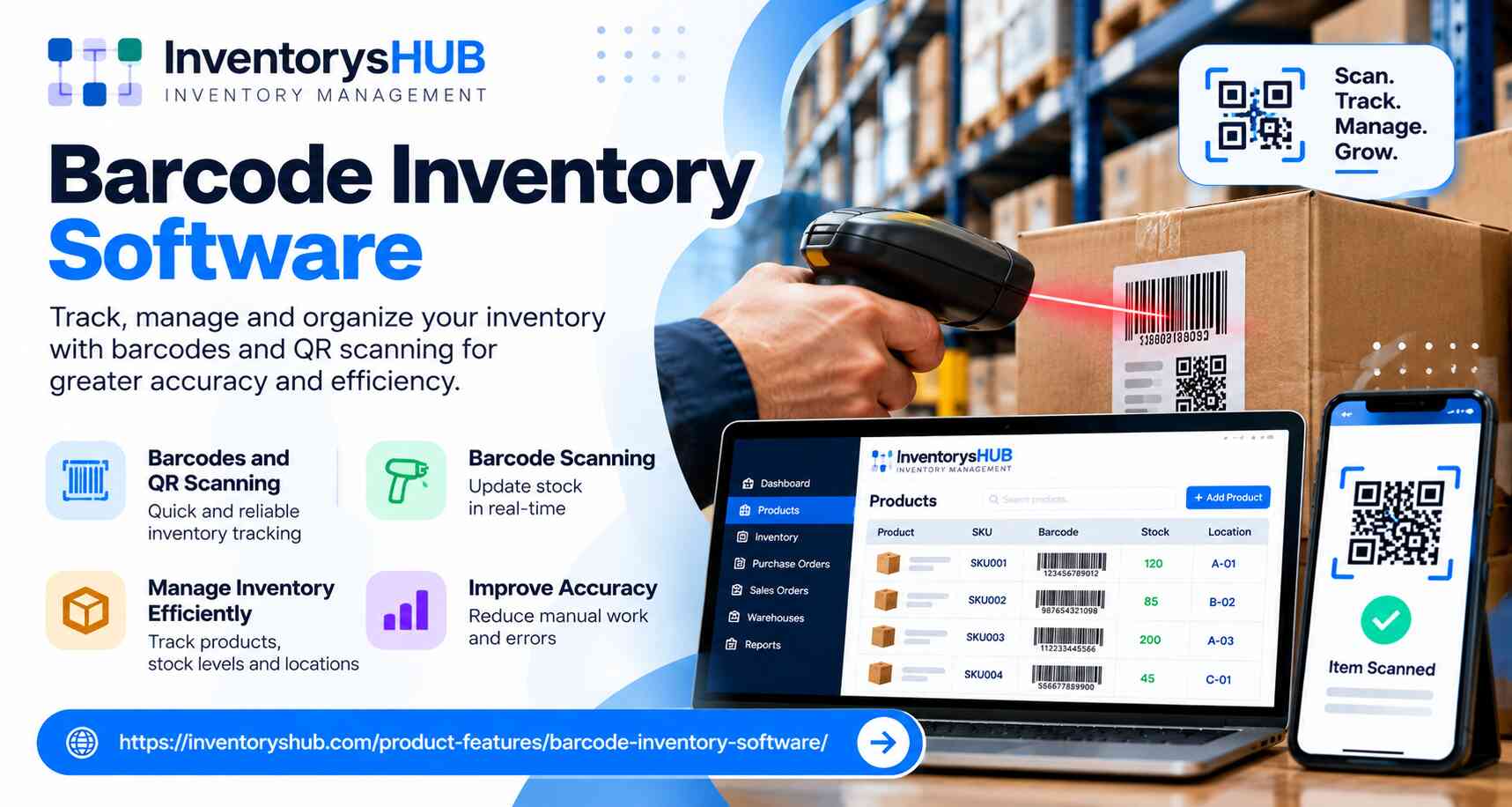
Building Better Stock Visibility With Barcode Technology
Inventory management becomes increasingly challenging as businesses handle larger product catalogs, frequent stock movements, and multiple storage locations. Employees need to know what products are available, where items are stored, how much stock is on hand, and when inventory information was last updated. When these activities depend heavily on manual records, maintaining accurate information can require considerable time and effort.
Barcode Inventory Software can provide a structured way to connect physical products with digital inventory records. By giving products a consistent identification method, businesses can create more organized processes for receiving, counting, storing, moving, and fulfilling inventory.
One of the most important parts of inventory management is product identification. Employees need to distinguish between products before making changes to stock information. This can become difficult when a business manages products with similar names, different sizes, colors, models, or variations. Searching through long product lists every time an item needs to be handled can make routine work slower.
Barcode-based identification provides a straightforward alternative. Employees can use a product's barcode to recognize the item and continue with the appropriate inventory activity. This can make the process easier to repeat and reduce the amount of manual searching required during daily operations.
Improving Product Identification and Inventory Accuracy
Receiving is one of the first stages of an item's inventory lifecycle. When new products arrive, employees may need to verify the shipment, identify each product, check quantities, and update inventory records.
Manual receiving can become difficult when shipments contain a large number of items. Employees may have to enter product codes individually or search for products in a database. These repeated activities can consume time and may create opportunities for incorrect entries.
A barcode-based receiving process can give employees a consistent method for identifying incoming products. Instead of treating every item as a separate manual search, teams can follow a repeatable process for checking and recording stock.
The objective is not to eliminate verification. Businesses still need to confirm that received products and quantities are correct. Barcode technology can simply provide a more organized way to perform these checks.
Physical inventory counts are another important part of stock management. Businesses need to compare physical products with their recorded inventory information to identify differences.
Counting becomes more complicated as product catalogs grow. Employees may need to move through shelves, storage areas, or warehouse sections while identifying products and recording quantities.
A consistent product identification process can make this work easier to organize. Employees can work through an area systematically rather than relying entirely on product names or handwritten records.
Regular counting can also help businesses discover discrepancies earlier. If a difference is identified between physical stock and recorded information, employees can investigate the reason and correct the relevant process when necessary.
Streamlining Warehouse and Order Management
Warehouses involve constant product movement. Items arrive, enter storage, move between locations, become available for picking, and eventually leave the facility. Each movement creates an opportunity for inventory information to become outdated if the process is not clearly defined.
Barcode technology can support warehouse organization by giving employees a consistent way to identify products during these movements. Businesses can establish procedures for receiving, storing, transferring, counting, and picking products while maintaining a common identification method.
This becomes particularly useful when several employees or teams handle the same inventory. A standardized process reduces dependence on individual working habits and gives employees a clearer understanding of how products should be handled.
Many inventory activities involve repetitive work. Employees may repeatedly search for product records, enter item numbers, check quantities, and update stock information. Each task may seem small, but the combined workload can become significant over time.
Barcode scanning can help reduce some of this repetition by providing a direct way to identify products. Employees can spend less time searching for information and more time completing the operational task.
Reducing repetitive work can also help businesses create more consistent processes. Instead of allowing every employee to handle product identification differently, businesses can define a common procedure that can be followed across daily activities.
Accurate product identification is also important during order fulfillment. Employees need to locate the correct products, verify quantities, and prepare items for shipment.
When products have similar names or packaging, manually checking each item can create additional work. Barcode identification can become part of the picking and packing process, giving employees a consistent method for confirming products.
A structured fulfillment process can be especially useful when order volumes increase. Employees can follow defined steps rather than relying entirely on memory or manual searches.
Barcodes and QR scanning can also support product identification across different inventory activities. Depending on business requirements, scanning can be incorporated into receiving, counting, stock movement, picking, and other routine processes.
Building a Scalable Inventory Workflow
Businesses with multiple storage areas face additional inventory challenges. Products may be distributed across warehouses, rooms, shelves, or other locations. Without clear procedures, employees may have difficulty determining where products are currently stored. This can lead to additional searching and unnecessary movement.
A centralized inventory approach combined with consistent product identification can help businesses maintain better visibility across locations. Employees can use the same basic process when handling products regardless of where the inventory is stored.
Inventory processes should also be able to adapt as a business grows. A manual approach that works for a small product catalog may become difficult to maintain when the number of products, orders, and stock movements increases.
Barcode-based inventory management can provide a foundation for creating repeatable processes. Businesses can establish clear procedures that remain understandable even when inventory activity becomes more complex.
Growth may introduce new employees, additional storage locations, and higher order volumes. A standardized identification process can help new team members understand how products should be handled and recorded.
Technology alone does not guarantee accurate inventory information. Businesses still need reliable product data, clear procedures, employee training, and regular checks.
The most effective approach is to make barcode identification part of a broader inventory workflow. Employees should understand how products are received, where stock information is updated, how inventory is counted, and what happens when a discrepancy is discovered.
Training is particularly important. When employees understand the same procedures, businesses can maintain greater consistency across shifts and departments.
Good inventory management depends on having a clear view of available products. Businesses need reliable information when planning purchases, preparing orders, organizing storage, and reviewing stock levels.
Barcode-based processes can contribute to this visibility by making product identification more consistent. When inventory activities are recorded through a structured workflow, businesses can develop a clearer connection between physical products and their digital records.
This can make everyday inventory decisions easier to manage and provide a stronger foundation for future growth.
Modern inventory operations require more than simply recording product quantities. Businesses need reliable identification methods, organized procedures, and consistent information across receiving, storage, counting, movement, and fulfillment.
Barcode technology can support these requirements by giving employees a practical way to identify products during everyday inventory activities. It can reduce some repetitive manual work, support warehouse organization, improve product visibility, and help businesses establish processes that can adapt as inventory grows.
The goal is not simply to add scanning to an existing process. The greater objective is to create an inventory workflow that employees can follow consistently and that businesses can maintain as their operations become more complex.
A well-structured barcode inventory process can therefore become an important part of modern stock management, helping businesses connect physical products with reliable digital information while creating a more organized approach to everyday inventory operations.