Las Vegas at Night by Air: Complete Guide to Aerial Tours, Night Views, and Safety
-
- March 07th, 2026
- 256 views

Get a free topical map and start building content authority today.
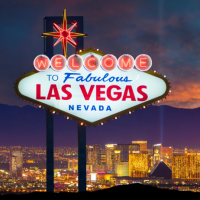
Seeing the Strip light up from above is a signature Las Vegas experience; this guide explains how to plan Las Vegas at night aerial tours, what to expect from different aircraft, and how to stay safe and get the best photos. Detected intent: Informational
Short flights—helicopters, small planes, and helicopter-night routes—offer unique skyline views, while evening observation decks and the High Roller wheel provide accessible alternatives. Use the NV Night & Air Checklist below, compare flight times and operator credentials, and follow FAA and local rules for the safest outcome.
Las Vegas at night aerial tours: what to expect
Las Vegas at night aerial tours typically come in two flavors: helicopter tours that fly the Strip and short fixed-wing flights that include downtown and surrounding desert. Nighttime lighting dramatically changes distances and depth perception, so pilots fly specific routes and altitudes to maximize landmarks such as the Bellagio fountains, the Luxor pyramid, and Fremont Street. The busiest launch points are nearby heliports and small airports; expect boarding procedures similar to commercial charters.
Types of night flights and how they differ
Helicopter night tours
Helicopters hover and fly lower, offering immersive, close-up perspectives. These tours often last 10–30 minutes and include the Strip corridor and downtown. Advantages include stability at low speed and the ability to hover for photos; drawbacks include higher per-minute cost and sensitivity to wind.
Fixed-wing night flights
Small planes (single- or twin-engine) fly higher and cover more ground, helpful for combining the Strip with surrounding views like Red Rock Canyon or the Hoover Dam at night. Fixed-wing aircraft are generally more affordable per mile but offer a less intimate feel.
Observation decks and urban air alternatives
Not every skyline-view experience needs an aircraft. The High Roller observation wheel, SkyPod at the STRAT, or rooftop lounges provide high, stable viewpoints with minimal motion and zero aviation coordination.
NV Night & Air Checklist (named framework)
- Credentials: Confirm operator certification, Part 135 air carrier status, and pilot night-rating where required.
- Timing: Book during civil twilight or early night for the best balance of light and visibility.
- Weather: Check local METAR/TAF or operator forecast for wind and visibility.
- Equipment: Bring a camera with a fast lens, a small tripod or stabilizer, and motion-sickness remedies if sensitive.
- Logistics: Arrive early, expect ID checks, and plan ground transport to/from remote heliports.
Booking, timing, and regulations
Best time to fly
Flights that start 20–40 minutes after sunset capture the twilight glow while leaving the Strip lights vivid. Late-night flights after 11 p.m. are possible but may pass over quieter areas with fewer lit landmarks.
Regulations and safety
Operators follow FAA regulations and local airspace restrictions. For official safety and regulatory information, reference the Federal Aviation Administration (FAA). Confirm that the operator holds appropriate air-carrier certification and insurance.
Practical tips for better photos and comfort
- Use a fast lens (f/2.8–f/4) and set ISO moderately high to balance noise and shutter speed.
- Choose a side seat for the best Strip view—ask the operator about preferred seating during booking.
- Tape or secure loose straps and pockets to avoid dropped items during takeoff and landing.
- Bring ear protection for helicopters and sunglasses for pre-flight glare; dress in layers for temperature changes.
Trade-offs and common mistakes
Trade-offs
- Cost vs. duration: Short helicopter hops are more expensive per minute but deliver dramatic, low-altitude views; longer fixed-wing flights are cost-effective for covering wider areas.
- Proximity vs. comfort: Lower-altitude flights yield better photos but can be noisier and bumpier.
- Twilight vs. full night: Twilight gives color gradients and usable ambient detail; full night emphasizes lights but reduces visible landscape contrast.
Common mistakes
- Booking the latest possible departure and missing the best light, or boarding too early with cameras still in backpacks.
- Skipping operator verification—always confirm Part 135 certification or a reputable local operator record.
- Expecting stable tripod shots from a helicopter—handheld stabilized settings work better for moving aircraft.
Short real-world scenario
Example: A two-person group books a 20-minute helicopter that departs 30 minutes after sunset. The pilot flies the Strip corridor north to south, circles the Bellagio for a slow pass, then crosses to Fremont Street for a downtown sweep. The passengers use high-ISO settings and steady their cameras against the helicopter frame. The result: sharp city-light photos and a clear sense of Las Vegas’ scale without motion-sickness issues because of the early-evening launch and calm weather.
Core cluster questions
- What does a typical helicopter night tour of the Las Vegas Strip include?
- How to compare helicopter and fixed-wing night flights over Las Vegas?
- What are safety credentials to check before booking a Las Vegas air tour?
- When is the best time to photograph Las Vegas from the air at night?
- What alternative night-view options exist if aerial tours are unavailable?
Practical tips (3–5 actionable points)
- Confirm seating preference at booking—side seats produce the best skyline views.
- Bring a compact stabilizer and use continuous autofocus with burst mode to increase keepers.
- Check the operator’s minimum passenger weight and combined load policy to avoid last-minute seat changes.
- Ask about refund or reschedule policies if weather closes the flight—many operators allow flexible rebooking within 24–48 hours.
How to choose the right operator
Verification checklist
- Check FAA registration and Part 135 air carrier status.
- Look for recent customer reviews focused on safety and punctuality, not just marketing language.
- Confirm pilot night flight experience and instrument currency if flying after dusk.
FAQ
Are Las Vegas at night aerial tours worth it?
Yes for first-time visitors or photography-focused travelers—the elevated perspective transforms familiar landmarks into a compact, sparkling panorama. Consider cost, motion sensitivity, and weather before booking.
What is the difference between a Las Vegas night flight and a daytime tour?
Night flights prioritize illuminated landmarks and condensed city lights, while daytime tours emphasize landscape detail and nearby natural features like Red Rock Canyon or the Hoover Dam.
Can anyone take a helicopter over Las Vegas at night?
Passengers must meet operator safety requirements, which may include age, weight distribution, and ID. Operators will also confirm acceptable medical conditions—pregnancy or severe motion sickness should be discussed in advance.
How should cameras be set up for aerial night photos?
Use wide apertures, high ISO, and shutter speeds fast enough to reduce motion blur—typically 1/60s or faster in a helicopter. Stabilize against the aircraft frame and take multiple exposures to increase the chance of clean shots.
Are drones allowed for night photography over the Strip?
No. The Las Vegas Strip and most urban airspace are restricted; recreational or commercial drone flights over crowds and near the Strip are prohibited and enforced by FAA and local authorities.