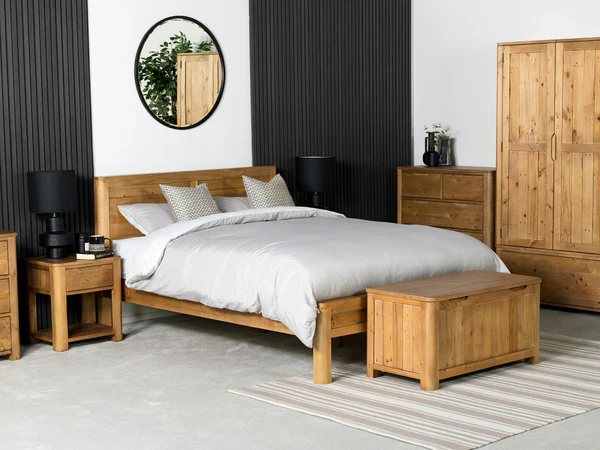
Double Beds with Storage: Choosing Between Double, Queen & King for Comfort and Elegance
-

- March 05th, 2026
- 289 views
Choosing the right bed impacts daily comfort and bedroom style; double beds with storage can maximize space while improving functionality. This guide explains how storage-equipped double, queen, and king beds differ, which storage types work best for specific rooms, and how to balance comfort with elegant design.
Detected intent: Informational
Main focus: double beds with storage
Secondary keywords: king vs queen bed size, storage beds for small bedrooms
Core cluster questions:
- How much storage does a storage bed typically provide?
- Which storage bed type is best for small bedrooms?
- How do mattress depth and storage mechanisms interact?
- What are the weight and clearance considerations for drawer vs lift-up beds?
- How to style a storage bed for a modern bedroom aesthetic?
double beds with storage: benefits, types, and how to choose
Storage beds combine sleeping surface and storage into one footprint—useful for small apartments, seasonal clothing, or keeping bedding tidy. Benefits include increased usable storage, reduced need for extra furniture, and cleaner sightlines that support elegant design. Common storage mechanisms include under-bed drawers (sliding drawers), ottoman lift (gas-lift hinged base), and integrated headboard cabinets or shelves.
Storage types and how they compare
- Under-bed drawers — Pull-out drawers provide organized compartments for linen and clothing. Best when there is enough clearance to slide drawers fully.
- Lift-up (ottoman) bases — Full-depth storage accessed by lifting the mattress platform. Offers more cubic volume but requires clear vertical room and a reliable hinge/gas lift.
- Platform with cubbies or open compartments — Easier access but less dust protection; works well for baskets and open storage styling.
- Headboard storage — Shelves or cabinets in the headboard add nightstand-like functionality and can reduce bedroom clutter without increasing mattress height.
Sizes: double vs queen vs king — practical size guidance
Deciding between double, queen, and king sizes depends on room footprint and user needs. Use the king vs queen bed size comparison to match dimensions and circulation space: a double is compact for single sleepers or tighter rooms; a queen is the most common choice for couples; a king provides generous sleeping area at the cost of a larger footprint. Remember that storage volume scales with frame size—king storage beds can hold substantially more, while double storage beds optimize space in smaller rooms.
Materials, durability, and mattress compatibility
Frame materials (solid wood, plywood, engineered wood, metal) influence durability and noise. Gas lifts should be rated for mattress weight—check manufacturer load limits when pairing thick hybrid or memory foam mattresses with ottoman bases. Slatted bases and ventilation are important for mattress longevity; some storage beds include vents or breathable platforms to prevent moisture buildup.
Design, styling, and layout: making storage beds look elegant
Storage beds can read heavy if proportions or finishes are off. Keep these styling principles in mind:
- Choose a low-profile frame or recessed base to maintain a lighter visual weight.
- Match finishes to bedroom hardware (door, dresser) for cohesion; a single contrast accent (textiles or headboard fabric) keeps the look deliberate.
- Use under-bed storage organizers and uniform storage bins for a clean interior; visible compartments are best styled with baskets and coordinated linens.
BED-FIT checklist (a named practical selection framework)
Use the BED-FIT checklist to evaluate options quickly:
- Base type — drawers, lift-up, platform; evaluate access and volume.
- Ergonomics — mattress height, ease of use, hinge effort.
- Dimensions — frame footprint vs room layout and clearance.
- Finish and fitting — materials, finish durability, hardware quality.
- Internal organization — compartments, dividers, bin compatibility.
- Technical limits — weight capacity, ventilation, warranty.
Short real-world example
Scenario: A 12' x 11' bedroom needs a full sleeping surface and storage for off-season clothing. A double bed with storage (drawer units on both sides) was chosen to maximize floor clearance and maintain a walking path on both sides. The BED-FIT checklist ensured the chosen Frame had a slatted, ventilated base and drawers with soft-close runners rated for 30 kg each—preventing noise and wear over time.
Practical tips for buying and installing storage beds
- Measure the room with doors and drawers open; allow at least 24 inches of clearance at the foot of the bed for comfortable circulation.
- Confirm mattress depth and lift mechanism compatibility—deep memory foam mattresses may reduce usable lift clearance in ottoman beds.
- Check load ratings for gas lifts and drawer hardware; multiply mattress weight by two to include occupants when estimating required capacity.
- Consider delivery and assembly logistics—some lift-up bases are heavy and require two strong installers.
- Test the noise and smoothness of drawers or hinges in-store if possible; full-height drawers need solid runners to avoid sagging.
Common mistakes and trade-offs
- Overfocusing on capacity — Choosing the largest storage option can overwhelm a small room and reduce circulation. Balance cubic storage with usable floor space.
- Ignoring mattress compatibility — Some thick mattresses reduce lift clearance or make drawer access awkward.
- Undervaluing hardware quality — Cheap runners or hinges lead to premature failure and noisy operation.
- Skipping ventilation — Closed storage without airflow can trap moisture; choose slatted platforms or ventilated designs for foam mattresses.
For standardized mattress dimensions and general best practices on bed sizes, consult an authoritative sizing guide such as the Sleep Foundation mattress size resource: sleepfoundation.org/bed-sizes.
Installation and maintenance checklist
- Assemble on-site when possible to avoid damage during transport.
- Lubricate runners and hinges per the manufacturer manual to prolong life.
- Rotate stored items seasonally and use breathable storage bags for textiles.
- Inspect gas lifts annually for leaks or loss of pressure; replace worn hardware promptly.
Frequently Asked Questions
Are double beds with storage a good option for small bedrooms?
Yes. Storage beds for small bedrooms add wardrobe capacity without extra furniture, but choose drawer or low-profile designs to maintain circulation. Measure to ensure drawer access and mattress clearance before buying.
How does a double storage bed compare with a queen or king in terms of comfort and space?
Comfort depends on mattress size and personal needs. Queen and king beds offer wider sleeping surfaces for couples; double beds with storage optimize the footprint for single sleepers or tighter rooms while still offering useful storage volume.
How to ensure mattress compatibility with ottoman lift storage?
Confirm the frame's maximum lift capacity and internal height. Thicker mattresses reduce interior clearance—choose a mattress depth and weight within the frame's specified limits and allow room for bedding.
double beds with storage: what maintenance is needed for the mechanisms?
Regularly clean tracks and hinges, check fasteners, and follow the manufacturer’s maintenance instructions. Lubricate metal runners and tighten hardware annually to prevent squeaks and ensure smooth operation.
Can a storage bed replace a wardrobe or dresser entirely?
Possibly, depending on the amount and type of clothing. Storage beds handle folded items well, but hanging garments and shoes may still require a wardrobe or specialized storage solution. Combine strategies—under-bed organizers plus a compact wardrobe—often yields the best, most elegant result.