Practical Guide to Building Effective Online Advertising Campaigns
-

- February 23rd, 2026
- 1,358 views
Effective online advertising campaigns begin with clear goals, a well-defined target audience, and measurable key performance indicators. This guide explains the essential steps for planning, creating, targeting, measuring, and optimizing online advertising campaigns so that resources are focused on the highest-impact opportunities.
- Start with objectives and KPIs (reach, CTR, conversion rate, CPA).
- Choose channels and creative formats aligned with audience intent.
- Set budgets and bidding rules, and implement robust conversion tracking.
- Use testing, measurement, and attribution to iterate and improve.
Planning online advertising campaigns
Defining clear objectives is the foundation of any successful campaign. Common campaign goals include brand awareness, lead generation, online sales, app installs, and foot-traffic lift. For each goal, identify measurable key performance indicators such as click-through rate (CTR), conversion rate, cost per acquisition (CPA), and return on ad spend (ROAS).
Identify the target audience
Segment audiences by demographics, interests, intents, purchase stage, and lifetime value. Use first-party data such as website behavior and CRM records to build high-value segments, and supplement with contextual signals where permitted by data privacy regulations.
Choose channels and formats
Select channels based on audience behavior and campaign objective. Search-style placements are often best for intent-driven conversions, while display, video, and social formats can build awareness and consideration. Consider programmatic advertising and direct buys depending on scale and control needs.
Designing ads and creative assets
Craft clear messaging and calls to action
Ad creative should match audience intent and the landing experience. Use concise headlines, benefit-focused copy, and a prominent call to action. Ensure the messaging aligns with any terms and conditions or legal requirements applicable to the product or service.
Format and technical considerations
Create assets for multiple sizes and aspect ratios to fit different placements. Optimize image compression and video length for loading performance. Include accessible text alternatives and readable fonts to improve reach and compliance with accessibility best practices.
Targeting, bidding, and budget management
Budget allocation
Allocate budgets across channels by expected ROI and campaign stage. Use a test-and-scale approach: allocate small budgets to validate audiences and creative, then scale investment to the highest-performing combinations.
Bidding and optimization strategies
Select bidding strategies aligned with KPIs: maximize clicks for awareness, maximize conversions for direct response, or use value-based bidding when customer lifetime value is available. Include frequency caps to limit ad fatigue and apply bid adjustments for high-value segments.
Measurement, analytics, and optimization
Conversion tracking and attribution
Implement conversion tracking for the actions that matter, such as purchases, form submissions, or sign-ups. Choose an attribution model that fits campaign goals—last-click, time-decay, or data-driven approaches—and be consistent when comparing performance over time.
Key metrics to monitor
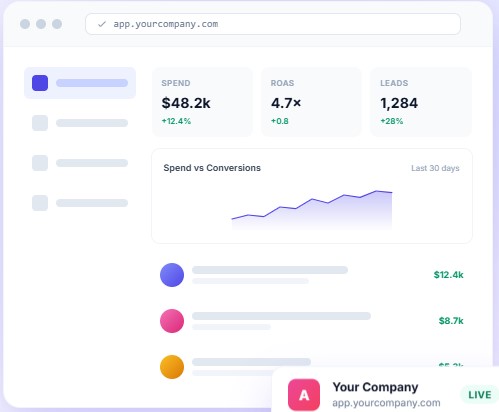
Track impressions, CTR, conversion rate, CPA, ROAS, and engagement metrics like view-through conversions for video. Monitor both short-term response and longer-term indicators such as retention and lifetime value to avoid optimizing for vanity metrics alone.
Testing and iterative improvement
Run A/B or multivariate tests for headlines, images, offers, and landing pages. Use statistically significant sample sizes and holdout groups to validate lifts. Document results and create playbooks for scaling winners.
Privacy, compliance, and disclosure
Adherence to data privacy laws and advertising standards is essential. Follow guidance from regulators such as the Federal Trade Commission and industry bodies on disclosures and consumer protection. For official guidance, see the FTC's advertising and marketing resources: https://www.ftc.gov.
Channels, formats, and technical partners
Common channel options
Common channels include search-style placements for high intent, display banners for reach, in-stream and out-stream video for storytelling, social feeds for contextual engagement, and programmatic marketplaces for scale. Each channel requires specific creative and measurement approaches.
Working with technical partners
Demand-side platforms (DSPs), ad exchanges, analytics platforms, and tag managers help with delivery, targeting, and measurement. Ensure technical integration is tested before launch, and validate that tags do not slow page load or conflict with consent management tools.
Quality control and fraud prevention
Implement viewability and brand safety controls, and monitor for invalid traffic and click fraud. Use third-party verification and analytics to maintain media quality and protect campaign performance.
Operational checklist before launch
- Confirm campaign objectives, KPIs, and budget allocation.
- Validate audience segments and targeting logic.
- Ensure creative assets match placement specifications.
- Test conversion tracking, tags, and attribution setup.
- Set reporting cadence and escalation rules for performance issues.
FAQ
How long should online advertising campaigns run to show results?
Duration depends on objective and channel. Awareness campaigns may run continuously to build reach, while performance campaigns typically require several weeks of data to stabilize metrics. Allow time for learning phases and reach statistically reliable sample sizes before deciding on major changes.
What is the most important metric for campaign success?
The most important metric is the one tied directly to campaign objectives. For direct response, cost per acquisition (CPA) or return on ad spend (ROAS) is often primary. For brand campaigns, reach and ad recall measures matter more. Align reporting to business goals rather than single-channel vanity metrics.
How should budgets be adjusted after launch?
Increase budgets gradually for high-performing segments and pause or reallocate underperforming placements. Use a mix of automated rules and manual review to react to seasonal shifts, promotional periods, and market changes.
What privacy considerations affect online advertising campaigns?
Privacy regulations and platform policies can limit tracking and targeting. Implement consent management and privacy-preserving measurement techniques (for example, aggregated reporting and delayed attribution) to comply with legal requirements and user expectations.
How can creative performance be improved quickly?
Iterate on headlines, offers, and imagery using A/B tests focused on lift. Simplify messaging, ensure the landing page aligns with the ad, and reduce friction in conversion paths to improve conversion rate and overall campaign efficiency.
Where to find more guidance on advertising regulations?
Regulatory bodies and industry organizations publish guidance on advertising standards and disclosures. For government-level guidelines in the United States, consult the Federal Trade Commission's resources on advertising and consumer protection.