Carbon Fiber Composites: Advanced Strength with Lightweight Design
-
- Published Updated
- 1,806 views
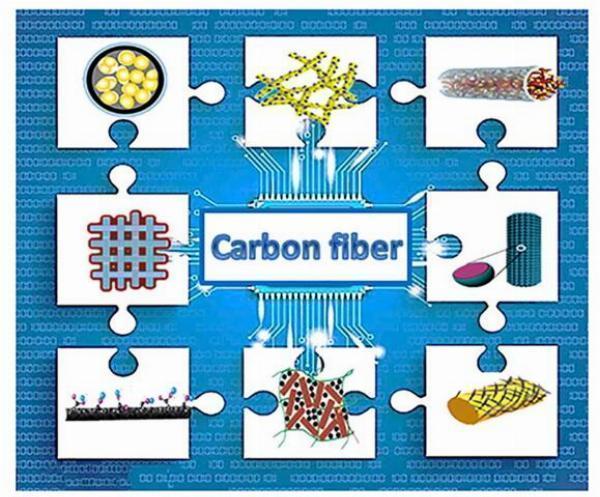
Carbon fiber composites deliver a combination of high strength and low density that has transformed engineering design across aerospace, automotive, sports equipment, and renewable energy. Understanding carbon fiber composites, their structure, manufacturing methods, and design trade-offs helps designers, engineers, and procurement professionals choose materials that meet stiffness, durability, and weight targets while managing cost and lifecycle impacts.
Carbon fiber composites: material basics and properties
Carbon fiber composites typically consist of carbon filaments arranged into woven or unidirectional reinforcements embedded in a polymer matrix (often epoxy for thermoset systems or various thermoplastics). The carbon fibers provide tensile strength and stiffness, while the matrix transfers loads between fibers, resists compression and shear, and protects fibers from environmental damage. Key mechanical and physical properties include high specific strength (strength-to-weight ratio), high specific stiffness, low thermal expansion, and good corrosion resistance compared with many metals.
Microstructure and components
Typical components are: carbon fibers (PAN-based or pitch-based), matrix resin (epoxy, phenolic, PEEK, PEI), sizing and surface treatments to improve fiber-matrix adhesion, and sometimes core materials (foam or honeycomb) in sandwich constructions used for panels and structures.
Mechanical behavior and anisotropy
Composite performance depends strongly on fiber orientation and layup sequence. Unidirectional plies provide maximum strength along fiber axes but little strength transverse to fibers. Laminated designs combine orientations to tailor stiffness and strength for bending, torsion, and shear. Designers must account for anisotropy, fatigue characteristics, impact and delamination risks, and environmental effects such as moisture uptake and temperature.
Manufacturing methods and design implications
Common manufacturing processes
Production techniques include prepreg layup and autoclave curing, resin transfer molding (RTM), vacuum-assisted resin infusion (VARI), filament winding for cylindrical parts, and pultrusion for constant-cross-section components. Additive manufacturing and automated fiber placement (AFP) are expanding possibilities for complex geometries and reduced labor costs.
Design trade-offs and part quality
Choices of process affect part quality, void content, repeatability, and cost. Autoclave-cured prepregs often deliver the highest performance and lowest void fraction but at higher capital and operating cost. RTM and infusion methods can be more cost-effective for higher volumes or larger parts. Automated production (AFP, robotic layup) reduces variability and labor intensity but requires upfront tooling and programming investment.
Applications, standards, and regulation
Major application areas
Widely used sectors include aerospace primary and secondary structures (where Boeing, Airbus, and regulators require stringent certification), automotive components for high-performance and fuel-efficiency gains, wind turbine blades where long span and low weight are critical, sporting goods, marine hulls, and select civil infrastructure elements like pedestrian bridges. Medical devices and prosthetics employ composites where customized stiffness-to-weight is advantageous.
Testing, standards, and certification
Standardized test methods from ASTM and ISO define tensile, compression, shear, impact, and environmental exposure tests. Aerospace certification processes involve regulators such as the Federal Aviation Administration (FAA) or equivalent civil aviation authorities. Material databases and test plans are essential for structural analysis and compliance during design and certification.
Sustainability, repair, and lifecycle considerations
Recycling and end-of-life options
Recycling remains a challenge for thermoset-based carbon fiber composites because curing creates crosslinked networks. Current recycling approaches include pyrolysis to recover fibers, solvolysis for chemical recovery of resin components, and repurposing shredded material for non-structural uses. Thermoplastic matrices improve recyclability through remelting but currently have higher processing demands and cost trade-offs.
Repair and maintenance
Repair methods range from patching and local resin injection to bonded patch repairs and full component replacement. Inspection techniques include visual inspection, ultrasonic C-scan, thermography, and X-ray for internal defects. Maintenance planning should address fatigue, impact damage susceptibility, and environmental degradation.
Emerging trends and future directions
Material and process innovation
Research focuses on multifunctional composites (integrated sensing, electrical conductivity), hybrid fiber systems combining carbon with glass or natural fibers, incorporation of nanomaterials to improve interlaminar toughness, and automation to lower unit cost. Improvements in recycling technology and circular material flows are an active area of academic and industrial work.
Digital design and simulation
Advances in finite element modeling, digital twin approaches, and AI-driven topology optimization enable designers to exploit anisotropy and place material only where needed, maximizing performance while minimizing weight. Coupling manufacturing constraints with design software reduces iterations and improves manufacturability.
For authoritative measurement and material data, reference documents and test method descriptions from national standards and research organizations are recommended for design validation and certification. One such source is the National Institute of Standards and Technology (NIST): https://www.nist.gov.
Practical guidance for engineers and buyers
Selection checklist
Consider application load cases, required stiffness and strength, environmental exposures, manufacturability and tooling costs, inspection and repair strategy, certification requirements, and lifecycle/recycling expectations. Early supplier engagement and prototype testing reduce schedule and cost risk.
Cost drivers
Key cost factors include fiber type and volume fraction, matrix system, tooling and curing equipment, labor intensity, and certification testing. Volume production and process automation reduce per-part cost but require capital investment.
FAQ
What are carbon fiber composites and how do they differ from other materials?
Carbon fiber composites are engineered materials made by embedding carbon fiber reinforcements in a polymer matrix. They differ from metals in being anisotropic, offering much higher strength-to-weight and stiffness-to-weight ratios, and being more resistant to corrosion. Compared with other composites (for example glass-fiber-reinforced polymers), carbon fiber typically delivers higher stiffness and lower density but at higher cost.
Are carbon fiber composites recyclable?
Recycling is technically possible but depends on the matrix system. Thermoplastic-based composites are more readily reprocessed; thermoset-based systems require pyrolysis, solvolysis, or repurposing of recovered fibers. Ongoing research aims to improve recovery rates and economic viability.
How do manufacturing methods affect properties of carbon fiber composites?
The selected process influences void content, fiber alignment precision, and achievable volume fraction, all of which affect strength, stiffness, and fatigue life. High-performance aerospace parts often use autoclave-cured prepregs for best consistency, while RTM and infusion are chosen for larger or cost-sensitive components.
What standards apply to carbon fiber composite testing?
Testing standards from ASTM and ISO provide specific methods for measuring tensile, flexural, compression, interlaminar shear, and impact properties. Regulatory authorities such as aviation certification agencies require documented test evidence for safety-critical applications.
How can a project balance weight savings against cost?
Balance is achieved by targeted use of composites where weight reduction yields performance or operational cost benefits (for example fuel savings in transport or increased range). Hybrid designs, selective reinforcement, and simulation-driven optimization help minimize material use and cost while achieving design goals.
Related Articles