
Chiller Service and Repair in Los Angeles: A Practical Guide for Commercial Buildings
-

- Published Updated
- 72 views
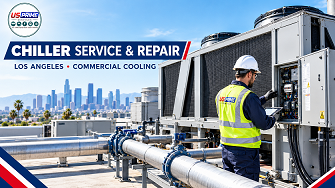
A chiller rarely fails without warning. A room won't cool, a pump sounds different, or the energy bill creeps up. These small signs are easy to miss. When the system finally stops, the cost goes beyond the repair. Tenants get uncomfortable, equipment overheats, and work slows down.
This guide explains what a chiller does, the warning signs to watch for, and the common causes of trouble. It also covers when to call a professional, how to plan a new unit, and what to do in an emergency.
Chiller service is the planned work that keeps a cooling system running the way it was designed. It usually includes inspecting the unit, cleaning heat-transfer surfaces, checking refrigerant levels, testing electrical connections, and reviewing performance. The goal is to catch small problems before they cause a shutdown.
A chiller removes heat from a liquid, usually water or a water-glycol mix. The cooled liquid travels through pipes to air handlers or process equipment. The heat is then released outside, either through a cooling tower or an air-cooled condenser.
Four main parts do the work: the compressor, the condenser, the evaporator, and the expansion device. If one part struggles, the whole system feels it. That is why a small fault can grow into a large one.
Warning Signs Your Chiller Needs Attention
Watch for these signals:
Rooms or equipment that do not reach the set temperature
Temperatures that swing up and down
New noise or vibration from the compressor or pumps
Oil or fluid leaks around the unit
Higher energy use with no added load
Frequent alarms or trips
A daily operating log makes these changes easier to spot. The daily chiller log is described as the first step toward keeping efficiency high. Even a few notes on temperatures and pressures help a technician see trends.
What Causes Chiller Problems
Several issues show up again and again.
Refrigerant leaks are one. Leaks, along with air and moisture getting into the system, lower efficiency and reliability. Dirty tubes are another. Scale, algae, and mud coat the tube walls and make the unit work harder. Poor water treatment makes this worse.
Electrical and control faults also cause shutdowns. So do pump and water-flow problems. These are possible causes, not a diagnosis. Only testing on site can confirm what is wrong.
Repair Work and When to Call a Professional
Chiller repair starts with finding the real cause. A good technician checks pressures, temperatures, electrical parts, controls, and water flow before replacing anything. Fixing the symptom without the cause often means the problem returns.
Chiller service repair works best when maintenance and fixes are planned together. A repair visit is a good time to note worn parts and fouled coils. Those notes can shape the next maintenance plan.
Some tasks are not for building staff. Federal rules require EPA Section 608 certification for anyone who services or repairs equipment that may release refrigerant. Electrical work on a chiller also needs a qualified person. Staff can safely check the log, look for visible leaks, and keep the area around the unit clear. Then they should call a professional.
Working With a Qualified Provider
Usprimeservices provides commercial and industrial chiller work in Los Angeles, including maintenance, repair, and installation. Before hiring any provider, ask about experience with your type of chiller, such as air-cooled, water-cooled, scroll, screw, or centrifugal. Ask about technician certification, parts access, and written estimates.
Installation and Replacement
Chiller install planning begins with a load calculation. Size matters. A unit that is too large may cycle on and off too often. A unit that is too small cannot keep up on hot days. Good planning also covers electrical capacity, piping, structural support, controls, and final testing.
Repair or replace? Look at the unit's age, how often it breaks, refrigerant availability, energy use, and how much downtime your business can handle. A technician can walk through these factors with you. Exact costs depend on the system, so ask for a written quote.
Local Considerations in Los Angeles
Chiller service Los Angeles needs often rise before summer. Cooling demand is high in the warm months. A unit that struggles in spring may fail in the first heat wave. An inspection before the hottest weather gives you time to fix issues on your schedule.
Chiller repair Los Angeles searches usually come from people who need an answer fast. Still, take a few minutes to compare providers. Ask what the diagnosis includes, how parts are sourced, and how the work will be explained to you.
Chiller install Los Angeles projects need early coordination. Talk to building management about access, noise, and shutdown windows. Ask which refrigerant the new unit uses. Refrigerant rules are changing, so confirm the choice meets current federal and California requirements.
When a Chiller Fails Unexpectedly
Emergency chiller service is for failures that threaten people, products, or operations. Examples include an overheating server room, a medical area that must stay cool, or a production line that cannot stop. Decide early what is urgent and what can wait for the next business day.
Emergency chiller repair goes faster when you share clear details. Have the make, model, alarm codes, and a short description of what happened. Note when the problem started and when the unit was last serviced. If you smell refrigerant or see burning or sparks, move people away and treat it as a safety issue first.
Emergency chiller service repair Los Angeles requests are easier to handle when a plan exists before the breakdown. Keep a contact number, equipment details, and a list of critical areas in one place. Your team will not need to search for them under pressure.
Maintenance and Prevention
Simple habits lower the odds of a surprise failure:
Keep a daily or weekly operating log.
Follow the manufacturer's maintenance schedule.
Clean condenser tubes on time. Many centrifugal chillers need condenser tubes brush cleaned at least once a year.
Treat condenser water to limit scale, corrosion, and growth.
Find and fix leaks instead of only adding refrigerant.
Test controls, sensors, and safety devices on a schedule.
Source: Chiller Service and Repair in Los Angeles: A Practical Guide for Commercial Buildings
How a Chiller Works
Related Articles




Publishing note:
This article was submitted by usprime service. IndiBlogHub provides the publishing platform. Contributor articles may include AI-assisted writing; publication does not imply endorsement by Team IndiBlogHub.
Please review our Disclaimer and Privacy Policy for more information.
