How to Choose Montessori Learning Equipment for Every Developmental Stage
-

- February 23rd, 2026
- 1,485 views

FREE SEO Topical Map Generator: Find Your Next Content Ideas
Choosing the right Montessori learning equipment is central to creating a prepared environment that supports independence and learning. Montessori learning equipment emphasizes hands-on, self-correcting materials that match a child’s sensitive periods and developmental stages. This guide explains how to evaluate materials, select age-appropriate sets, and balance quality, safety, and cost.
- Montessori materials should be purposeful, attractive, and suited to developmental needs.
- Key categories: Practical Life, Sensorial, Language, Math, and Cultural materials.
- Prioritize quality, safety, and correct sizing for age groups.
- Consider new, used, or DIY options while preserving pedagogical integrity.
- Consult a certified Montessori guide or organization for classroom-level decisions.
How Montessori learning equipment supports child development
Montessori learning equipment, often called didactic materials, is designed to isolate one skill or concept so children can focus and achieve mastery. Sensorial materials refine perception; Practical Life activities build fine motor skills and independence; language and math materials introduce abstract ideas concretely. The approach aligns with research on early childhood development and sensitive periods described by Maria Montessori and later educators.
Key features to look for when choosing equipment
Purposeful design and single-skill focus
Choose materials that isolate a single concept or motor skill. Classic examples include bead chains for math sequencing and knobbed cylinders for size discrimination. Materials that are self-correcting help children learn through exploration without constant adult correction.
Child-sized and durable construction
Equipment should be the right scale for small hands and built from durable, non-toxic materials. Smooth edges, appropriate weight, and tactile finish contribute to safe, long-lasting use.
Attractive but simple presentation
Montessori materials are aesthetically pleasing without being flashy. Neutral colors and natural materials support focus; unnecessary lights or sounds often distract from the learning objective.
Age and developmental stage guide
Infants and toddlers (0–3)
Focus on sensory exploration and movement. Simple grasping toys, texture boards, and objects that support reaching and crawling are appropriate. Safety and supervision are essential.
Preschool (3–6)
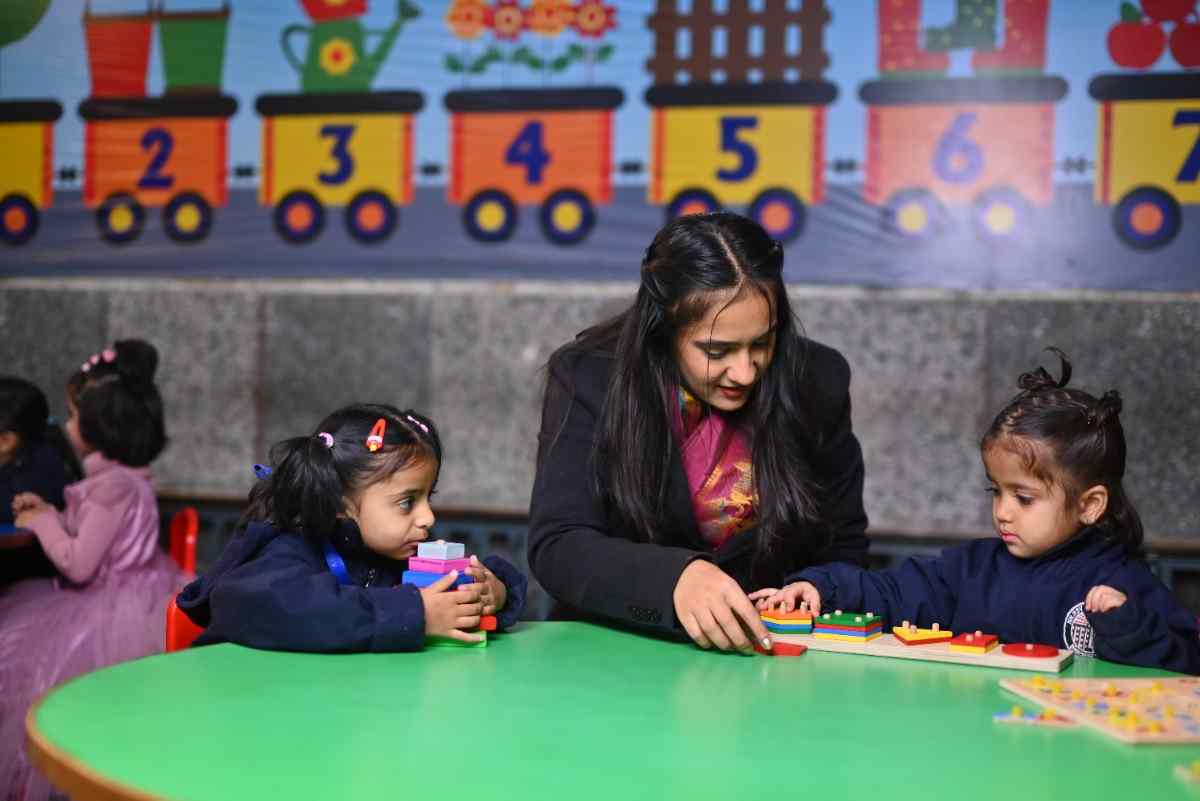
Materials that promote independence are critical: Practical Life sets (pouring, spooning), initial sensorial sets, pink tower, and early language cards. This stage emphasizes concentration and fine motor refinement.
Early elementary (6–9+)
Children transition to abstract thinking. Math chains, grammar symbols, maps, and science materials that allow experimentation and classification suit this stage.
Materials by learning area
Practical Life
Items include dressing frames, child-sized utensils, and pouring sets. These develop coordination, sequencing, and care of the environment.
Sensorial
Sensorial materials isolate qualities such as size, color, weight, temperature, and sound. They lay groundwork for later academic concepts.
Language and Math
Language materials progress from phonemic awareness to reading; math materials use concrete manipulatives that lead to abstraction (e.g., golden beads, number rods).
Cultural and science materials
Geography puzzles, timelines, and simple science experiments broaden knowledge and encourage curiosity about the world.
Safety, quality, and sustainability considerations
Look for non-toxic finishes and materials that meet consumer safety standards. Consider sustainable materials like solid wood over particleboard and avoid small parts for younger age groups. Verify compliance with local safety regulations and product certifications when available.
New, used, or DIY: pros and cons
New materials ensure consistency and safety; used items can be cost-effective but require inspection and cleaning. DIY options allow customization but should preserve correct dimensions and learning intent. When buying used, inspect for damage, missing parts, and wear that could affect the material’s function.
Setting up a prepared environment
Arrange materials on low, accessible shelves grouped by area so children can choose independently. Limit choices to avoid overload and rotate materials periodically to match developing interests. Clear labels and uncluttered presentation support concentration.
When to consult a certified Montessori guide or organization
For classroom implementation or curriculum alignment, consult credentialed educators and recognized organizations. The American Montessori Society provides standards and resources for schools and families to ensure fidelity to Montessori principles.
Budgeting and prioritizing purchases
Start with essentials for Practical Life and Sensorial areas, then add language and math materials as skills progress. Prioritize multiuse items and materials that match current developmental needs. Establish a plan for maintenance and replacement to extend lifespan.
Evaluating vendors and craftsmanship
Choose suppliers who describe materials’ pedagogical purpose, provide clear dimensions, and disclose materials and finishes. Reviews from educators and alignment with accredited training programs can be useful signals.
FAQ
What is Montessori learning equipment and why does it matter?
Montessori learning equipment consists of hands-on, self-correcting materials designed to support developmental learning stages. They matter because they promote independence, concentration, and a gradual move from concrete to abstract thinking.
How to choose Montessori learning equipment for different ages?
Select materials that match sensitive periods: sensory and movement items for infants, Practical Life and sensorial for preschoolers, and more abstract math and language materials for older children.
Are secondhand Montessori materials safe to use?
Used materials can be safe if cleaned, inspected, and refurbished when necessary. Check for missing pieces, loose parts, and damage that could compromise safety or the material’s educational function.
Is Montessori learning equipment expensive to start with?
Costs vary. Prioritize core Practical Life and Sensorial items first. Consider used, DIY, or phased purchases to manage budget without compromising key learning opportunities.