Cosmelan Peel in Riyadh: Complete Guide to Treating Hyperpigmentation
-

- Published Updated
- 1,331 views
The Cosmelan peel in Riyadh is a professional depigmentation protocol used to reduce melasma, post-inflammatory hyperpigmentation, and uneven skin tone. This guide explains candidacy, the in-clinic procedure, aftercare, expected timelines, and how to choose a qualified provider in Riyadh.
- Primary intent: Informational
- Primary keyword: Cosmelan peel in Riyadh
- What it treats: melasma, stubborn dark spots, post-inflammatory hyperpigmentation
- Core checklist included: SAFER aftercare framework
- Core cluster questions: listed below as internal linking targets
Detected intent: Informational
Cosmelan peel in Riyadh: What to expect
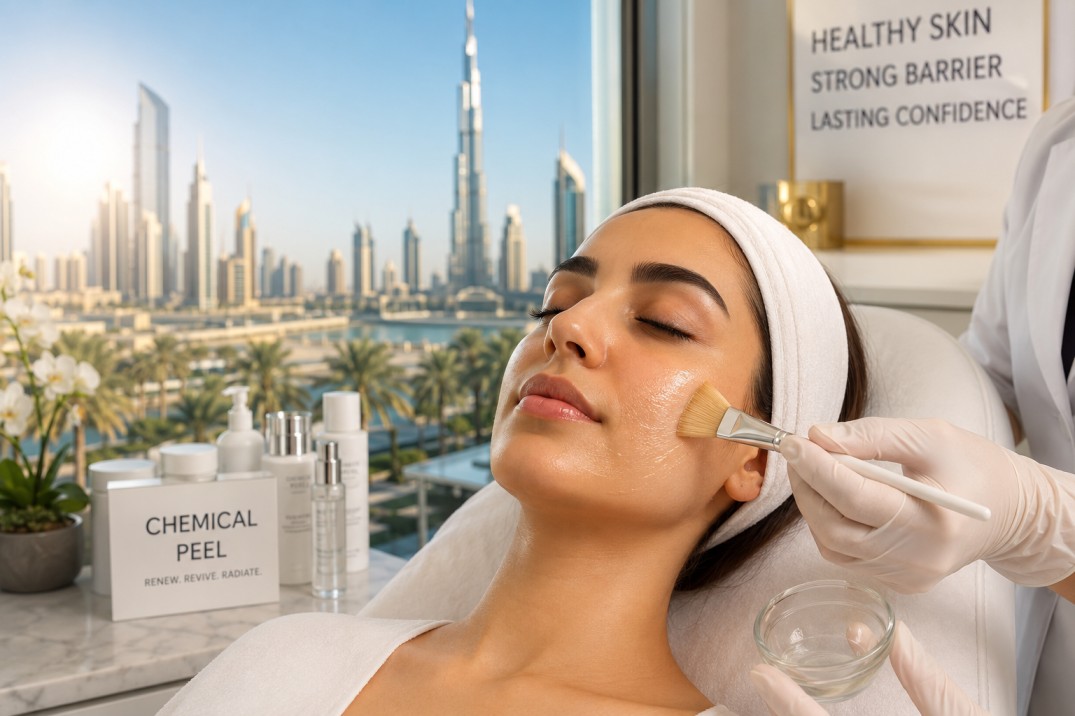
Cosmelan is a two-stage, clinic-led depigmentation protocol combining an in-office topical mask with a controlled home maintenance routine. The in-clinic mask rapidly inhibits melanin production, then a prescribed maintenance cream and strict sun protection help consolidate results. Expect significant peeling, transient redness, and a defined recovery schedule rather than an instant fix.
How Cosmelan works and who should consider it
Cosmelan targets tyrosinase activity and melanin production with azelaic acid derivatives and other depigmenting agents. Typical candidates include people with melasma, epidermal hyperpigmentation, or lingering dark marks after inflammation. Not every skin type or condition is appropriate: active infections, recent isotretinoin use, or unrealistic expectations require alternative approaches.
The SAFER aftercare framework (named checklist)
Use this five-step checklist to support healing and results:
- Screening — pre-procedure assessment for medications, skin history, and photos.
- Application — professional application protocol and documented instructions.
- Follow-up — scheduled clinic checks at 48 hours, 7–14 days, and 1 month.
- Emollients & protection — gentle moisturizers and daily broad-spectrum SPF 50+.
- Recovery monitoring — track rebound hyperpigmentation and adjust maintenance.
Choosing a hyperpigmentation treatment Riyadh clinic
Select a licensed dermatologist or certified clinic experienced with Cosmelan and skin of color. Confirm that pre-treatment screening, test patches, and a written aftercare plan are provided. For general guidance on chemical peel safety, refer to the American Academy of Dermatology: American Academy of Dermatology on chemical peels.
Typical timeline and realistic outcomes
Expect an intense peeling phase starting 2–7 days after the in-clinic mask is removed, with visible improvement by 4–8 weeks. Maintenance treatments or topical regimens may be needed every few months. Results depend on cause of pigmentation, skin tone, and adherence to post-peel sun protection.
Short real-world example
Scenario: A 34-year-old woman with facial melasma and Fitzpatrick skin type IV consults a dermatologist in Riyadh. After screening and a patch test, an in-clinic Cosmelan mask is applied, left for 8–12 hours, then removed. The next days involve redness and peeling. A prescribed maintenance cream and 50+ SPF daily prevent relapse. At 8 weeks, pigment is significantly reduced, but maintenance continues to prevent recurrence.
Post-peel skincare Riyadh: practical tips
- Apply fragrance-free emollients to relieve tightness and support barrier repair.
- Use a broad-spectrum SPF 50+ mineral sunscreen every morning and reapply hourly when outdoors.
- Avoid active exfoliants, retinoids, or strong acids for 4–6 weeks unless cleared by the clinician.
- Follow scheduled clinic reviews to adjust maintenance creams and address rebound pigmentation early.
Practical tips — 4 actionable points
- Schedule treatment outside peak sun months if extensive outdoor exposure is unavoidable.
- Complete a medication review (especially isotretinoin and photosensitizing drugs) before treatment.
- Use non-comedogenic, hydrating products during recovery to prevent irritation-induced hyperpigmentation.
- Keep photographic records to measure progress and guide maintenance decisions.
Common mistakes and trade-offs
Trade-offs include downtime versus pigment reduction: Cosmelan offers strong results but requires visible peeling and strict sun control. Common mistakes are inadequate sun protection, restarting aggressive actives too soon, and skipping follow-up visits. Over-treatment or lack of screening can cause hypopigmentation or prolonged irritation.
Core cluster questions for related articles
- How long does a Cosmelan peel last?
- Who is an ideal candidate for professional depigmentation treatments?
- What is the difference between Cosmelan and at-home bleaching creams?
- How to manage post-peel redness and peeling safely?
- When to see a dermatologist for recurring melasma?
Is Cosmelan peel in Riyadh suitable for all skin types?
Cosmelan can be used on many skin tones, but candidacy depends on individual history, pigmentation type, and risk of post-inflammatory hyperpigmentation. A dermatologist should perform a patch test and assess risks. Lighter downtime options or staged treatment may be preferable for some skin types.
How long until results appear after Cosmelan?
Initial improvement is often visible at 2–4 weeks, with more substantial changes by 6–12 weeks. Maintenance creams and diligent sun protection are essential to preserve results.
What are the main risks and side effects?
Common effects include redness, peeling, and temporary sensitivity. Less common risks are prolonged irritation, infection if aftercare is poor, and paradoxical pigmentation changes. Proper screening and follow-up reduce these risks.
Can pregnancy or recent isotretinoin use affect eligibility?
Yes. Pregnancy is a contraindication for many chemical depigmentation protocols, and isotretinoin often requires a waiting period before undergoing chemical peels. Full disclosure of medications and health status is required for safe treatment planning.
How to maintain results long term?
Long-term maintenance requires daily high‑SPF sun protection, periodic clinic reviews, and a tailored topical maintenance regimen. Lifestyle factors like sun exposure and hormonal changes affect recurrence risk; regular monitoring allows early intervention.