Crypto Payment Providers and Customer Support: Who Helps When a Payment Goes Missing
-

- Published Updated
- 2,637 views
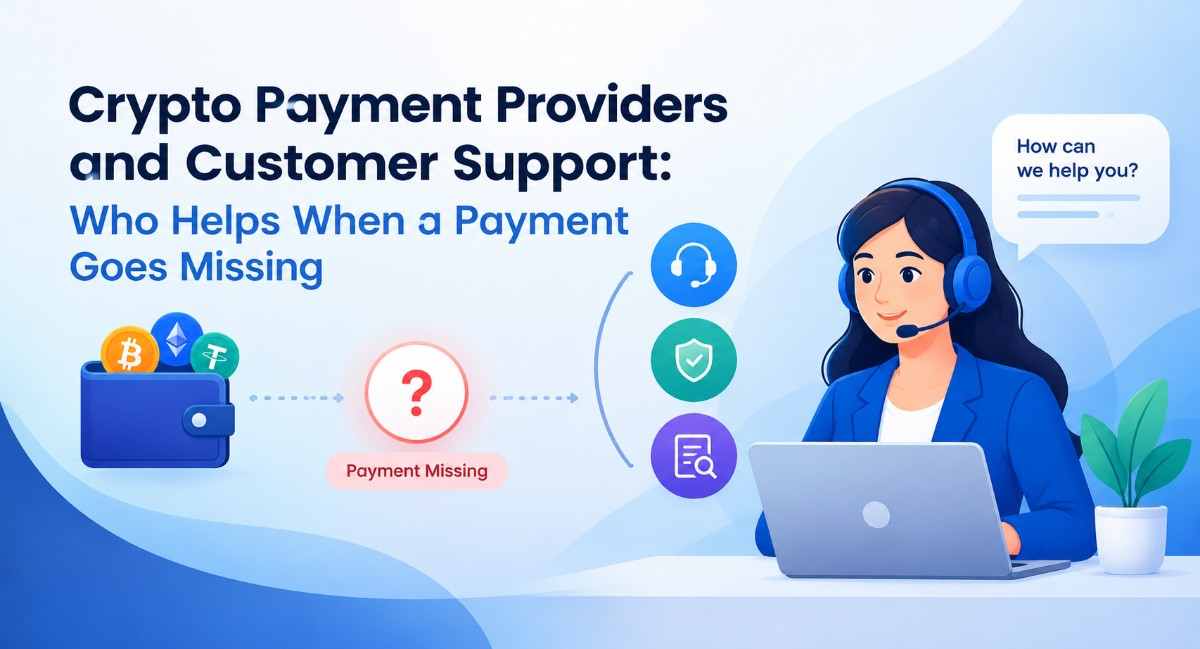
Crypto payment providers move money in minutes. Then one payment fails to show up, and speed stops mattering. You have a wallet screenshot, a transaction hash, and nobody to ask. That gap is the real subject of Crypto Payment Providers and Customer Support: Who Helps When a Payment Goes Missing. If you run a store, or you pay one, you should know the answer before it happens to you.
The short answer
Your payment provider's support team helps first, but only if the provider runs a real support desk and the payment passed through its system. If you sent funds to the wrong address, nobody can reverse it, though some cases can be recovered. When people ask about Crypto Payment Providers and Customer Support: Who Helps When a Payment Goes Missing, this is the honest version. The blockchain has no help line. The company sitting between you and the blockchain does, or should.
Why crypto payments go missing
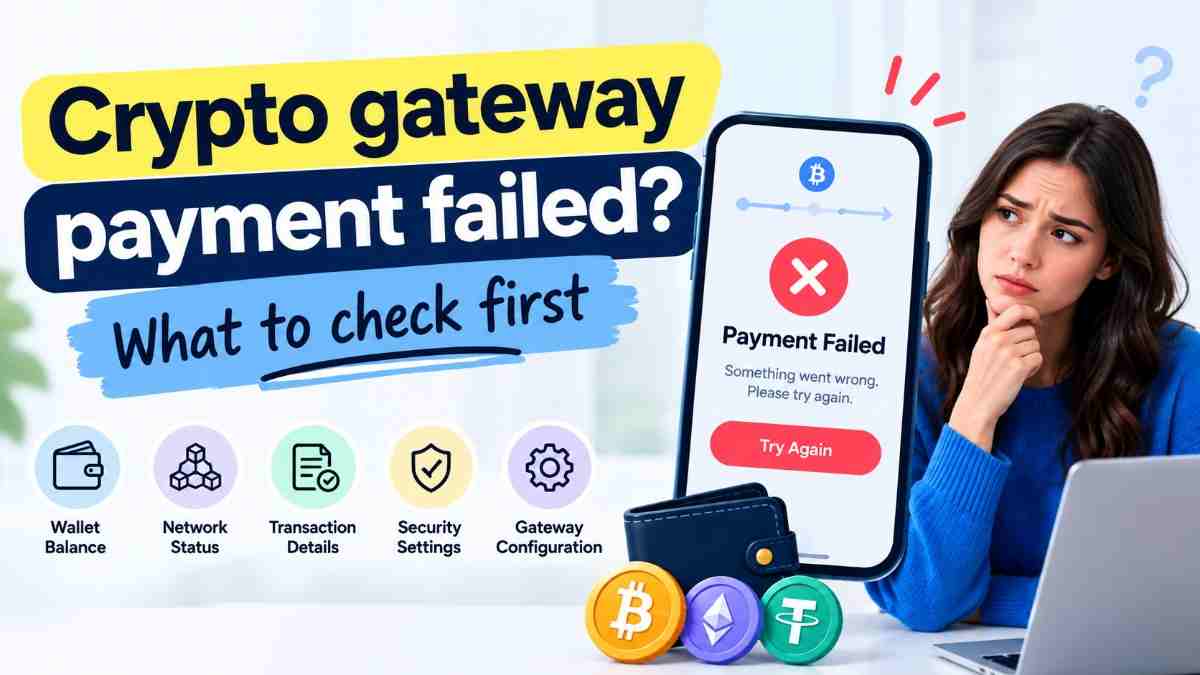
Most missing payments are not lost. They are late, misrouted, or underpaid. The usual causes:
- Wrong network. Sending USDT on Ethereum to an address that expects Tron is the classic mistake.
- Low network fee. The transaction sits unconfirmed for hours, sometimes days.
- Underpayment. The customer sends 99.20 instead of 100 because the wallet took its fee out of the amount.
- Missing memo or tag. Coins like XRP and Stellar need a destination tag. Without it, the gateway can't credit the right account.
- Expired invoice. The customer pays after the quoted rate window closes.
- Exchange withdrawal holds. The customer's exchange delays or flags the withdrawal.
Notice what most of these have in common. The money exists on-chain. The problem is matching it to an order. That is a support problem, not a technology problem.
Who is responsible when a payment goes missing
Five parties touch a crypto payment, and each owns a different piece.
The sender controls the address, the network, and the amount. Get one wrong and the sender caused the problem. That sounds harsh, but it is how irreversible payments work.
The merchant owns the order. They decide whether to ship, wait, or refund when a payment is short or late.
The payment provider owns the matching. It watches the blockchain, detects the deposit, and credits the invoice. If a payment lands and the invoice stays unpaid, the provider's system or support team has to sort it out. This is where Crypto Payment Providers and Customer Support: Who Helps When a Payment Goes Missing gets practical, because the provider is the only party that sees both sides.
The network owns nothing. Bitcoin and Ethereum have no refund department. They confirm transactions, and that's all.
The customer's exchange or wallet app owns the withdrawal. If funds left an exchange account late, that exchange's support team has to explain why.
A quick example
Picture a small store selling design templates. A buyer pays a 50 USDT invoice from an exchange but picks the wrong network. The store dashboard shows nothing. The buyer emails, annoyed.
With a decent provider, support asks for the transaction hash, finds the deposit on the other chain, and tells both sides what can be done, usually within a day. With a poor one, the buyer waits five days for a template reply and the merchant loses the sale and the customer. The payment failed in both cases. Support decided how it ended.
What good crypto customer support looks like
I've seen providers that answer in minutes and providers that send a canned reply after three days. The difference shows up fast. Good support has visible traits:
- A ticket system with a real reference number
- A human who reads the email or chat
- A status page for network delays
- A written policy on underpayments, overpayments, and late payments
- Staff who can read a blockchain explorer
That last one matters most. An agent who can't look up your transaction hash can't help you.
Speed matters less than competence. A fast "we are looking into it" is worth nothing. A slower reply that says "your payment has 2 of 6 confirmations and will clear in about 20 minutes" is worth a lot. For Crypto Payment Providers and Customer Support: Who Helps When a Payment Goes Missing, that is the standard I would hold any provider to.
What to do the moment a payment goes missing
This is the practical core of Crypto Payment Providers and Customer Support: Who Helps When a Payment Goes Missing. Do these in order, and don't send a second payment yet.
- Copy the transaction hash from the sender's wallet or exchange.
- Paste it into a block explorer for that network. Check the status, the receiving address, and the confirmation count.
- Compare the receiving address to the invoice address, character by character.
- Confirm the network. The same coin can exist on several chains.
- Contact the payment provider with the hash, invoice ID, amount, time, and a screenshot.
- Tell the merchant, so they hold the order instead of cancelling it.
- Wait for confirmations before assuming the worst. Bitcoin blocks average about ten minutes, so six confirmations take roughly an hour.
Skip step 5 and you're guessing. The hash is the one piece of evidence nobody can dispute.
Mistakes that make recovery harder
Sending a second payment before the first is resolved creates two problems instead of one. Deleting the transaction hash or the exchange email removes your proof. Opening tickets with five different support desks and telling each a slightly different story slows everything down.
One more, and it's serious. Scammers pose as support staff in social media replies and direct messages. Real support never asks for your seed phrase or private key. Not once, not for any reason.
How to judge a provider before a payment fails
Test support before you need it. Send a pre-sales question and time the reply. Read the terms for a section on failed, late, and underpaid transactions. If it's missing, that tells you plenty. Ask whether the provider offers manual recovery for wrong-network deposits and whether it charges for it. Look for a named contact, not only a web form. Run a small test payment, ideally with a deliberate mistake such as a slightly low amount, and see how the system reacts.
Also check whether the provider is custodial. If it holds funds for you, it can often trace and fix a misrouted deposit. If it is non-custodial, you keep the keys, and recovery depends on your own wallet setup. Neither is wrong. They come with different support expectations, and Crypto Payment Providers and Customer Support: Who Helps When a Payment Goes Missing looks different depending on which model you chose.
Where FaradPay fits
FaradPay is a crypto payment provider, so every question above applies to it like any other. Before you commit, check how its team handles unmatched deposits, what its policy says about underpayments, and how quickly a human answers a ticket. Judge it by what happens when a payment breaks, not by the landing page. That is the test for Crypto Payment Providers and Customer Support: Who Helps When a Payment Goes Missing, and it applies to every name on your shortlist.
FAQ on Crypto Payment Providers and Customer Support: Who Helps When a Payment Goes Missing
Can a crypto payment be reversed?
No. Blockchain transactions are final. Only the receiver can send funds back, so contact the provider or merchant who received them.
Who do I contact first if my crypto payment is missing?
Contact the payment provider or merchant you paid. Send the transaction hash and invoice ID. The blockchain itself has no support team.
How long before a missing payment is a real problem?
It depends on the network. Fast chains confirm in seconds. Bitcoin can take an hour or more during congestion. If the hash shows no confirmation after 24 hours, escalate to support.
Can funds sent on the wrong network be recovered?
Sometimes. If the address exists on both networks and the receiver controls it, they may be able to retrieve the funds. If not, the funds are likely gone. Some providers charge a fee for manual recovery.
What information does support need?
The transaction hash, invoice ID, coin, network, amount, timestamp, sending wallet address, and a screenshot.
Will I get a refund for an underpayment?
That depends on the provider's terms. Refunds go back on-chain, usually minus the network fee, so read the policy first.
Final thoughts
Missing payments are rarely lost. Most are late, misrouted, or underpaid, and someone with a view of both sides can usually fix them. So choose a provider the way you'd choose a bank. Test support before you need it, read the failed-payment policy, and keep the transaction hash safe. That is the real answer to Crypto Payment Providers and Customer Support: Who Helps When a Payment Goes Missing. It's the provider you picked.