How to Choose a Custom Android App Development Company for Startups and Enterprises
-
- February 28th, 2026
- 324 views
Finding the right custom Android app development company sets the foundation for product success, time-to-market, and long-term maintenance. This guide explains how to evaluate vendors for both startups and enterprises, what to expect in cost and delivery, and how to avoid common mistakes. The phrase custom Android app development company appears here to center the search intent and decision criteria.
Detected intent: Commercial Investigation
- Primary decision factors: technical expertise, team structure, delivery model, and portfolio.
- Use an MVP-first checklist and require clear SLAs for enterprise-grade apps.
- Expect trade-offs: speed vs. quality, in-house control vs. vendor expertise, and fixed-price vs. T&M.
Why hire a custom Android app development company for startups and enterprises
Hiring a specialized custom Android app development company makes sense when product requirements need native performance, integration with platform services (Google Play, Firebase), or strict device compatibility. For startups, the focus is typically on speed and validated learning; for enterprises, priorities include security, compliance, and long-term maintainability. This section compares those needs and how a vendor should respond.
Key capabilities to look for
- Proven native Android expertise: Kotlin and Android SDK proficiency, support for Jetpack libraries.
- Cross-functional teams: product management, UX/UI, QA, DevOps, and backend engineers.
- Security and compliance: encryption, secure storage, authentication, and enterprise SSO support.
- Operational readiness: CI/CD pipelines, automated testing, and play store release experience.
Android app development for startups vs enterprise Android app development
Startups typically need rapid prototyping, user testing, and cost containment—often using an MVP approach. Enterprises require governance, multi-region deployments, data residency considerations, and integration with legacy systems. A vendor should be able to tailor delivery models to each context.
How to evaluate proposals: a practical checklist
Use the following named framework to compare vendors objectively: MVP-First Android Delivery Checklist. This checklist emphasizes outcomes over feature lists and helps align budgets with business goals.
- Scope clarity: prioritized backlog and clear MVP definition.
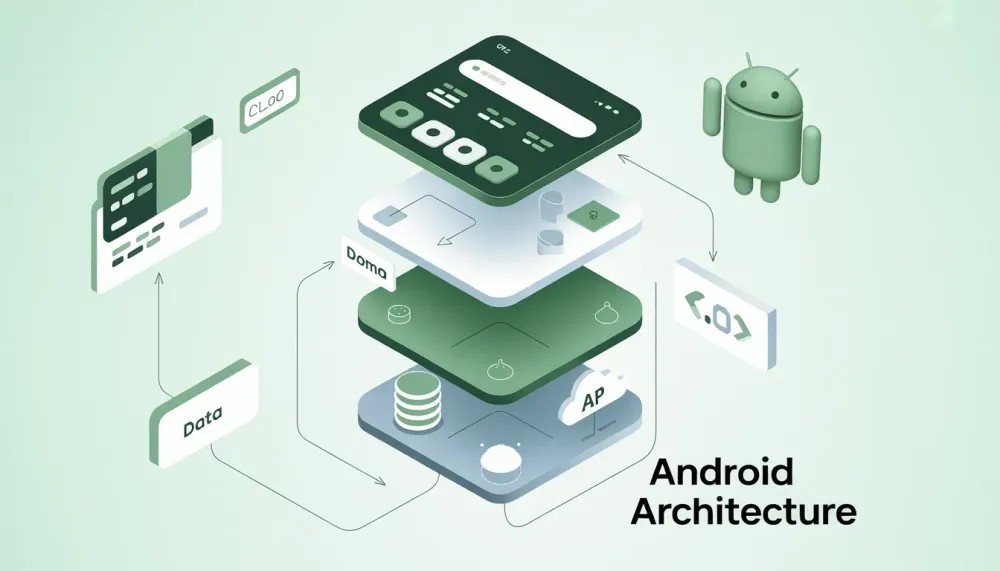
- Architecture plan: modular codebase, dependency injection, and testability.
- QA strategy: device matrix, automation coverage, and performance testing.
- Release process: CI/CD pipelines, Play Store rollout, and rollback plans.
- Post-launch support: SLA terms, monitoring, and update cadence.
Example scenario
A seed-stage startup needs an MVP consumer app to validate demand for a location-based service. The chosen vendor proposes a 12-week MVP using Kotlin, Firebase for backend, and a limited device compatibility matrix. The MVP-First checklist ensured the team delivered core flows, analytics, and a Play Store release while keeping costs predictable.
Cost drivers, timelines, and contract models
Major cost drivers include feature complexity, third-party integrations, offline support, and security requirements. Typical contract models are fixed-price for well-scoped MVPs and time-and-materials (T&M) for evolving products. Enterprise deals often include multi-year support agreements and governance fees.
Trade-offs and common mistakes
- Rushing to a full-featured launch: increases technical debt and delays user feedback.
- Choosing price over expertise: underestimates routine costs like testing and maintenance.
- Ignoring platform best practices: results in poor performance and higher crash rates.
Practical tips for contract and project setup
These steps keep vendor relationships productive and measurable.
- Define success metrics up front: retention, crash-free users, and key conversion events.
- Require a working prototype in the first sprint to validate approach and tech choices.
- Insist on code ownership and clear IP clauses in the contract.
- Plan for app store operations: release channels, staged rollouts, and compliance with Play Store policies.
Practical tips (3–5 actionable points)
- Request a technical audit of 1–2 past Android projects to assess code quality and architecture.
- Ask for a recommended device testing matrix that covers low-end, mid-range, and flagship models.
- Include a 30–60 day post-launch support window in the agreement for early bug fixes and performance tuning.
Integration and standards
Expect vendors to follow Android platform guidelines and accessibility practices. For factual guidance on platform best practices and APIs, consult the official Android Developers site: Android Developers — App Fundamentals.
Common integrations
- Authentication: OAuth2, OpenID Connect, or enterprise SSO.
- Push and analytics: Firebase Cloud Messaging and analytics platforms.
- Payment and subscriptions: Google Play Billing or third-party gateways for hybrid models.
Core cluster questions
- What should a startup expect to pay for an Android MVP?
- How long does it take to build a production-ready Android app?
- What technical skills are essential in an Android development team?
- How to evaluate code quality in a vendor proposal?
- What maintenance costs should be budgeted post-launch?
Final decision checklist
- Match vendor experience to target audience and device profiles.
- Confirm delivery process: sprint cadence, demo schedule, and acceptance criteria.
- Validate legal and security requirements before signing.
FAQ
What is a custom Android app development company and what services do they provide?
A custom Android app development company designs, builds, tests, and maintains native Android applications. Services typically include product discovery, UX/UI design, native development (Kotlin/Java), backend integration, QA and testing, Play Store deployment, and post-launch support.
How much does custom Android app development typically cost for startups?
Costs vary widely: a simple MVP often ranges from low five-figures to mid five-figures depending on scope, while complex consumer or enterprise apps can be significantly more. Budget should include development, QA, and at least 3–6 months of post-launch support.
How to compare proposals for enterprise Android app development?
Compare technical architecture, security controls, compliance certifications, SLAs, team composition, and references from similar enterprise projects. Pay attention to operational readiness: monitoring, rollback plans, and multi-environment deployments.
How do startups ensure fast delivery without sacrificing quality?
Adopt an MVP-first approach, enforce a prioritized backlog, require automated tests for critical flows, and schedule frequent demos to catch issues early. Use short sprints and an initial prototype to validate assumptions before scaling the feature set.
What are common pitfalls when hiring a custom Android app development company?
Common mistakes include unclear scope and acceptance criteria, ignoring device fragmentation, skipping security reviews, and signing vague maintenance agreements. Address these with explicit requirements, device lists, and measurable SLAs.