How Embracing Uncertainty Can Reduce Anxiety and Control Problems
-

- February 23rd, 2026
- 1,943 views
Embracing uncertainty is a practical approach to reduce anxiety and control problems by changing how situations are perceived and responded to. This article explains what embracing uncertainty means, why intolerance of uncertainty contributes to anxiety disorders, and evidence-informed strategies to build tolerance for unpredictability without promising medical or legal advice.
- Embracing uncertainty helps reduce worry, avoidance, and rigid control strategies that can maintain anxiety.
- Practical approaches include mindfulness, cognitive behavioral strategies, exposure to uncertainty, and values-based action.
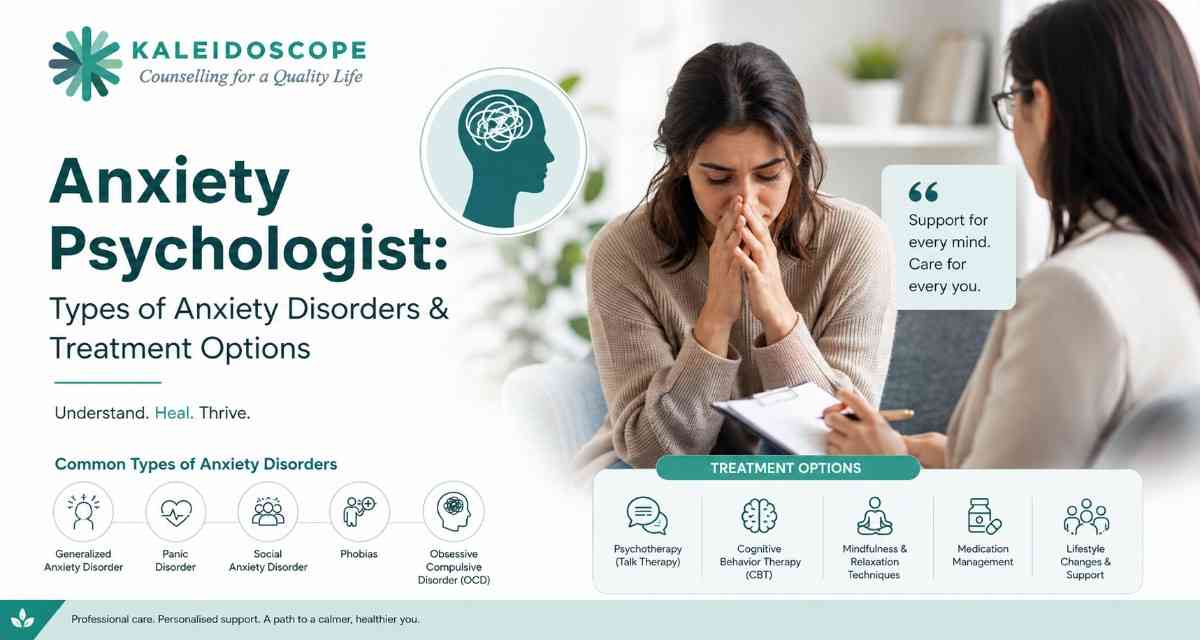
- Professional treatments such as cognitive behavioral therapy (CBT) and acceptance and commitment therapy (ACT) target intolerance of uncertainty; consult licensed professionals for individual care.
Why embracing uncertainty matters for anxiety and control problems
Anxiety often involves repetitive worry about possible negative outcomes and attempts to prevent or control those outcomes. When tolerance for uncertainty is low—sometimes called intolerance of uncertainty—thoughts escalate and avoidance behaviors increase. Over time, attempts to control every risk or outcome can themselves become a source of distress, reducing flexibility and life satisfaction.
How uncertainty is linked to common anxiety patterns
Intolerance of uncertainty
Intolerance of uncertainty is a cognitive tendency to overestimate threat and underestimate coping capacity. It is associated with generalized anxiety disorder (GAD) and contributes to persistent worry. Research in clinical psychology indicates that reducing avoidance and increasing acceptance of ambiguous outcomes can weaken worry cycles.
Control as a short-term fix
Attempts to control thoughts, situations, or others may reduce anxiety momentarily but often increase stress over time. Rigid planning, reassurance-seeking, and excessive checking are examples of control behaviors that can maintain anxiety and interfere with daily functioning.
Practical strategies to cultivate tolerance for uncertainty
Mindfulness and present-moment awareness
Mindfulness practices train attention on present experience rather than future-oriented threats. Simple exercises—such as focused breathing, noting sensations, or brief body scans—can reduce reactivity to anxious thoughts and create space for more flexible responses.
Cognitive approaches
Cognitive techniques used in cognitive behavioral therapy (CBT) can help identify unhelpful beliefs about certainty and control. Typical steps include noticing catastrophic predictions, testing evidence for those beliefs, and generating balanced alternative appraisals. These strategies do not eliminate risk, but they reduce biased threat estimates that drive excessive control efforts.
Behavioural experiments and exposure to uncertainty
Deliberate exposure to uncertain situations—starting with low-intensity challenges and progressing gradually—can reduce avoidance and corrective learning about outcomes. Behavioral experiments test predictions (for example, "If I don't check X, something terrible will happen") and gather real-world evidence that disconfirms catastrophic expectations.
Acceptance and values-based action
Acceptance and commitment therapy (ACT) emphasizes accepting internal experiences (thoughts, feelings) while committing to actions aligned with personal values. This approach reframes control problems by prioritizing meaningful activity over attempts to eliminate discomfort. That can increase life satisfaction even when uncertainty remains.
When to seek professional support
If anxiety, persistent worry, or control-related behaviors significantly interfere with work, relationships, or daily routines, a licensed mental health professional can offer assessment and evidence-based treatments such as CBT or ACT. Professional care is especially important when anxiety co-occurs with depression, substance use, or thoughts of self-harm.
Building a practical plan
Simple steps
- Start small: identify one low-risk situation to approach without using a control strategy.
- Use observation: note predictions before the situation and outcomes afterward to collect evidence.
- Practice brief mindfulness daily to strengthen tolerance for discomfort.
- Set values-based goals to guide actions even when uncertainty is present.
Track progress
Keep a brief journal of attempts to tolerate uncertainty, noting predictions, behaviors, and actual outcomes. Over weeks, look for patterns of reduced avoidance and increased willingness to accept unpredictability.
Trust and resources
Authoritative organizations provide guidance on anxiety and coping strategies. For overview materials and treatment recommendations, see the American Psychological Association's resources on anxiety and stress management: https://www.apa.org/topics/anxiety. Peer-reviewed research also supports approaches such as CBT, ACT, and exposure-based interventions for intolerance of uncertainty.
Limitations and realistic expectations
Embracing uncertainty is a gradual process. Strategies reduce distress for many people but do not remove all risk or guarantee specific outcomes. Progress often involves setbacks; consistent practice and, when needed, professional guidance improve chances of lasting change.
Frequently asked questions
What does embracing uncertainty mean?
Embracing uncertainty means accepting that not all outcomes can be predicted or controlled, and choosing responses that prioritize functioning and values over attempts to eliminate unpredictability.
How can embracing uncertainty help with anxiety?
By reducing avoidance and rigid control behaviors, embracing uncertainty weakens the cycles of worry that maintain anxiety. Techniques from mindfulness, CBT, ACT, and exposure-based work support this process.
Is embracing uncertainty the same as giving up?
No. It is not resignation but a shift in strategy: recognizing limits of control while taking intentional, value-driven actions despite discomfort.
When should a licensed professional be consulted about embracing uncertainty and anxiety?
Consult a licensed mental health professional if anxiety or control problems cause significant distress, impair daily life, or when there is concern about safety, co-occurring mental health conditions, or need for tailored treatment planning.