Customized Employee Uniforms for Corporate, Retail, and Hospitality Teams
-

- Published Updated
- 6,818 views
Uniform decisions often get pushed to the end of a business setup or rebranding project. The logo is finalized, the office is ready, and then someone says, "We also need uniforms."
After working in the employee uniform manufacturing industry for years, I've seen companies spend months refining their brand identity and only a few days deciding what their employees will wear every day. The result is often uncomfortable clothing, inconsistent branding, and frustrated staff.
Customized Employee Uniforms are much more than clothing with a company logo. They influence employee confidence, customer perception, and day-to-day practicality. The needs of a hotel receptionist differ significantly from those of a retail sales associate or a corporate office team. A successful uniform program takes these differences into account from the start.
Why Customization Matters More Than Many Businesses Realize
Many organizations assume that ordering standard ready-made uniforms and adding embroidery is enough. In practice, this approach creates problems.
Employees vary in body types, work environments, and daily responsibilities. A front-desk executive spends hours seated and interacting with guests. A retail employee is constantly moving, arranging displays, and assisting customers. Corporate staff often shift between meetings, presentations, and desk work.
A single uniform design rarely works effectively across all these situations.
Customization allows businesses to adjust:
- Fabric selection
- Color combinations
- Logo placement
- Fit and sizing
- Functional features
- Seasonal requirements
The strongest uniform programs balance brand consistency with practical workplace needs.
Customized Employee Uniforms for Corporate Teams
Corporate environments have changed significantly over the last decade.
Traditional formal wear is no longer the default in many offices. Employees often prefer smart business attire that looks professional without feeling restrictive.
Prioritize Comfort During Long Workdays
One common mistake is selecting fabrics solely based on appearance.
A fabric may look excellent in a showroom but become uncomfortable after eight hours of use. Breathability matters, particularly in warmer regions where employees move between offices, meetings, and outdoor locations.
For corporate teams, common uniform items include:
- Branded shirts
- Tailored trousers
- Corporate blazers
- Polo shirts
- Business dresses
- Lightweight jackets
The most successful designs often look understated rather than flashy.
In my experience, employees are more likely to wear uniforms properly when they feel similar to quality professional clothing rather than promotional apparel.
Consider Department-Specific Requirements
Not every employee performs the same role.
Sales teams may need more formal attire for client meetings. Administrative staff might prioritize comfort. Technical teams often require additional flexibility and durability.
Creating slight variations within the same visual identity usually produces better results than forcing every department into identical garments.
Uniform Strategies for Retail Teams
Retail environments present unique challenges.
Employees spend hours standing, walking, lifting products, assisting customers, and maintaining displays. Their uniforms must support constant movement while maintaining a polished appearance.
Visibility Matters
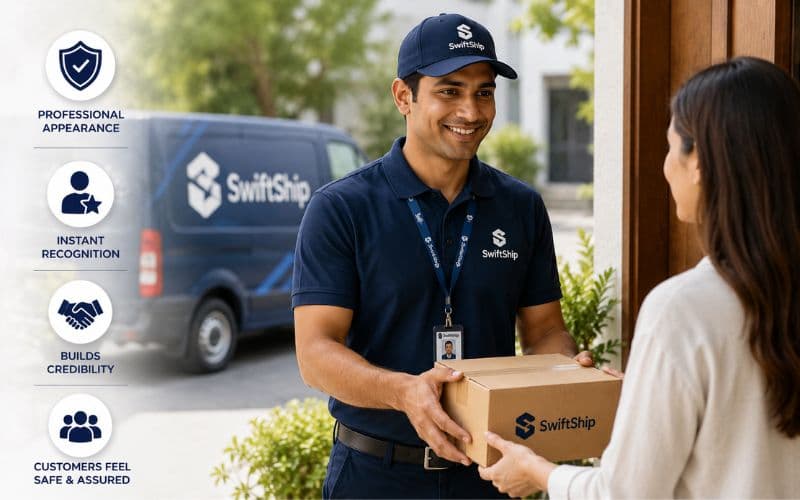
Customers should be able to identify staff immediately.
This sounds obvious, yet many retailers choose colors that blend into store interiors or follow fashion trends that reduce visibility.
Good retail uniforms make staff approachable and recognizable without appearing overly promotional.
Effective retail uniform components often include:
- Branded polo shirts
- Stretch-fit trousers
- Lightweight jackets
- Aprons
- Name badges
- Moisture-wicking fabrics
Durability Should Not Be an Afterthought
Retail uniforms typically experience more wear than corporate uniforms.
Frequent washing, movement, and customer interaction place constant stress on garments.
A slightly higher investment in durable fabrics often reduces replacement costs significantly over time.
I've seen companies choose cheaper materials to save money initially, only to reorder entire uniform sets within a few months because colors faded or stitching failed.
Hospitality Uniforms Require a Different Approach
Hospitality is one of the most demanding sectors for uniform design.
Guests notice appearance immediately.
The uniform becomes part of the guest experience, especially in hotels, resorts, restaurants, and event venues.
First Impressions Are Influenced by Uniform Quality
A well-designed hospitality uniform helps communicate professionalism before any conversation takes place.
Reception teams, concierge staff, restaurant servers, housekeeping personnel, and managers all represent the brand visually.
Their uniforms should work together while reflecting their specific responsibilities.
For example:
- Reception staff often require formal and polished attire.
- Housekeeping teams need practical and durable garments.
- Restaurant staff benefit from stain-resistant fabrics.
- Concierge personnel often require premium-looking uniforms that support mobility.
Fabric Selection Becomes Critical
Hospitality teams frequently work long shifts.
Poor fabric choices quickly become apparent.
Heavy fabrics may look luxurious initially but become uncomfortable during extended wear. Lightweight materials may improve comfort but fail to maintain a premium appearance.
Balancing these factors is one of the most challenging aspects of Employee Uniform Manufacturing.
Common Mistakes Businesses Make During Uniform Projects
Ignoring Employee Feedback
Management often chooses uniforms without consulting employees.
This creates avoidable problems.
Employees can identify practical concerns early, including fit issues, pocket placement, fabric comfort, and movement restrictions.
A short trial period with sample garments often prevents costly mistakes.
Ordering Based Only on Price
Price matters, but focusing exclusively on the lowest quote can be expensive later.
Low-quality uniforms typically result in:
- Faster replacement cycles
- Employee complaints
- Inconsistent appearance
- Higher long-term costs
Uniforms are used daily. Durability should carry significant weight during purchasing decisions.
Overcomplicating the Design
Some companies attempt to include too many branding elements.
Large logos, multiple colors, excessive embroidery, and decorative features often make uniforms look dated quickly.
Simple designs generally age better and maintain a more professional appearance.
Neglecting Size Diversity
One-size-fits-all approaches rarely work.
A proper sizing program accommodates different body shapes and provides employees with options that help them feel comfortable and confident.
The Role of Employee Uniform Manufacturing in Consistency
The manufacturing process affects much more than production speed.
Reliable Employee Uniform Manufacturing ensures:
- Consistent colors across batches
- Uniform logo placement
- Accurate sizing standards
- Fabric quality control
- Long-term availability of designs
This becomes particularly important for organizations with multiple branches or locations.
I've encountered businesses that ordered uniforms from different suppliers over time and ended up with noticeable variations in color, fit, and branding. Customers often notice these inconsistencies faster than management expects.
Balancing Brand Identity and Practical Use
A uniform should represent the brand, but it should also function effectively in real working conditions.
That balance is where many successful uniform programs are won or lost.
One opinion I hold strongly after years in this industry is that comfort has become more influential than appearance alone. Employees who feel comfortable tend to wear uniforms properly, maintain them better, and project greater confidence during customer interactions.
Another observation is that businesses frequently underestimate how much employees value having input during the design process. Even small adjustments can improve acceptance significantly.
Practical Takeaway
Before ordering Customized Employee Uniforms, spend time observing how employees actually work. Watch how much they move, where they store tools or devices, how often garments need washing, and what environmental conditions they face during a normal shift. Uniform decisions based on real workplace behavior consistently produce better results than decisions based solely on catalogs, samples, or branding guidelines.
FAQs
1. How often should employee uniforms be replaced?
Most organizations replace uniforms every 12 to 24 months, depending on fabric quality, work conditions, and washing frequency.
2. What is the best fabric for customized employee uniforms?
The best fabric depends on the industry. Corporate environments often use cotton blends, while retail and hospitality teams frequently benefit from breathable, wrinkle-resistant, and moisture-wicking materials.
3. How many uniform sets should each employee receive?
Most businesses provide at least three to five sets per employee to allow for regular washing and rotation.
4. Can different departments have different uniform designs?
Yes. Many organizations maintain a consistent brand identity while customizing styles, colors, or features for different departments.
5. Why is sizing accuracy important in uniform programs?
Proper sizing improves employee comfort, appearance, confidence, and overall acceptance of the uniform program while reducing alteration and replacement costs.
Before ordering Customized Employee Uniforms, spend time observing how employees actually work. Watch how much they move, where they store tools or devices, how often garments need washing, and what environmental conditions they face during a normal shift. Uniform decisions based on real workplace behavior consistently produce better results than decisions based solely on catalogs, samples, or branding guidelines. For businesses looking to explore practical uniform solutions across corporate, retail, hospitality, healthcare, and industrial sectors, visiting Futuremind Uniforms( futureminduniforms.ae ) can provide useful insights into current customization options and industry-specific workwear trends.