Comparing Materials Under a Forensic Microscope
-

- Published Updated
- 2,299 views
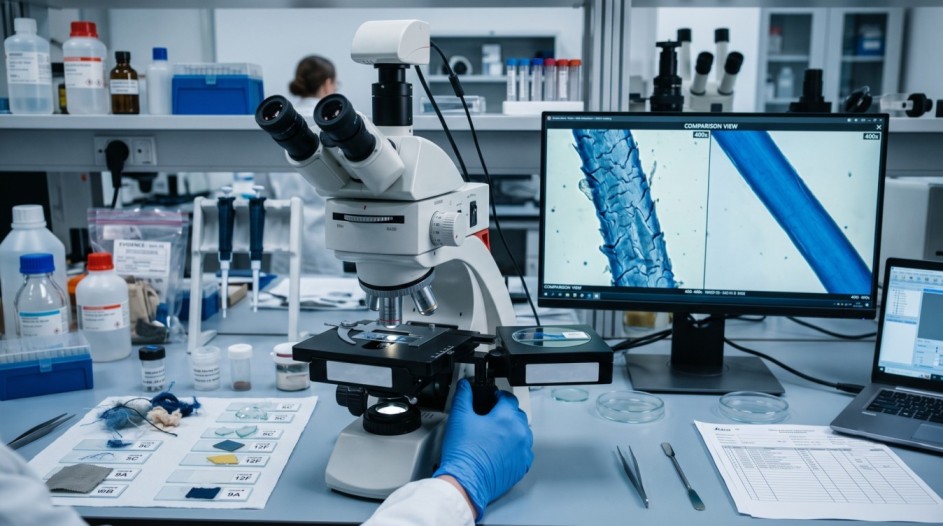
A fibre found on a seat. A paint chip recovered from a bumper. A strand of hair on a jacket. These are the materials that quietly build or break a forensic case, and how they get examined matters more than most people outside a lab would expect.
A forensic microscope lets two samples sit side by side under matched optics so an investigator can see exactly where they line up and where they do not. That comparison carries real weight in court.
In this article, we walk through what a forensic microscope analyses best and what to look for when selecting one.
Why a Forensic Microscope Is Not Interchangeable with a Standard Lab Scope
Most lab microscopes do one thing: magnify a single sample. A forensic microscope is built for something different. It places two samples under the same optical system so an investigator can compare both at once, side by side, through a single eyepiece.
How it's different:
- Dual-stage comparison: Two samples are viewed through one eyepiece simultaneously, allowing for direct, reliable and repeatable comparison.
- Matched optics: Both samples are magnified to the same degree, meaning color, texture and surface detail are presented in identical conditions on each side.
- Polarised light: Fibres, minerals, and paint fragments reveal structural and compositional details that standard scopes simply cannot capture.
- Documentation support: Integrated camera ports allow analysts to record and submit findings in a format ready for court use.
RCMP labs and forensic programs across North America rely on purpose-built instruments because standard equipment was never designed for this kind of evidence work.
The Materials Forensic Microscopes Are Built to Compare
Not every piece of evidence arrives clearly labelled. Most of it is small, fragile, and easy to overlook. This is exactly where a forensic microscope earns its place in a lab.
Fibres and Textiles
Fibres transfer between people, clothing, and surfaces more often than investigators expect. Under a forensic microscope, analysts compare colour saturation, diameter, cross-section shape, and surface texture between a questioned sample and a known reference.
Glass Fragments and Paint Chips
Both appear frequently in hit-and-run cases. A forensic comparison microscope reads fracture patterns, paint layer structure, and refractive index side by side, helping determine whether a questioned fragment matches a known source.
Hair and Biological Trace Evidence
Hair analysis is based on pigment distribution, medullary index and cuticle scale shape. It is useful in narrowing down leads, but is best used in conjunction with DNA analysis rather than as a finding in itself.
Soil, Minerals, and Debris
Soil comparison connects a suspect to a physical location without relying on digital evidence. Polarised light forensic microscopes identify particles by refractive index and crystal form, making this one of the more geography-specific applications in trace evidence work.
Three Forensic Microscopes That Deliver in Real Lab Conditions
Every forensic lab has different needs. The right instrument depends on what your team analyses most and how findings get reported. Here are three worth knowing about.
Comparison Microscope
This is the workhorse of trace evidence labs. Two specimen stages connect under one optical bridge, letting analysts view a known and questioned sample at the same time through a single eyepiece. It handles fibre, hair, and paint chip comparison with the optical consistency that court submissions require. Best suited for labs working with trace evidence regularly.
Stereo Forensic Microscope
Built for initial evidence triage rather than deep magnification. This wide-field instrument handles tool mark review, fabric damage assessment, and soil debris sorting while keeping the physical structure of a sample intact. The three-dimensional view matters when a specimen cannot be sectioned before examination.
Digital Forensic Microscope
Some labs need more than results. They need results that hold up in a courtroom. This system pairs optical clarity with calibrated imaging software, letting analysts annotate, timestamp, and export findings in formats accepted by legal teams across Canada and the US.
Choosing a Forensic Microscope That Actually Fits Your Lab
The wrong microscope does not just waste the budget. It creates gaps in evidence reporting that are hard to correct later. Start with one question: what materials will your lab analyse most often? That answer shapes everything that follows.
- Match the instrument to your caseload: High-volume crime labs need a dedicated comparison microscope. Smaller departments or university programs often manage well with a stereo scope and a digital attachment.
- Consider reporting requirements: If findings go to court, digital documentation capability is not optional. It saves time and meets evidence submission standards across Canada and the US.
- Evaluate vendor support alongside optics: Training availability, calibration servicing, and software update cycles matter as much as the instrument itself over its working life.
- Check system compatibility: The microscope should integrate with your existing documentation software without requiring a full infrastructure change.
SWGMAT and ASTM International guidelines are worth referencing when building your internal procurement criteria.
The Right Forensic Microscope Shapes What Your Lab Can Prove
Material comparison is not a background task in forensic work. A fibre, a paint chip, or a soil sample examined under the right instrument can anchor findings that nothing else in an investigation provides. The microscope a lab selects determines what kind of answers it delivers.
Optical quality, documentation capability, and application fit all matter when choosing an instrument. A scope that does not match your caseload creates gaps in reporting that tend to surface at the worst possible time, usually when evidence is already under legal scrutiny.
Labs that get this decision right spend less time revisiting inconclusive results. They spend more time building an evidence record that holds up in reports, in reviews, and in court.