Autonomous AI Agents: How Super Agents Will Change Workflows and Risk Management
-

- March 08th, 2026
- 173 views

Get a free topical map and start building content authority today.
Autonomous AI agents are software systems that perform tasks, make decisions, and adapt with minimal human direction. As automation advances, autonomous AI agents are shifting from narrow chatbots to coordinated "super agents" that orchestrate multiple services, plan multi-step actions, and manage exceptions across systems.
- Detected intent: Informational
- What this guide covers: definitions, how super agents work, a named readiness checklist, a short scenario, 3–5 practical tips, and common mistakes to avoid.
- Main focus: practical adoption and risk management for autonomous AI agents.
Why autonomous AI agents matter
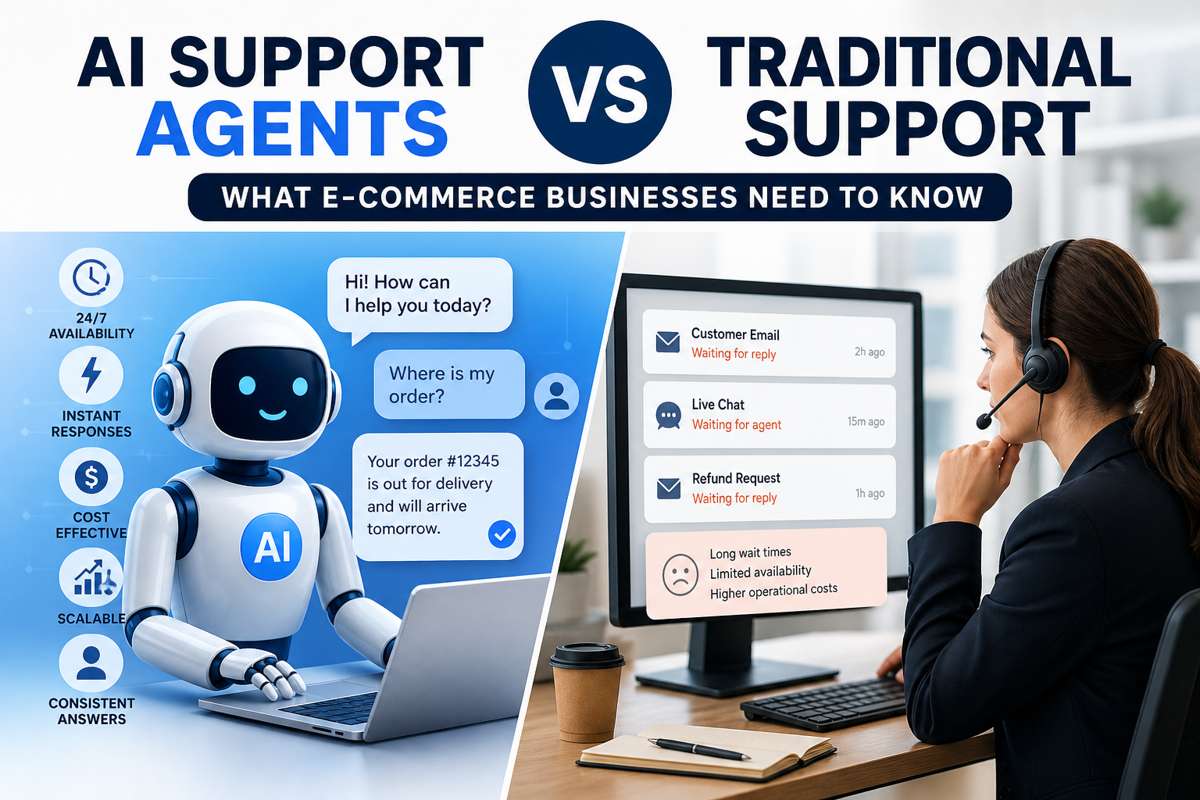
Autonomous AI agents matter because they move AI from single-turn assistance to continuous, goal-driven activity. Where chatbots answer questions, super agents execute multi-step workflows—coordinating APIs, scheduling tasks, and escalating to humans when necessary. This evolution impacts productivity, customer experience, and operational risk across industries such as finance, logistics, IT operations, and customer support.
How autonomous AI agents work
At a technical level, autonomous AI agents combine several components: planning and intent interpretation, action orchestration, state management, observation and feedback loops, and an escalation or human-in-the-loop mechanism. Common enabling technologies include natural language understanding, reinforcement learning or planner modules, API connectors, observability tooling, and policy-enforcement layers.
Core building blocks
- Perception: NLU and structured input parsing
- Decision engine: planner, cost/utility model, or RL policy
- Orchestration layer: executes actions and manages retries
- State store: tracks session data and long-term memory
- Governance: access controls, audit logs, and safety checks
AI Super-Agent Readiness Checklist
A named, practical checklist helps evaluate readiness to deploy autonomous systems. Use the "SUPER-AGENT" checklist below to assess technical, organizational, and governance preparedness.
- Scope definition: Clear, measurable goals and success criteria.
- User boundaries: Define when the agent must escalate to a human.
- Permissions & access: Least-privilege credentials and secrets management.
- Error handling: Retry strategies, fallbacks, and state reconciliation.
- Resilience: Observability, monitoring, and automated rollback triggers.
- -
- Auditability: Immutable logs for actions, inputs, and decisions.
- Governance: Policies, compliance mapping, and approval workflows.
- Ethics & safety: Bias checks, harm analysis, and impact assessment.
- Network of tests: Integration, security, and adversarial tests.
- Training & ops: Runbooks, incident playbooks, and continuous learning pipelines.
For standards and risk-management guidance, align assessments with established frameworks such as the NIST AI Risk Management Framework, which offers practices for identifying and managing AI-related risks (NIST AI RMF).
Real-world example: IT incident resolution with a super agent
Scenario: An organization deploys a super agent to handle Tier-1 IT incidents. The agent monitors alerts, runs diagnostic scripts, and, if safe, applies known fixes. If a fix changes production configuration or exceeds risk thresholds, the agent opens a ticket and notifies an on-call engineer. Over time, the agent logs outcomes and suggests new automated playbooks for recurring issues.
This scenario illustrates responsibilities for observability, human escalation points, and audit trails in production—elements that must be planned before any live deployment.
Practical tips for adopting autonomous AI agents
- Start small with bounded goals: Limit initial scope to a single domain and clearly measurable KPIs (time saved, error reduction).
- Use human-in-the-loop thresholds: Default to human review for high-risk actions and gradually expand autonomy after monitored success.
- Instrument every action: Capture inputs, decisions, and outcomes in an immutable log for debugging and compliance.
- Define rollback and kill switches: Ensure immediate shutoff and safe rollback paths for unexpected behavior.
- Model performance as metrics: Track reliability, false positive/negative rates, and business impact—not just accuracy.
Trade-offs and common mistakes
Trade-offs to consider
- Speed vs. safety: Greater autonomy speeds workflows but increases the impact of errors. Balance with staged rollout and strong monitoring.
- Complexity vs. maintainability: Multi-agent orchestration can be powerful but harder to debug and update than simpler rules-based automations.
- Cost vs. coverage: Broad autonomy can reduce labor costs but raise engineering and governance expenses for safe operation.
Common mistakes
- Deploying without clear success metrics or rollback procedures.
- Granting broad permissions early—leading to excessive blast radius when mistakes occur.
- Missing observability: Without action logs and monitoring, diagnosing failures becomes impractical.
- Ignoring human factors: Poor UX for escalation often leads to mistrust and underuse of autonomous systems.
Core cluster questions
- How do autonomous AI agents differ from chatbots?
- What governance controls are needed for AI super agents?
- When should a system escalate to human-in-the-loop review?
- How to measure reliability and business impact of autonomous workflow automation?
- What testing and validation steps are critical before production deployment?
Frequently asked questions
What are autonomous AI agents and how are they different from chatbots?
Autonomous AI agents are goal-oriented systems that plan and execute multi-step actions across services; chatbots primarily handle conversational tasks and single-turn requests. Agents include orchestration, state, and policy layers that enable longer-running activities.
How can organizations safely scale AI super agents in production?
Scale safely by using staged rollouts, human-in-the-loop gates, strict permission controls, comprehensive observability, and a tested incident response playbook. Regular audits and alignment to risk frameworks ensure ongoing governance.
What monitoring and logs should be captured for autonomous AI agents?
Capture input payloads, decision traces, action calls (including API responses), timing data, and outcomes. Store logs immutably with indexes for auditability and correlation to downstream events.
How do multi-agent systems and AI super agents relate?
Multi-agent systems coordinate multiple specialized agents (e.g., planner, executor, monitor) to achieve complex goals. Super agents are often built as multi-agent architectures that delegate sub-tasks to specialized components.
Are autonomous AI agents ready for high-risk domains like finance or healthcare?
Autonomous AI agents can be useful in high-risk domains, but adoption requires rigorous validation, alignment with regulatory requirements, strong human oversight, and security controls. Use conservative autonomy limits and follow industry standards and risk frameworks before expanding scope.