Why Georgette Fabric Dresses Are a Timeless Wardrobe Choice
-

- Published Updated
- 1,439 views
Introduction
Georgette fabric dresses are prized for their lightweight drape, subtle texture, and ability to move fluidly with the body. Often associated with eveningwear, casual frocks, and layered silhouettes, georgette balances a sheer appearance with enough body for tailored styles. This article explains what gives georgette its distinctive feel, how it compares with similar textiles, practical care tips, and considerations for sustainable choices.
- Georgette is a crepe-textured woven fabric known for its lightweight drape and slightly crinkled surface.
- It can be made from silk, rayon, polyester, or blends; fiber content affects hand, sheen, and care.
- Common uses include dresses, blouses, linings, and scarves; linings or layers often address sheerness.
- Care varies by fiber—follow garment labels and safety guidance for flammability and washing.
Georgette Fabric Dresses: Characteristics and Composition
At a structural level, georgette is a plain-woven fabric made from highly twisted yarns in alternating S- and Z-twists, which creates a textured, crepe-like surface. When constructed from natural silk, georgette has a soft sheen, excellent breathability, and a fluid drape. Synthetic versions—commonly polyester or rayon—offer greater durability, easier care, and lower cost but may differ in hand, heat sensitivity, and environmental footprint.
Weave, twist, and texture
The characteristic pebble surface results from the use of high-twist yarns; these twists cause the fabric to pucker slightly. This gives georgette its signature matte, creped look and distinct hand compared with similar fabrics such as chiffon (which is smoother and more sheer) and crepe (which can be heavier and more textured).
Common fiber types
Silk georgette: lightweight, luxurious hand, more resilient to static but needs gentler care. Rayon/viscose georgette: breathable and soft, with moderate strength. Polyester georgette: affordable, easy to care for, more heat-sensitive and less breathable. Blends combine attributes such as drape, strength, and washability.
How Georgette Affects Dress Design and Fit
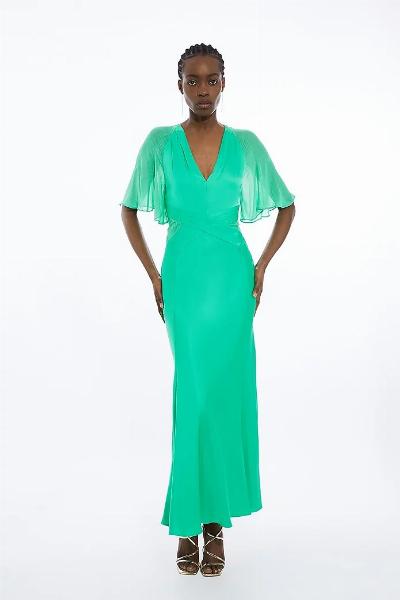
Designers select georgette for styles that benefit from soft, flowing lines—bias-cut dresses, tiered skirts, and blousy sleeves. The fabric's drape makes it suitable for garments that require movement and feminine silhouettes. Because many georgettes are semi-sheer, dresses are often fully or partially lined, or constructed with multiple layers for opacity and structure.
Construction techniques
Seam finishes, narrow hems, and French seams are commonly used to protect delicate fabrics. Lightweight interfacing and stable facings help support necklines and buttonholes without adding bulk. When sewing georgette, the use of fine needles, shortened stitch length, and careful handling reduces puckering and distortion.
Styling tips
Layering a georgette dress with a slip or matching lining improves opacity. Tailored belts, under-structures, and camisoles can add shape while preserving the fabric’s natural movement. For formal wear, consider lining or built-in bodices to maintain comfort and modesty.
Care, Durability, and Safety
Care needs depend largely on fiber content. Silk georgette typically requires hand washing or professional cleaning, while many polyester versions tolerate gentle machine cycles. Always consult the garment label and test a hidden seam before attempting home cleaning.
Washing and drying
Use mild detergents, cold water, and avoid wringing. Lay flat or hang to dry away from direct heat to preserve shape. Ironing on low heat with a pressing cloth or steaming is preferred to avoid flattening the textured surface.
Safety and regulatory guidance
Because lightweight fabrics can be more flammable, check product labels and national safety guidance when purchasing garments intended for children or use near open flames. The U.S. Consumer Product Safety Commission provides information on clothing flammability and safe practices for textiles and apparel.
Sustainability and Sourcing Considerations
Choosing between silk, rayon, and polyester georgette involves trade-offs. Silk is renewable but resource-intensive to produce; rayon is derived from cellulose and varies by production method; polyester is petroleum-based but durable and recyclable in some streams. Certifications such as OEKO-TEX and the Global Recycled Standard can help identify lower-impact options. Academic research in textile science and organizations like the American Association of Textile Chemists and Colorists (AATCC) offer testing standards for fiber content and performance.
When to Choose Georgette
Georgette fabric dresses suit occasions where elegant movement and soft silhouettes are desired—weddings, evening events, and summer wear. For daily wear, polyester georgette may be chosen for ease of care; for heirloom or special-occasion garments, silk georgette remains popular for its hand and appearance.
Frequently asked questions
Are georgette fabric dresses suitable for everyday wear?
Yes—when constructed from durable fibers such as polyester or well-finished rayon, georgette dresses can be practical for regular use. Selecting garments with appropriate linings and following care instructions extends wear life.
How should georgette fabric dresses be washed?
Follow the garment's care label. Generally, silk georgette benefits from hand washing or dry cleaning; synthetic georgette often tolerates gentle machine washing. Use cold water, mild detergent, and air dry to retain texture and shape.
What makes georgette different from chiffon or crepe?
Georgette is created from highly twisted yarns that give a slightly pebbled texture and soft matte finish. Chiffon is finer and smoother with a more transparent appearance, while crepe can be heavier with a more pronounced texture depending on weight and weave.
Can georgette be used for lined versus unlined dresses?
Both approaches are common. Lined georgette dresses offer opacity and structure, while unlined or layered styles emphasize lightness. The choice depends on the desired silhouette and the fabric's translucency.