Golden Retriever Feeding | How Much and How Often to Feed
-

- Published Updated
- 9,457 views
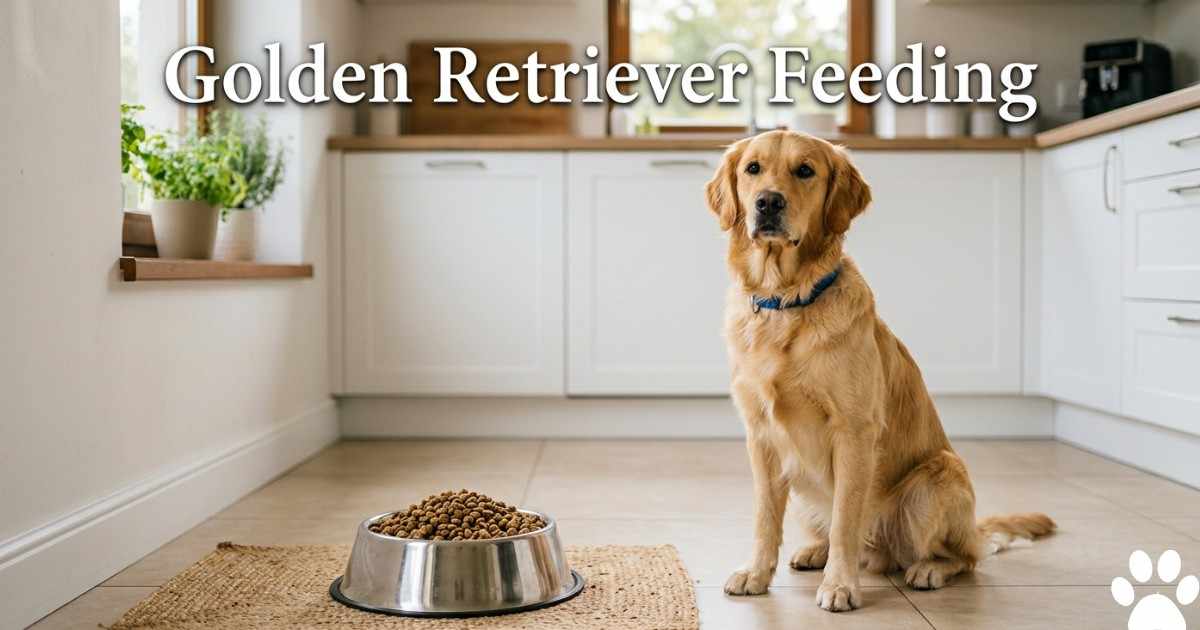
Adult Golden Retrievers need two meals per day totaling 2.5 to 4 cups of quality dry food, adjusted for body weight and activity level. Get the amount wrong, high or low, and you’re not just dealing with a picky eater. You’re setting up joint stress, obesity, or, in serious cases, the conditions that lead to gastric dilatation-volvulus.
I see the consequences of incorrect Golden Retriever feeding more than most people expect. A Golden will eat whatever you put in the bowl and act hungry two minutes later. That’s not a signal to add more food; it’s just breed behavior. The first sign I look for in any overweight Golden isn’t the scale reading. It’s that the waist has disappeared when you look down from above.
According to the APOP survey, over 55% of dogs in the United States are overweight or obese, and Golden Retrievers rank among the most affected large breeds due to their food motivation and owners' tendencies to free-feed.
How Much to Feed a Golden Retriever by Life Stage
Golden Retriever feeding (https://goldenretrieverinsight.com/the-golden-retriever-feeding-guide/) amounts shift significantly from puppyhood through senior years, and treating each stage the same is where most problems start.
Puppies (8 weeks to 6 months)
Feed three meals daily. A 2-3 month old puppy needs approximately 3 cups of large-breed puppy food per day, divided across those three meals. By six months, total daily intake for most pups rises to 3 to 4 cups. Large-breed puppy formulas matter here because they regulate calcium and phosphorus ratios critical for skeletal development. The AKC recommends staying on puppy food until at least 12 months and closer to 18 months for larger-framed dogs.
Adults (1 to 7 years)
Two meals per day, 10 to 12 hours apart. A moderately active adult Golden at 65 to 75 pounds typically needs 3 to 3.5 cups daily of a food rated at 350 to 400 kcal per cup. Active dogs running or retrieving daily can go up to 4 to 5 cups. Less active or indoor dogs should stay at 2.5 to 3 cups. Never free-feed an adult Golden. Leaving food available all day removes the structure that protects against overeating and makes early illness harder to detect.
Seniors (7 years and up)
Reduce to roughly 2.5 to 3 cups daily and consider a senior formula with lower caloric density and added glucosamine and EPA/DHA to support the joint degeneration common in aging Goldens. Weight gain after age seven is a direct stress multiplier on hips and elbows already showing age-related changes.
)
The Weight-Check Window: A Between-Visit Body Condition Check
You don’t need a vet visit to know if your Golden’s weight is drifting. Run this three-point check weekly, and you’ll catch problems before the scale confirms them.
Rib feel
Place both hands flat on your dog’s ribcage. You should feel individual ribs easily with light pressure, like running fingers over knuckles. If you have to push to find them, reduce portions by 10% immediately.
Waist tuck
Looking from the side, the abdomen should rise gently behind the rib cage. A golden with a straight line from chest to hindquarters is already overweight.
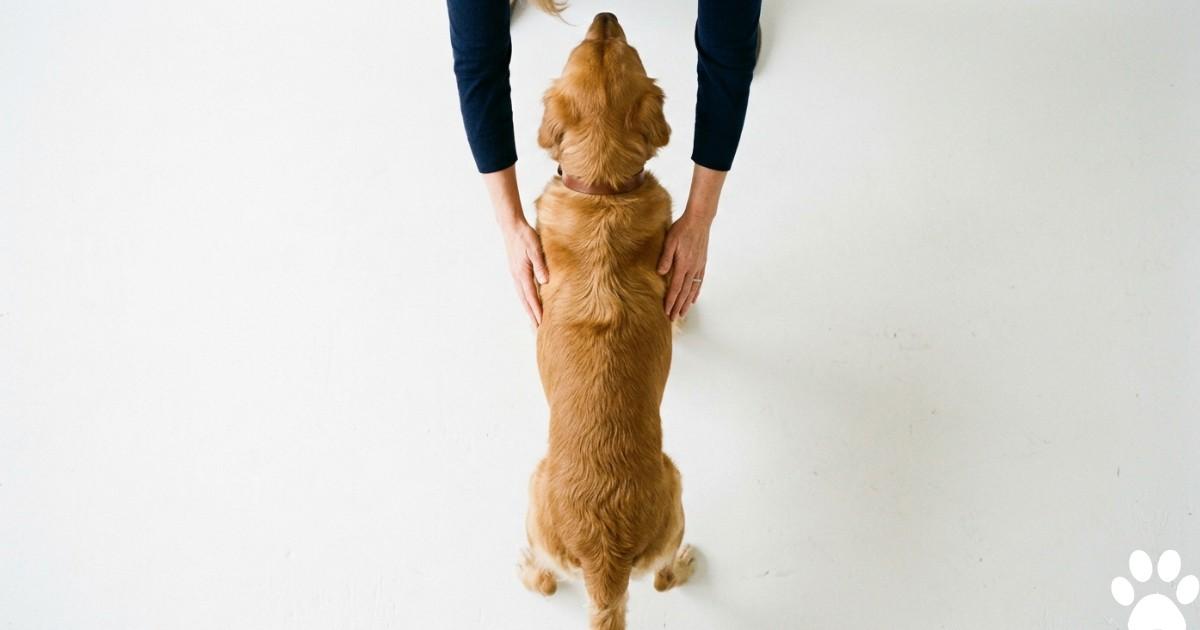
Overhead silhouette
Standing over your dog and looking straight down, you should see a clear narrowing at the waist. A golden who looks rectangular from above needs a feeding adjustment, not more walks alone.
For more structured Golden Retriever feeding guidance (https://goldenretrieverinsight.com/golden-retriever-feeding-chart-by-age/) mapped across full weight ranges, a detailed Golden Retriever feeding guide with age-specific charts (https://goldenretrieverinsight.com/dog-feeding-schedule-by-age/) covers the full breakdown.
When to Call the Vet about Feeding
URGENT—call immediately if you observe the following:
· A distended, tight, or drum-like abdomen after eating
· Unproductive retching or drooling with no vomit
· Sudden lethargy within one hour of a meal
These are cardinal signs of gastric dilatation-volvulus. The stomach rotates, cutting off the blood supply. Time matters in minutes, not hours. GDV risk increases when large meals are fed once daily and when dogs exercise immediately after eating, both common patterns in Goldens.
MONITOR over 24 to 48 hours if you observe the following:
· Loose stool after a food transition
· Reduced appetite lasting one meal
· Mild intermittent gas with no other symptoms
In a case from January 2024, a five-year-old female Golden presented with a two-month history of loose stools and slow weight gain despite a standard 3.5-cup daily portion. After reviewing her food, I found the owner had switched brands without a gradual transition, and the new formula was 20% higher in calories per cup. Adjusting portions and transitioning over ten days resolved both issues completely.
How much should a Golden Retriever eat per day?
Adult Golden Retrievers typically need 2.5 to 4 cups of quality dry food daily, split into two meals, adjusted for body weight, activity level, and the caloric density of the specific food.
How often should you feed a Golden Retriever?
Feed puppies three times daily until six months old, then transition to two meals per day spaced 10 to 12 hours apart. Two meals reduce bloat risk compared to a single large daily feeding.
When should I switch my Golden Retriever from puppy to adult food?
The AKC recommends switching large breed dogs at 12 to 18 months. Transition gradually over 10 to 14 days, mixing increasing amounts of adult food into the puppy formula to avoid gastrointestinal upset.
Can Golden Retrievers overeat?
Yes. Goldens are highly food-motivated (https://goldenretrieverinsight.com/category/food/) and will consistently overeat if given the opportunity. Free-feeding dramatically increases obesity risk in this breed and makes it harder to detect early appetite changes that signal illness.
What happens if a Golden Retriever eats too much at once?
Overeating in one sitting raises the risk of gastric dilatation-volvulus, a life-threatening condition where the stomach distends and may rotate. If your Golden shows a bloated abdomen and unproductive retching after eating, call your vet immediately.
Conclusion
Golden Retriever feeding comes down to the right amount at the right frequency for your dog’s specific stage and size. Two meals daily, portions calibrated to body weight and food calorie density, and a weekly weight-check window between vet visits keep most Goldens at a healthy weight. Get your portions dialed in now; it’s the single biggest factor in how your golden ages. What’s your current feeding schedule, and has your Golden’s weight stayed steady on it?
AUTHOR BIO
Dr. Nabeel Akram, DVM, is a veterinarian with a clinical focus on Golden Retriever nutrition, weight management, and life-stage feeding. He shares breed-specific insights on diet, health, and preventive care at GoldenRetrieverInsight.com, drawing on years of hands-on experience with the breed across every life stage.