Googlebook Launch Event Set For September 15: What To Expect
-

- Published Updated
- 3,299 views
TL;DR
- Google has confirmed an exclusive media preview for Googlebook on September 15, 2026, in New York City.
- The event will feature keynote sessions, hands-on demonstrations, and partner showcases rather than a traditional consumer launch.
- Googlebook introduces a premium laptop platform that combines Android, ChromeOS, and Gemini Intelligence.
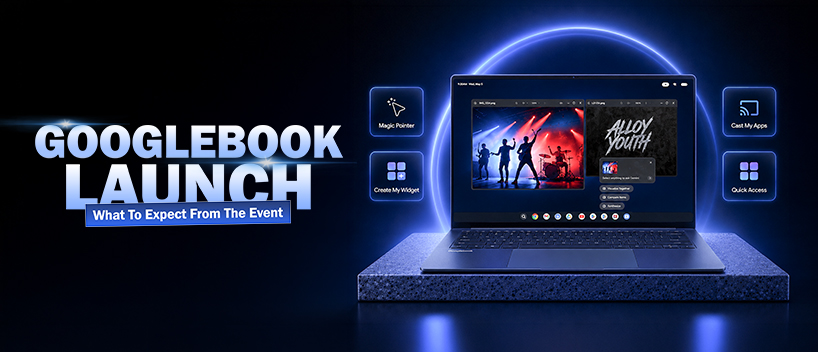
- AI-powered features such as Magic Pointer, Create My Widget, Cast My Apps, and Quick Access aim to create a smarter computing experience.
- Acer, ASUS, Dell, HP, and Lenovo are among the first manufacturers launching Googlebook devices later this fall.
Introduction
The personal computer has changed dramatically over the last two decades. Laptops have become thinner, more powerful, and increasingly connected to cloud services, yet the overall computing experience has remained largely familiar. Artificial intelligence, however, is beginning to reshape expectations. Instead of simply running applications, modern computers are evolving into intelligent assistants capable of understanding context, predicting user needs, and simplifying everyday tasks.
Google believes the next generation of laptops should be designed around that vision. Rather than treating AI as an optional feature, the company is making it a core part of the operating system itself. That philosophy is taking shape through Googlebook, Google's new premium laptop platform that blends Android, ChromeOS, and Gemini Intelligence into a single experience.
Following its introduction earlier this year, Googlebook is preparing for its biggest public milestone yet. Google has announced an invitation-only media preview in New York City on September 15, where journalists and industry analysts will receive their first detailed look at the platform, its software capabilities, and the hardware built by Google's manufacturing partners.
A Media Preview Instead Of A Traditional Launch
Unlike Google's Made by Google hardware events, the September gathering is not expected to be a large-scale consumer product launch. Instead, the company has chosen a more focused approach by inviting members of the media to experience Googlebook firsthand before it reaches store shelves.
The event is expected to feature keynote presentations from Google executives, demonstrations from hardware partners, and dedicated hands-on areas where attendees can test the devices. Reviewers will also have opportunities to evaluate performance, explore the software, and better understand how Google envisions the future of AI-powered computing.
This strategy gives Google the opportunity to generate detailed coverage based on real-world experiences rather than brief product announcements. Instead of relying solely on marketing presentations, journalists will be able to spend time exploring the platform before sharing their impressions with consumers.
While the September preview confirms Google's confidence in the product, it should not be mistaken for the commercial launch. Pricing, retail availability, and preorder information are still expected to arrive closer to the official release later this fall.
What Makes Googlebook Different?
Googlebook is not simply another Chromebook, nor is it an Android tablet with a keyboard attached. Google is positioning it as an entirely new category of premium laptops that combines the strengths of multiple platforms while placing artificial intelligence at the center of the user experience.
The platform brings together Android's application ecosystem with ChromeOS's web-first productivity model. Instead of asking users to choose between the flexibility of Android and the simplicity of ChromeOS, Googlebook aims to deliver both in a single operating environment.
This approach allows Google to modernize laptop computing without abandoning the features that users already appreciate. Android contributes access to a mature app ecosystem and a modern software foundation, while ChromeOS continues to offer fast browsing, cloud integration, and lightweight productivity tools.
By combining these technologies, Google hopes to create laptops that feel familiar while offering entirely new capabilities powered by Gemini Intelligence.
Gemini Intelligence Becomes The Operating System's Brain
Artificial intelligence is the defining element of Googlebook.
Rather than functioning as a standalone chatbot, Gemini Intelligence is woven throughout the operating system. Google's vision is for AI to become a constant assistant that understands what users are doing and provides help without interrupting their workflow.
This means users can expect AI-powered suggestions while reading emails, organizing files, browsing the internet, editing documents, or planning their schedules. Instead of repeatedly opening separate AI applications, many intelligent features are designed to appear naturally during everyday tasks.
Google believes this integrated approach makes AI more useful because assistance arrives exactly when users need it instead of requiring them to actively seek help.
The result is a computing experience intended to feel faster, more intuitive, and significantly more productive.
Magic Pointer Brings Context-Aware Computing
One of the headline features introduced for Googlebook is Magic Pointer.
Unlike a traditional mouse cursor, Magic Pointer understands the content displayed on screen and can recommend actions based on context.
Hovering over a meeting invitation could instantly create a calendar appointment. Selecting text may generate summaries, translations, or explanations. Choosing multiple images could allow Gemini to compare, organize, or visualize them together.
The objective is to reduce unnecessary clicks and eliminate repetitive tasks by allowing AI to recognize user intent directly from on-screen interactions.
Instead of switching between applications, users receive intelligent assistance without leaving their current workflow.
Create My Widget Personalizes The Desktop
Google is also introducing Create My Widget, an AI-powered customization feature that enables users to build personalized desktop widgets using natural language prompts.
Rather than manually configuring dashboards, users simply describe what they want to see.
Someone planning a business trip, for example, could request a dashboard displaying flight schedules, hotel reservations, local weather, meeting reminders, restaurant bookings, and travel countdowns.
Gemini gathers information from Google services such as Gmail, Calendar, and Search before automatically creating a customized workspace.
The feature reflects Google's larger ambition to organize information intelligently rather than expecting users to search for everything manually.
A Stronger Connection Between Phones And Laptops
Googlebook also strengthens the relationship between Android smartphones and laptops through several continuity features.
Cast My Apps
Cast My Apps allows compatible Android applications to run on Googlebook without requiring separate installation on the laptop.
Instead of downloading the same apps across multiple devices, users can access supported mobile applications directly from their connected smartphones.
This approach saves time while maintaining consistency between mobile and desktop experiences.
Quick Access
Quick Access makes moving files between devices significantly easier.
Users can browse, search, preview, and insert files stored on their Android smartphones directly through Googlebook's file manager without manually transferring them.
Whether accessing photos, presentations, documents, or PDFs, the process becomes considerably more seamless.
Google notes that these features require compatible smartphones running Android 17 or later.
Premium Hardware From Trusted PC Brands
Google is launching Googlebook alongside several established computer manufacturers rather than producing a single reference device.
The first wave of hardware partners includes Acer, ASUS, Dell, HP, and Lenovo.
Each company will develop its own interpretation of Googlebook while following Google's software requirements and design principles.
Consumers can therefore expect multiple screen sizes, performance levels, and hardware configurations to suit different preferences and budgets.
Google has also revealed that Googlebook devices will feature premium construction and a distinctive illuminated glowbar that visually differentiates them from traditional laptops.
Partnering with several leading manufacturers from day one also gives the platform immediate credibility within the competitive laptop market.
Why Googlebook Could Be Important
Googlebook represents more than another hardware announcement.
For years, Google's ecosystem has been divided between Android smartphones and ChromeOS laptops. While both platforms have gradually become more connected, they have largely evolved independently.
Googlebook signals a broader effort to unify Google's software ecosystem under a single AI-driven vision.
Instead of treating phones, laptops, and cloud services as separate products, Google wants them to function as parts of one intelligent computing environment.
This approach could significantly improve productivity for users already invested in Google's services while offering developers new opportunities to build AI-enhanced experiences.
At the same time, the success of Googlebook may influence how other technology companies approach the future of personal computing.
What Still Remains Unknown
Despite revealing numerous software capabilities, Google has not answered every question.
The company has yet to announce official pricing for Googlebook devices, leaving consumers uncertain about how the platform will compete against premium Windows laptops and Apple's MacBook lineup.
Google has also confirmed only that the first devices will arrive during fall 2026 without providing an exact release date.
The September 15 media preview is therefore expected to fill many of these gaps. Reviewers will likely share information about performance, battery life, build quality, displays, software responsiveness, and overall user experience after spending time with the devices.
Those early impressions may become the strongest indicator of how Googlebook will perform when it reaches consumers later this year.
Conclusion
Google's September 15 media preview marks the beginning of the next chapter in the company's laptop strategy. Rather than introducing another Chromebook, Google is attempting to redefine premium computing by combining Android, ChromeOS, and Gemini Intelligence into a unified platform built for the AI era.
Features such as Magic Pointer, Create My Widget, Cast My Apps, and Quick Access highlight Google's vision of making artificial intelligence a natural part of everyday computing instead of a separate application. Combined with hardware from Acer, ASUS, Dell, HP, and Lenovo, Googlebook enters the market with strong industry support and ambitious goals.
While pricing and availability remain under wraps, the upcoming preview should provide the clearest indication yet of whether Google's AI-first laptop strategy can reshape expectations for modern personal computing. If Google delivers on its promises, Googlebook could become one of the most significant additions to the premium laptop market in recent years.