Why Hospitals Should Hire a Healthcare Digital Marketing Agency
-

- September 24th, 2026
- 192 views
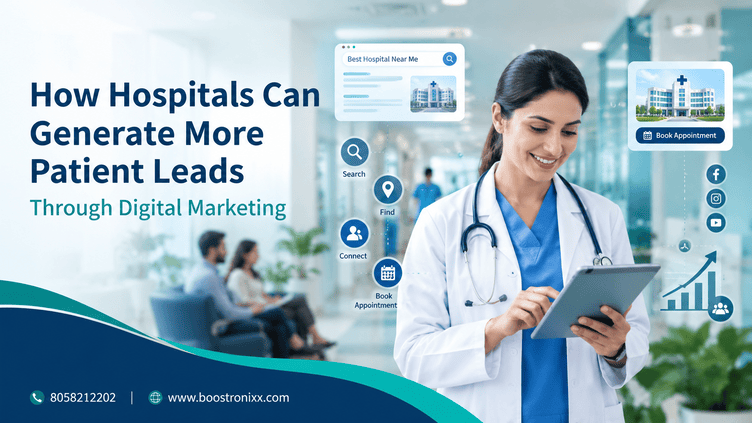
A patient's journey often begins long before they enter a hospital. They may search for a specialist, compare hospitals, check reviews, explore treatment information, or look for appointment options online. This changing behaviour has made digital visibility an important part of how hospitals communicate with potential patients.
For hospitals, digital marketing is not simply about promoting services. It is about making reliable information easier to find, building trust, improving the patient experience, and creating convenient ways for people to connect with the right healthcare service.
This is where working with a specialized healthcare digital marketing agency can be valuable.
Why Hospitals Need a Dedicated Digital Marketing Strategy
Healthcare marketing has different requirements from marketing a typical consumer business. Hospitals deal with sensitive information, highly personal decisions, and audiences looking for trustworthy information.
A hospital's digital strategy therefore needs to consider more than website traffic. It should connect search visibility, educational content, social media, paid advertising, reputation management, website experience, and lead tracking.
A dedicated healthcare marketing team can help bring these activities together instead of managing each channel separately.
The goal is not simply to attract more visitors. It is to attract relevant audiences and make it easier for them to find information, understand hospital services, and take an appropriate next step.
Patients Are Becoming More Digital in Their Healthcare Journey
Before contacting a hospital, people may search for symptoms, healthcare departments, doctors, treatment options, hospital locations, reviews, and appointment information.
This creates several digital touchpoints where a hospital can either provide useful information or remain invisible.
For example, someone searching for a specialist in Jaipur may first discover a hospital through Google. They may then visit its website, check the doctor's profile, read reviews, look at the hospital's location, and finally contact the hospital.
A strong digital presence helps hospitals participate in this journey with useful and accessible information.
1. Improve Hospital SEO and Local Visibility
Search engine optimization can help hospitals become more discoverable when people search for relevant healthcare services.
Hospital SEO may involve optimizing:
Department and specialty pages
Doctor profiles
Treatment and service pages
Location pages
Hospital information
Educational resources
Frequently asked questions
Local visibility is particularly important because healthcare decisions are often influenced by location.
For hospitals operating in Jaipur, Local SEO Services Jaipur can help strengthen visibility for relevant local searches by improving location signals, Google Business Profile information, website content, and other local search factors.
The objective should be to provide accurate information to people looking for relevant healthcare services rather than simply targeting as many keywords as possible.
2. Build Trust Through Healthcare Content
Healthcare websites need content that patients can understand and trust.
A hospital can publish educational articles, department information, doctor profiles, patient resources, FAQs, and general healthcare guidance to address common questions.
Content should be written carefully and avoid unsupported medical claims. Where appropriate, hospitals can demonstrate expertise through qualified authors or reviewers and references to reliable sources.
A specialized digital health marketing agency can help develop a content strategy that balances search visibility with the information needs of patients.
This is particularly important for healthcare websites because people may make significant decisions based on the information they find online.
3. Use Social Media to Educate and Engage
Social media can help hospitals communicate with their communities beyond their website.
Instead of making every post promotional, hospitals can share:
Doctor introductions
Hospital department information
General health awareness content
Patient education
Frequently asked questions
Hospital facilities
Community initiatives
Healthcare awareness campaigns
A healthcare social media marketing agency can help create a consistent content plan while keeping communication professional and appropriate for a healthcare audience.
The purpose is to build familiarity and trust over time rather than treating social media as a constant advertising channel.
4. Reach High-Intent Audiences With Google Ads
Organic search visibility takes time to develop. Paid search can provide another way for hospitals to reach people actively looking for specific services.
A properly structured Google Ads campaign can target relevant searches and direct users to dedicated landing pages.
For example, instead of sending someone searching for a particular specialty to a generic homepage, the campaign can direct them to a relevant service or department page containing useful information and a clear contact or appointment option.
A hospital marketing Agency Jaipur can help hospitals structure campaigns, manage budgets, test advertisements, monitor conversions, and identify opportunities for improvement.
However, advertising should always follow applicable healthcare advertising requirements and should avoid misleading claims or guarantees.
5. Turn Hospital Websites Into Useful Conversion Points
A hospital website should not simply provide information. It should make important actions easy.
Visitors should be able to quickly find:
Doctor information
Department details
Contact information
Hospital location
Appointment options
Service information
Emergency-related information where applicable
Landing pages should be relevant to the user's search or campaign and should have clear calls to action.
Website performance also matters. A confusing navigation structure, slow mobile experience, unclear contact information, or complicated appointment process can create unnecessary friction.
Digital marketing and website optimization therefore need to work together.
6. Manage Online Reputation Carefully
Reviews are another part of a hospital's digital presence.
Potential patients may look at reviews when researching healthcare providers. Hospitals should monitor their online reputation, encourage genuine feedback, and respond professionally to reviews.
Responses should respect patient privacy and should never disclose confidential medical information.
Reputation management is not about trying to eliminate every negative review. It is about maintaining an accurate, professional, and trustworthy online presence.
7. Build a Measurable Patient Lead Generation System
One advantage of digital marketing is that hospitals can measure different stages of the online journey.
Useful metrics may include:
Organic search traffic
Phone enquiries
Appointment requests
Website conversions
Paid advertising leads
Landing-page conversion rates
Cost per lead
Traffic by service or department
A Lead Generation Company Jaipur can help establish tracking systems that connect marketing activity with measurable enquiries.
This allows hospitals to identify which channels are generating meaningful engagement and where improvements may be needed.
8. Why Healthcare Marketing Requires Specialized Expertise
A general marketing strategy cannot always be transferred directly to healthcare.
Healthcare marketers need to understand the importance of accuracy, privacy, trust, patient intent, reputation, and responsible communication.
This is why many hospitals consider working with digital marketing agencies for healthcare rather than using a general-purpose marketing approach.
Specialized teams can coordinate SEO, paid advertising, content, social media, local search, website optimization, and analytics around the hospital's specific objectives.
What Should Hospitals Consider Before Hiring an Agency?
Before choosing an agency, hospitals should look beyond promises of rankings or leads.
Consider whether the agency:
Understands healthcare audiences
Uses transparent reporting
Has a clear SEO and content process
Understands local search
Can manage paid campaigns responsibly
Provides measurable performance data
Prioritizes useful, original content
Communicates clearly with the internal team
Hospitals with additional digital healthcare operations may also require specialized marketing support for online healthcare products or pharmacy-related ecommerce. In such cases, an Ecommerce Marketing Agency Jaipur may be relevant alongside the broader healthcare strategy.
The right agency should be selected based on the hospital's actual needs, services, audience, and growth objectives.
Final Thoughts
Digital marketing has become an important part of how hospitals build visibility and communicate with potential patients. However, successful healthcare marketing is not simply about publishing more content or increasing website traffic.
It requires a coordinated strategy across SEO, local search, paid advertising, social media, content marketing, website optimization, reputation management, and lead tracking.
For hospitals considering whether to Hire Digital Marketing Agency in Jaipur, the focus should be on finding a partner that understands healthcare communication and can build a practical strategy around measurable objectives.
BoostronixX helps healthcare businesses develop digital marketing strategies across SEO, PPC, social media, content marketing, local search, and website optimization. For hospitals and healthcare organizations in Jaipur, the approach can be tailored around their services, target audience, and patient acquisition goals.