How Industrial Solar Power Systems Reduce Manufacturing Costs
-

- Published Updated
- 2,316 views
Manufacturing businesses operate with high energy demands, and electricity is often one of the major components of their operating expenses. From running heavy machinery and production equipment to powering lighting, cooling, ventilation, and other systems, factories require a consistent supply of electricity. As energy costs continue to influence business profitability, manufacturers are increasingly looking for reliable ways to manage their power consumption.
Industrial solar power systems offer an effective solution by enabling factories and manufacturing facilities to generate electricity from sunlight. By producing power on-site, businesses can reduce their dependence on conventional grid electricity, manage energy expenses, and improve long-term operational efficiency. Solar energy can also support sustainability goals while providing manufacturers with a more predictable approach to energy management.
How Industrial Solar Power Systems Reduce Manufacturing Costs
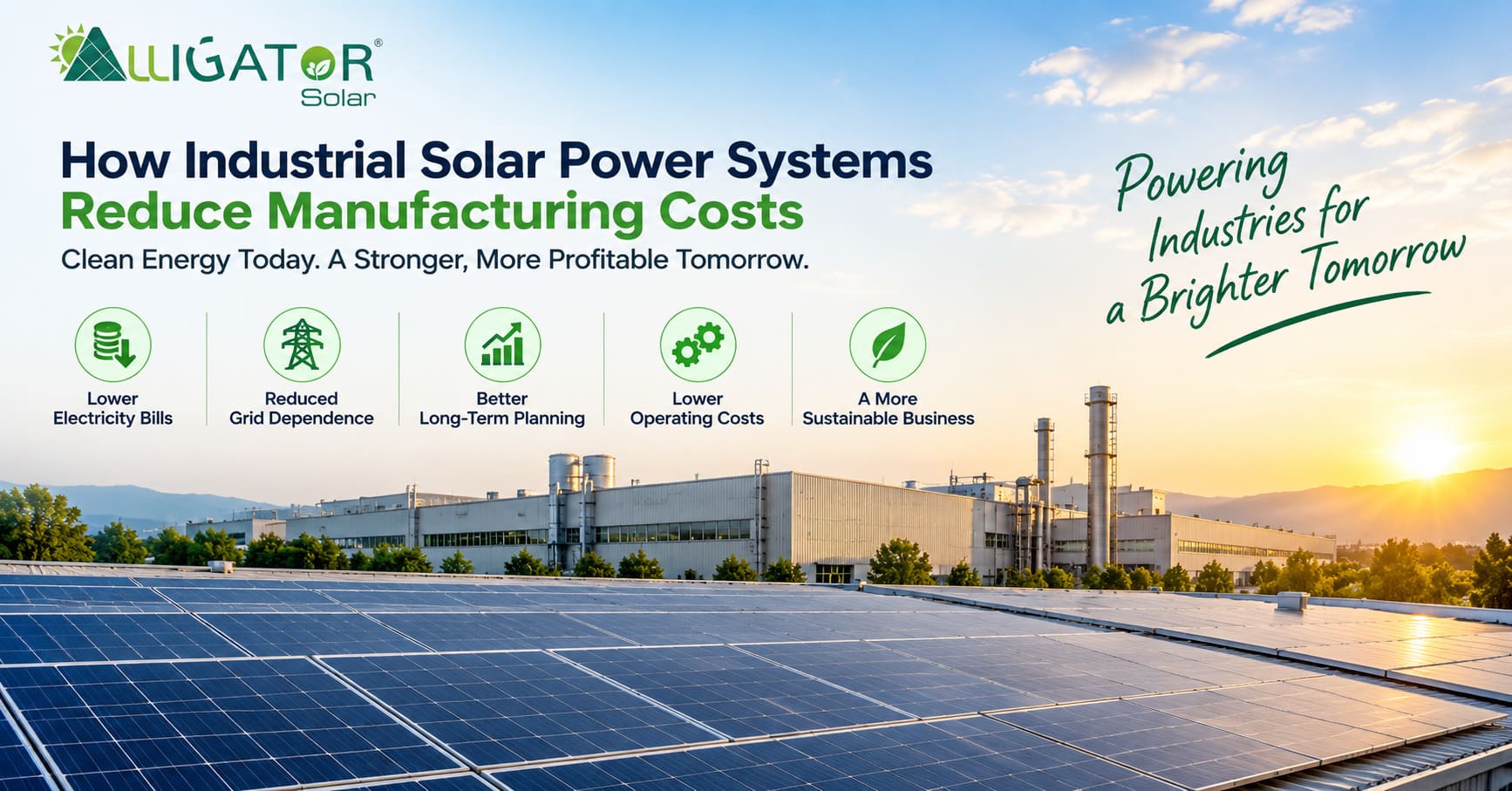
1. Lower Electricity Bills
One of the primary reasons manufacturers consider industrial solar power systems is the opportunity to reduce electricity expenses. Factories generally consume significant amounts of electricity during their operating hours, particularly when production machinery and other energy-intensive equipment are running.
Solar panels can generate electricity during daylight hours, allowing manufacturing facilities to use solar power for machinery, lighting, cooling, and other operations. By using the electricity generated by the solar system, businesses can reduce the amount of power they need to purchase from the grid.
The actual savings will depend on factors such as the size of the solar system, energy consumption, available installation space, and solar generation. However, generating a portion of electricity on-site can help businesses manage one of their recurring operating expenses more effectively.
2. Reduced Dependence on Grid Electricity
Manufacturing facilities often require a continuous and substantial supply of electricity. Heavy reliance on grid power can expose businesses to changing electricity tariffs and fluctuations in energy expenses.
An industrial solar system allows a factory to generate electricity at its own premises. This can reduce dependence on grid electricity and provide an additional source of power for regular business operations.
For facilities with suitable rooftops or available land, installing solar panels can be an efficient way to make better use of existing space while generating renewable electricity. Onsite solar solutions can be designed according to the facility's energy requirements and available installation area.
3. Better Long-Term Energy Planning
Energy costs can have a significant impact on the long-term financial planning of a manufacturing business. When electricity expenses change, it can become more difficult for businesses to accurately forecast future operating costs.
Solar power can provide greater predictability in energy planning. After an industrial solar power system is installed, sunlight becomes the primary energy source for electricity generation. This allows businesses to reduce their dependence on conventional electricity and better manage their long-term energy requirements.
For manufacturers planning their energy strategy over several years, solar can therefore become an important part of a broader approach to controlling operational expenses.
4. Lower Operating and Maintenance Costs
Modern industrial solar power systems are designed to operate reliably with comparatively low ongoing maintenance requirements. Unlike many conventional power-generation systems, solar panels do not rely on complex moving components to generate electricity.
However, regular maintenance is still important for maintaining system performance. Cleaning solar panels, inspecting equipment, monitoring energy generation, and carrying out preventive maintenance can help identify potential issues and support efficient operation.
Professional monitoring and maintenance can also help businesses maintain consistent energy generation over the operating life of their solar installation.
5. Improved Business Sustainability
Cost reduction is not the only advantage of industrial solar power. Manufacturing companies are also increasingly focusing on reducing their environmental impact and adopting cleaner energy sources.
Solar power generates electricity from sunlight without relying directly on conventional fossil-fuel-based electricity generation. By increasing the use of renewable energy, manufacturing businesses can support their sustainability objectives and reduce their dependence on conventional energy sources.
A stronger focus on renewable energy can also contribute to a more environmentally responsible business image, particularly for companies working toward long-term sustainability goals.
Why Professional Solar EPC Expertise Matters
Installing an industrial solar power system requires more than simply placing solar panels on a factory roof. The project needs proper planning, site assessment, system sizing, engineering, equipment selection, installation, and performance monitoring.
Working with an experienced solar EPC company can help manufacturers develop a solar solution based on their electricity consumption, available rooftop or ground space, operational requirements, and long-term energy objectives.
A professional EPC approach can also help businesses manage the installation process more effectively, from initial planning through commissioning and ongoing system support.
FAQs
How do industrial solar power systems reduce manufacturing costs?
Industrial solar power systems can reduce manufacturing costs by generating electricity on-site. This can lower dependence on grid electricity, reduce electricity expenses, and improve long-term energy cost management.
Are industrial solar power systems suitable for factories?
Yes. Industrial solar systems can be designed for different types of manufacturing facilities based on their electricity consumption, available rooftop or ground space, operating schedule, and energy requirements.
Do industrial solar systems require regular maintenance?
Yes. Regular cleaning, inspection, monitoring, and preventive maintenance are recommended to maintain system performance and identify potential issues at an early stage.
Is industrial solar a good long-term investment for manufacturers?
Industrial solar can be a valuable long-term energy investment for many manufacturing businesses. The financial benefits depend on factors such as system size, installation cost, electricity consumption, solar generation, and operating conditions.
Can solar power completely replace grid electricity for a factory?
The extent to which solar can meet a factory's electricity requirements depends on its energy consumption, solar system capacity, available installation space, and other project-specific factors. A professional assessment is required to determine the appropriate system size and expected energy generation.
Conclusion
Industrial solar power systems can help manufacturing businesses manage rising energy expenses while improving energy efficiency and sustainability. By generating electricity on-site, factories can reduce their dependence on grid power, lower recurring electricity costs, and improve long-term energy planning.
With appropriate system design, professional engineering, installation, and regular maintenance, solar energy can become an important part of a manufacturing facility's overall energy strategy. For businesses looking to control operating expenses while moving toward cleaner energy, industrial solar can offer a practical and sustainable path forward.