Integrate Fitness into Daily Routine: Practical Lifestyle Strategies
-

- Published Updated
- 376 views

Making movement a natural part of life requires more than motivation — it needs systems and small, repeatable actions that fit into existing routines. This guide explains how to integrate fitness into daily routine with practical frameworks, realistic examples, and actionable tips that work for busy schedules and varied fitness levels.
- Use short, repeatable sessions and environmental cues to build daily activity habits.
- Apply the MOVE framework (Micro-sessions, Opportunities, Variety, Environment) as a checklist.
- Track progress with simple measures: minutes active, steps, or number of micro-sessions.
- Expect trade-offs: convenience vs. intensity and consistency vs. novelty.
Integrate Fitness into Daily Routine: A Practical Guide
To integrate fitness into daily routine, start by identifying current daily touchpoints—commute, work breaks, household tasks—and convert them into consistent movement opportunities. Small, deliberate changes compound: five 5-minute micro-workouts distributed across the day can equal a single 25-minute session in time spent active while improving adherence.
Why lifestyle fitness integration works
Traditional exercise plans emphasize long, discrete workouts that demand separate time blocks. Lifestyle fitness integration replaces single-session thinking with a distributed approach that lowers resistance to action, increases frequency, and adapts to unpredictable days. Official guidance from health organizations notes that accumulated moderate-intensity activity yields meaningful health benefits when performed regularly; see the World Health Organization for baseline recommendations (WHO physical activity guidance).
MOVE Framework: A checklist for daily activity
A named, practical framework makes implementation easier. Use the MOVE framework as a checklist when planning daily activity:
- Micro-sessions — Break activity into 3–6 short sessions (3–15 minutes) during the day.
- Opportunities — Convert routine moments (waiting for the kettle, phone calls, commuting) into movement windows.
- Variety — Mix walking, strength moves, balance, and mobility to reduce boredom and target different systems.
- Environment — Arrange the home and workplace to cue activity: visible resistance bands, a timer, or a standing desk area.
Simple plan template: daily activity habits checklist
Apply this checklist to one typical day and adapt:
- Morning: 5-minute mobility and calf raises before breakfast.
- Commute or midday: 10-minute brisk walk or two 5-minute stair sessions.
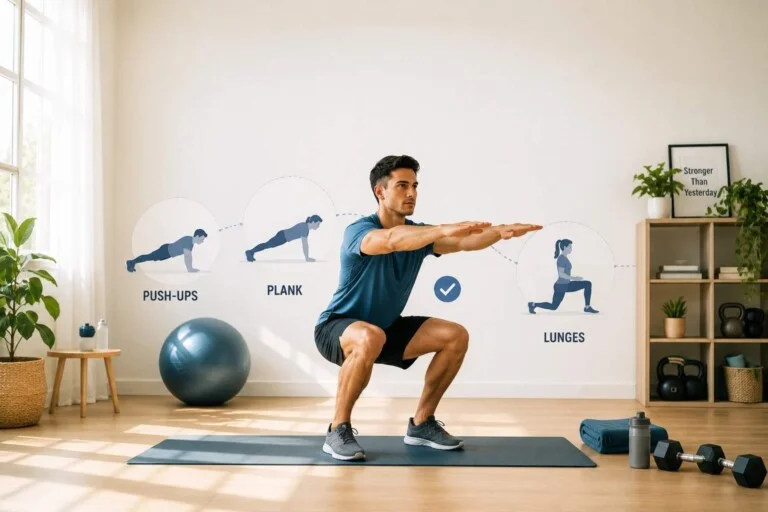
- Afternoon break: 3–5 minute bodyweight strength circuit (squats, push-ups, plank).
- Evening: 10–15 minute family walk or active household chores with added effort.
Real-world example
Scenario: An office worker with a 9–5 schedule converts the commute and breaks into movement. Walks to a farther bus stop (+7 minutes), does a 6-minute bodyweight circuit during lunch, and replaces one evening TV episode with a 15-minute walk. The result: consistent moderate activity spread through the day, improved energy, and no need to carve out a separate hour for the gym.
Practical tips for making it stick
- Set context-based cues: link a short exercise to an existing habit (e.g., after every coffee, do calf raises).
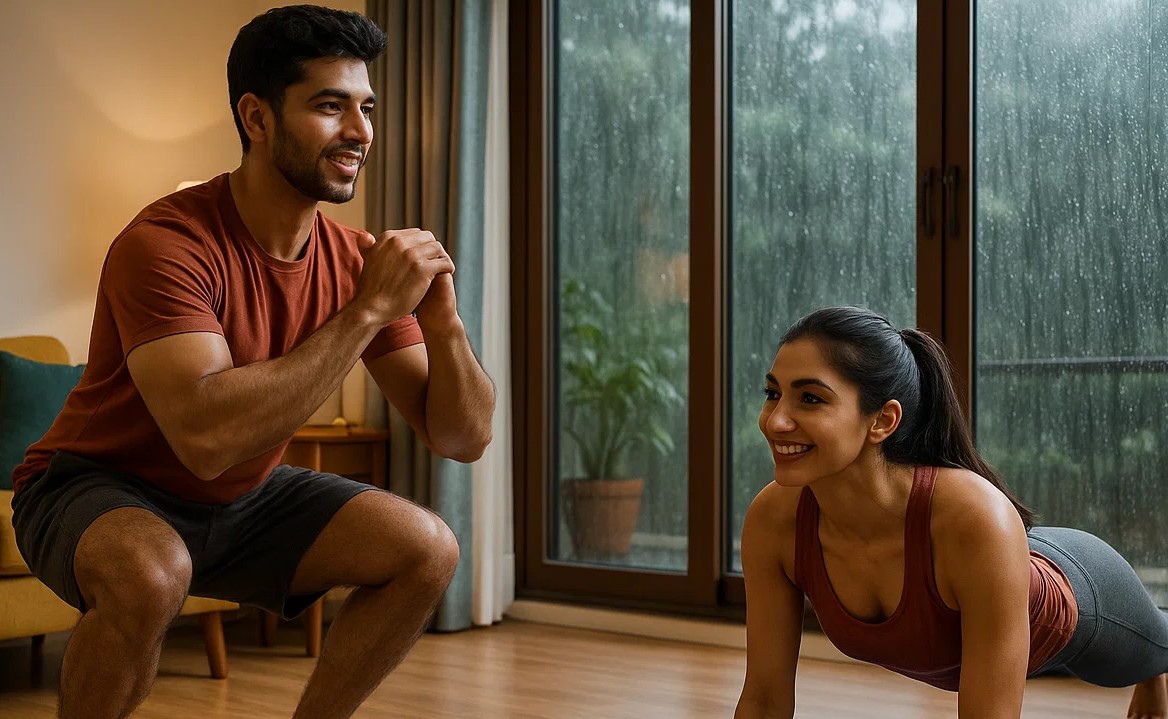
- Use micro-workouts at home when time is tight: 2–3 bodyweight moves for 3–6 minutes raise heart rate and build strength.
- Schedule the first 5 minutes: putting an activity in a calendar increases compliance more than vague intentions.
- Measure simple outputs: minutes active, step count, or number of micro-sessions per day rather than chasing a single metric.
Common mistakes and trade-offs
When switching to integrated fitness, expect trade-offs and avoid these common mistakes:
- Mistake: Treating micro-sessions as optional. If micro-sessions lack priority they are easy to skip. Solution: attach each session to a fixed cue.
- Mistake: Seeking high intensity every time. Trade-off: intensity vs. frequency — preserved frequency often yields better adherence.
- Mistake: Ignoring recovery and progression. Trade-off: convenience vs. overload — add intensity or duration gradually to avoid plateaus and injury.
Tracking progress and adapting
Progress measures should be simple and reliable. Use one or two of the following: daily active minutes, average steps per day, or the number of micro-sessions completed. Reassess every two weeks and adjust: increase session length, add resistance for strength, or diversify movement types to maintain gains.
Practical tools and environment adjustments
- Place exercise cues in view (bands, a mat, sneakers by the door).
- Set calendar blocks or phone reminders for micro-sessions.
- Choose clothing that reduces friction (comfortable shoes for short walks during the day).
When to choose integrated fitness vs. planned workouts
Integrated fitness is best for building consistent movement and improving daily energy, especially when schedules are unpredictable. Planned, longer workouts may be preferable when training for specific performance goals (races, competitions) that require focused overload and progressive programming. Combining both approaches is often the most sustainable choice.
FAQ
How can someone integrate fitness into daily routine if they work full-time?
Convert existing workday moments into movement: take a slightly longer route when walking to meetings, stand or march during phone calls, perform a 5–10 minute bodyweight circuit at lunch, and replace one evening passive habit with a short walk. Scheduling and physical cues are critical; use a timer and visible equipment to trigger action.
What are effective micro-workouts at home?
Short, full-body circuits work best: 30–45 seconds each of squats, incline push-ups, plank or side plank, and glute bridges with 15–30 seconds rest. Repeat for 6–12 minutes. Progress by increasing rounds, shortening rest, or adding resistance bands.
How long before lifestyle changes become habit?
Habit formation varies, but consistent practice for 6–8 weeks often solidifies a new routine. The key is repetition and reliable cues: tying activity to daily events accelerates habit formation.
Can lifestyle fitness replace gym workouts?
For general health and fitness, integrated daily activity can be as effective as gym workouts when volume and intensity are adequate. For specific strength or performance goals, combine lifestyle activity with targeted, progressive gym sessions.
What equipment is useful for daily activity?
Minimal tools are effective: a resistance band, a jump rope, or a kettlebell for short strength sessions. Tools should be visible and accessible to reduce the friction of starting a micro-session.