ISRAEL-HEZBOLLAH CONFLICT ERUPTS AGAIN: SOUTHERN LEBANON STRIKES RAISE FEARS OF WIDER MIDDLE EAST ESCALATION
-

- Published Updated
- 3,065 views
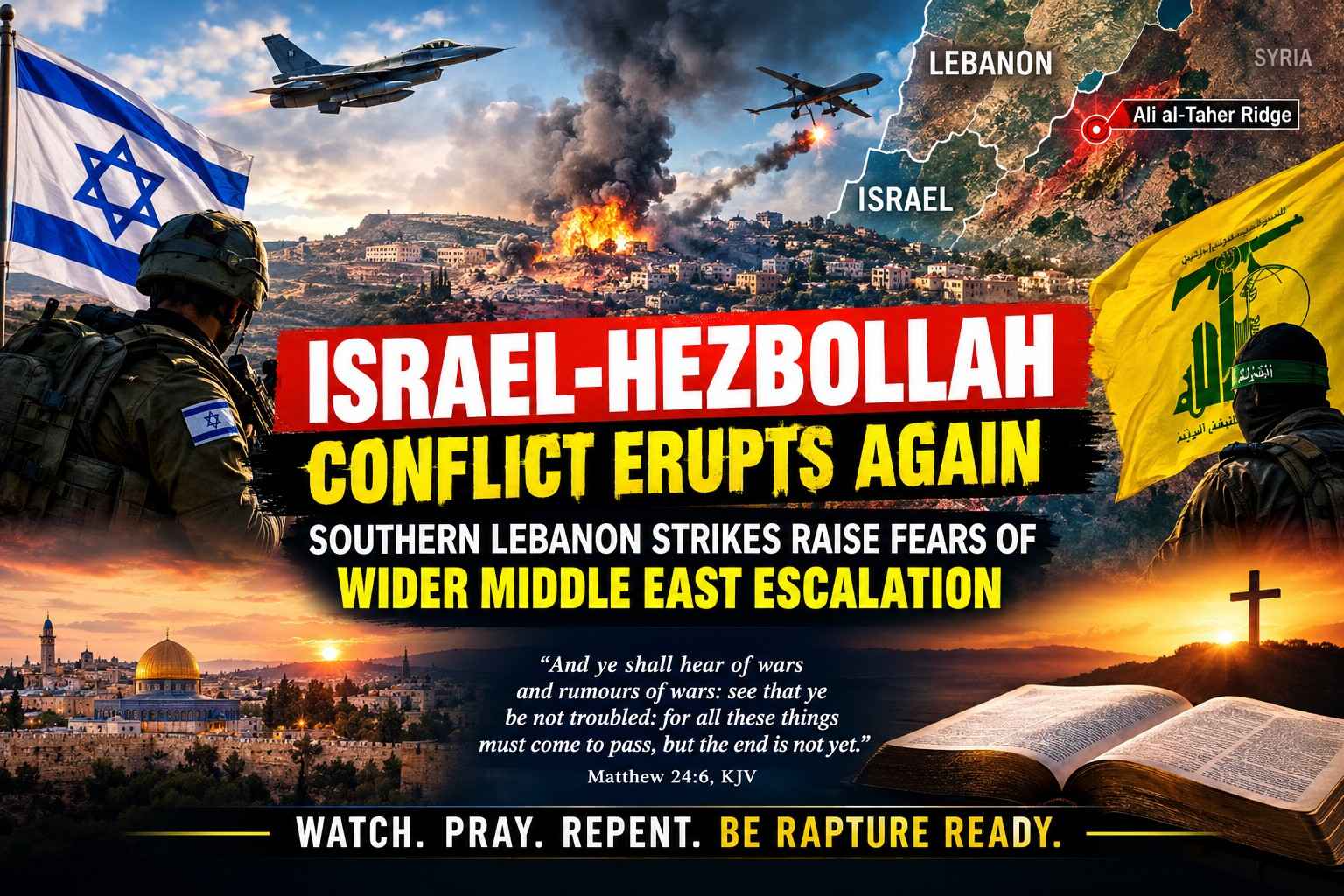
The Middle East is once again witnessing a dangerous escalation.
On September 6, 2026, Israeli forces carried out strikes in southern Lebanon after Hezbollah launched explosive drones toward Israeli troops operating in the area. Lebanese authorities reported multiple deaths and injuries, while Israel said it was targeting Hezbollah military infrastructure.
The latest escalation comes despite a ceasefire announced in June and raises fresh questions about whether the fragile truce can survive the continuing confrontation between Israel and Hezbollah.
According to reports, Israel has been conducting military operations around the strategic Ali al-Taher ridge in southern Lebanon. The elevated area is considered strategically important because of its position overlooking parts of southern Lebanon and because of underground infrastructure that Israel says was constructed by Hezbollah.
The Israeli military has said that it has gained operational control of the area and has targeted weapons storage facilities and underground positions belonging to Hezbollah.
Hezbollah, however, has continued to resist Israeli military pressure.
The result is a dangerous cycle.
One side launches drones.
The other responds with airstrikes.
Civilian areas are caught in the middle.
And every new military exchange increases the possibility that a localized confrontation could develop into something much larger.
⚠️ A CEASEFIRE UNDER GROWING PRESSURE
The latest fighting is particularly significant because it comes after a U.S.-brokered ceasefire.
A ceasefire is supposed to reduce tensions and create space for negotiations. Yet the continuing military activity demonstrates just how fragile the situation remains.
Reports indicate that the United States has been involved in diplomatic efforts between Lebanon and Israel, while discussions concerning Hezbollah's weapons and military infrastructure remain highly sensitive.
The strategic Ali al-Taher ridge has become one of the flashpoints in this confrontation.
Israel considers Hezbollah's presence and underground infrastructure in the region a major security threat. Hezbollah, meanwhile, has rejected demands that would significantly restrict its military capabilities.
This leaves southern Lebanon in a highly unstable position.
Even when a formal ceasefire exists, military operations can quickly restart when one side believes the other has violated the agreement.
That is precisely why the latest developments deserve attention.
🌍 WHY THIS MATTERS BEYOND LEBANON
The conflict between Israel and Hezbollah cannot be viewed entirely as an isolated Lebanese issue.
Hezbollah is closely connected to Iran, and the wider Middle East is already experiencing extraordinary military tension.
Iran, Israel, the United States and other regional actors are involved in an increasingly complicated geopolitical confrontation.
The latest developments in Lebanon therefore come at a particularly dangerous moment.
A military confrontation involving Hezbollah could potentially create pressure for other regional powers to become involved.
The Middle East has repeatedly demonstrated how quickly one military incident can produce consequences far beyond the original battlefield.
A drone attack can lead to airstrikes.
Airstrikes can lead to retaliation.
Retaliation can produce wider military operations.
And wider military operations can place additional pressure on governments that are already attempting to prevent a larger regional war.
This is why the situation in southern Lebanon deserves close attention.
📖 WHAT DOES THE BIBLE SAY ABOUT WARS AND THE LAST DAYS?
For Christians, these developments also bring the words of the Lord Jesus Christ into sharper focus.
When His disciples asked about the signs of the end of the age, the Lord Jesus Christ warned about increasing conflict among nations.
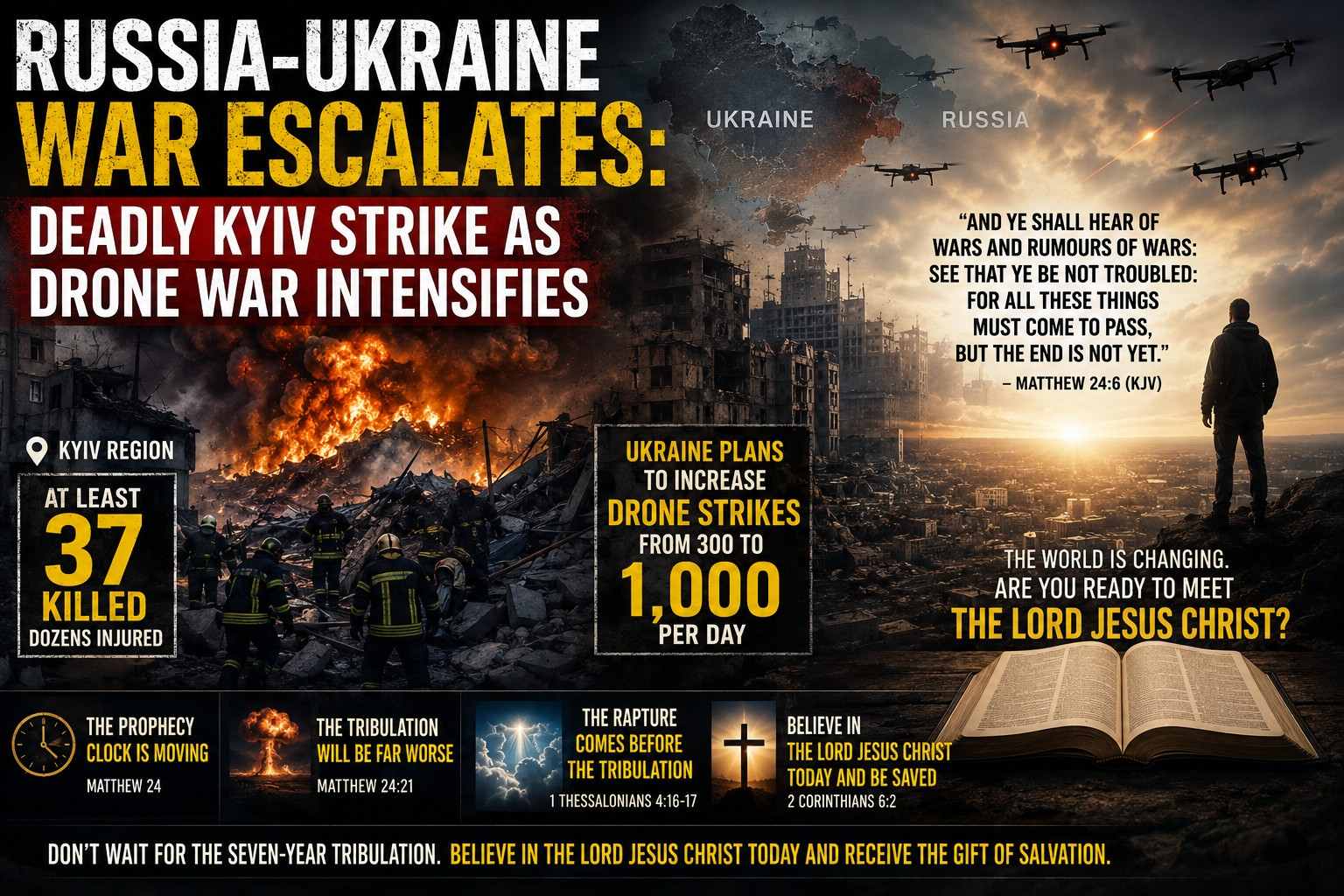
“And ye shall hear of wars and rumours of wars: see that ye be not troubled: for all these things must come to pass, but the end is not yet.”
— Matthew 24:6, KJV
The Middle East has repeatedly appeared at the centre of international conflict, and Israel occupies a unique place in biblical prophecy.
Scripture repeatedly directs our attention toward Israel, Jerusalem and the nations surrounding the region.
The continuing instability should therefore cause believers to watch carefully and to search the Scriptures.
These events are taking place in a world already experiencing wars, political instability, economic uncertainty, technological transformation and increasing international tension.
The prophetic picture described in Scripture is becoming increasingly relevant to the world in which we live.
🌍ISRAEL REMAINS CENTRAL TO BIBLICAL PROPHECY
Israel is not simply another country on the geopolitical map from a biblical perspective.
The Bible contains extensive prophecy concerning Israel, Jerusalem and the nations.
The Lord Jesus Christ also warned that the last days would be characterized by extraordinary turmoil and international conflict.
The continuing confrontation involving Israel and Hezbollah should therefore remind us that the Middle East remains one of the most important regions to watch.
The big question is where these developments ultimately lead.
Could the present conflicts contribute to a much broader regional confrontation?
Could changing alliances prepare the geopolitical environment for future prophetic events?
Could increasing instability accelerate the world toward the circumstances described in Daniel, Revelation and other prophetic passages?
These are questions that deserve serious consideration.
🔥 THE COMING 7-YEAR TRIBULATION
Bible prophecy points toward a future period of unprecedented global distress—the coming 7-year Tribulation.
The Lord Jesus Christ described this period in extraordinarily serious terms:
“For then shall be great tribulation, such as was not since the beginning of the world to this time, no, nor ever shall be.”
— Matthew 24:21, KJV
The present world has not yet experienced the full horror described in this prophecy.
But the direction of world events should awaken humanity.
Wars are multiplying.
Nations are increasingly divided.
The Middle East remains unstable.
International alliances continue to shift.
And Israel remains at the centre of enormous geopolitical and prophetic attention.
For those who believe the Bible, these developments should not produce hopelessness.
They should produce spiritual urgency.
✝️ THE MOST IMPORTANT MESSAGE IS REPENTANCE
Beyond the headlines, military operations and geopolitical calculations lies the most important issue of all: the condition of the human soul.
The Lord Jesus Christ gave a clear command:
“Repent ye, and believe the gospel.”
— Mark 1:15, KJV
No government, military alliance or political leader can provide eternal salvation.
Our ultimate hope is not found in military strength, diplomacy, economic systems or human governments.
Our hope is found in the Lord Jesus Christ.
The world may continue moving toward increasing uncertainty, but those who belong to Christ have an eternal hope.
The escalating situation in southern Lebanon is therefore another reason to watch, pray and remain spiritually prepared.
The Middle East may continue to dominate tomorrow's headlines.
But Scripture points us toward something far greater than tomorrow's headlines.
The prophetic clock continues to move.
WATCH. PRAY. REPENT. BE RAPTURE READY. ✝️
If you want to find more articles exploring current events, Israel, the Middle East, the Rapture, the coming 7-year Tribulation, end-time wars, Daniel, Revelation and the Gospel of the Lord Jesus Christ.
🔎Search Google for:
BIBLE PROPHECY IN ACTION