Maximizing IT Services Ads Revenue: Strategies for Effective Online Ad Campaigns
-

- February 23rd, 2026
- 1,757 views
Introduction
IT Services ads Revenue depends on more than ad spend: targeting, creative relevance, bidding strategy, landing page experience, and measurement all shape returns. This article outlines practical steps to design and optimize IT services ad campaigns for sustained revenue growth while addressing compliance, attribution, and industry benchmarks.
- Understand core metrics: CPC, CPM, CTR, conversion rate, ROAS, and lifetime value (LTV).
- Align creative and landing pages to reduce friction and improve Quality Score.
- Use audience segmentation, remarketing, and programmatic targeting to raise conversion efficiency.
- Measure with multi-touch attribution, analytics, and industry standards to validate revenue.
- Follow privacy and advertising guidelines (GDPR, CCPA) and industry standards from organizations like the IAB.
IT Services ads Revenue: Key concepts
Maximizing IT Services ads Revenue begins with clear definitions of measurement and goals. Cost-per-click (CPC) and cost-per-mille (CPM) are media cost metrics; click-through rate (CTR) and conversion rate measure response; return on ad spend (ROAS) and revenue-per-lead connect performance to business outcomes. Understand whether campaigns should prioritize lead volume, lead quality, or direct sales, and map metrics to those objectives.
Planning an IT services ad campaign
Define goals and buyer stages
Segment buyers into awareness, consideration, and decision stages. Use broad awareness channels (display, social video) for top-of-funnel reach, and targeted search or account-based marketing (ABM) for bottom-of-funnel conversions. Set measurable KPIs for each stage—impressions and view-through rate for awareness; CTR and form completions for consideration; cost-per-acquisition (CPA) and revenue-per-customer for decision.
Audience targeting and segmentation
Combine firmographic targeting (industry, company size, tech stack) with behavioral signals (site visits, content downloads) to prioritize high-value accounts. Use remarketing lists and lookalike audiences to expand reach while maintaining efficiency. Programmatic platforms and demand-side platforms (DSPs) can automate reach across exchanges with bid adjustments for priority segments.
Creative, landing pages, and conversion optimization
Ad creative best practices
Ad messages should reflect the buyer stage: educational content for awareness, case studies and demos for consideration, and clear calls-to-action for decision. A/B test headlines, descriptions, visual assets, and formats (text, responsive display, video) to learn which combinations produce the best CTR and conversion rate.
Landing pages and funnel design
Ensure landing pages match ad intent—consistent messaging, clear value propositions, fast load times, and mobile optimization. Reduce form friction by asking only for necessary information at the first contact, and use progressive profiling for deeper qualification. Track post-click behavior with analytics and server-side events where feasible.
Measurement, attribution, and reporting
Attribution models and revenue mapping
Single-touch models (last click) can misrepresent influence in multi-channel funnels. Implement multi-touch attribution or data-driven attribution to distribute credit across touchpoints. Connect ad platforms to CRM systems to record lead-to-revenue paths and calculate pipeline contribution and customer lifetime value (LTV).
Key metrics to monitor
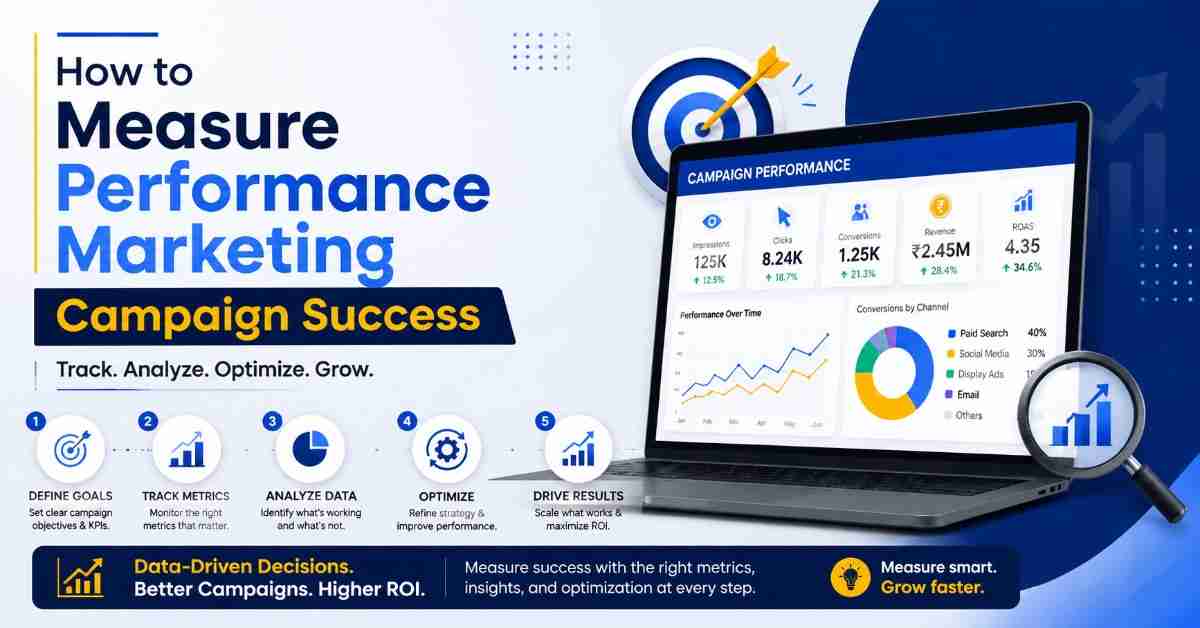
Monitor CPC, CPM, CTR, conversion rate, CPA, ROAS, and LTV-to-CAC ratio. Segment performance by channel, campaign, audience, device, and creative. Use statistical significance in experiments and maintain at least several weeks of data to account for variability in B2B buying cycles.
Optimization techniques and bid strategies
Bidding and budget allocation
Choose bidding strategies that align with goals: automated bid strategies for conversion volume, target ROAS for efficiency, or manual bids for precise control of high-value accounts. Reallocate budget dynamically to campaigns and audiences showing higher marginal returns, and consider seasonality and sales cycles in planning.
Testing and scaling
Run controlled experiments for creative, landing pages, and audience segments. When a test shows repeatable performance gains, scale incrementally to preserve unit economics. Monitor frequency and ad fatigue to avoid diminishing returns.
Compliance, privacy, and industry standards
Privacy regulations and best practices
Ad campaigns must comply with regional privacy laws such as GDPR in the EU and CCPA in California. Maintain transparent consent mechanisms, document data processing, and follow platform policies. For measurement, favor aggregated or modeled conversion approaches when individual-level tracking is restricted.
Industry measurement guidance
Follow industry bodies and standards for measurement and disclosure. The Interactive Advertising Bureau (IAB) publishes guidelines on viewability, ad fraud, and measurement that can help maintain consistent reporting and trust across partners.
Frequently asked questions
How can IT Services ads Revenue be accurately measured for multi-channel campaigns?
Accurate measurement requires integrating ad platforms with analytics and CRM, using multi-touch attribution or data-driven models, and mapping ad-driven leads to revenue events. Use server-side tracking, conversion APIs, and consistent UTM tagging to improve data quality while respecting privacy rules.
What metrics should be prioritized for a B2B IT services campaign?
Prioritize metrics that reflect lead quality and revenue impact: cost-per-acquisition (CPA), conversion rate, pipeline contribution, average deal size, and customer lifetime value (LTV). CTR and CPC are useful upstream indicators but should be tied to downstream outcomes.
Which ad formats typically drive the best ROI for IT services?
Search ads often produce strong intent-driven performance, while targeted display and programmatic can support account-based initiatives and awareness. Sponsored content, webinars, and case studies—amplified via paid social—are effective for generating informed leads. Testing across formats is essential because performance varies by audience and offer.
How do privacy rules like GDPR affect ad measurement?
Privacy regulations require informed consent for personal data processing and impose restrictions on cross-site tracking. Use consent management platforms, prioritize first-party data collection, and implement privacy-preserving measurement (aggregated modeling or conversion APIs) to maintain measurement while complying with law.
What is a reasonable timeline to see improvements in IT services ad revenue?
Initial learnings often appear within 4–8 weeks for paid search and social; however, sustained improvements in revenue and funnel efficiency typically require several months due to longer B2B sales cycles, attribution lag, and necessary experimentation. Maintain consistent measurement and iterate based on data.