Japan’s Solar Energy Plan from Moon Transforms Future Clean Energy
-

- May 15th, 2026
- 7,088 views
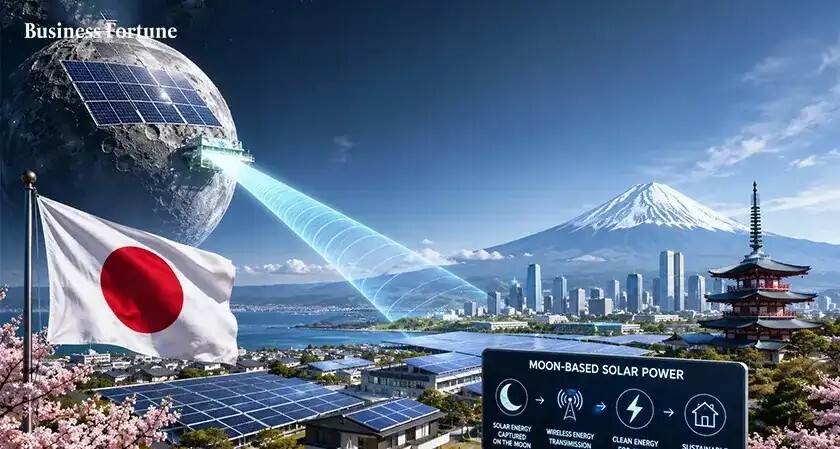
The future of renewable energy may no longer be limited to Earth. In a groundbreaking development that is capturing global attention, Japan’s ambitious plan to generate solar power from space—particularly from the Moon—is redefining how humanity could solve future energy challenges. The concept, once considered science fiction, is now becoming part of serious scientific and technological discussions as countries race to secure sustainable and long-term clean energy solutions.
Japan’s latest focus on lunar-based solar energy systems signals a major shift in the global clean energy conversation. As technological innovation accelerates and climate concerns intensify, experts believe space-based solar power could become one of the most transformative energy breakthroughs of the 21st century.
The Vision Behind Japan’s Lunar Solar Energy Strategy
Japan has long been recognized as a leader in advanced technology, robotics, and sustainable innovation. Now, the country is exploring how solar energy collected in space could provide uninterrupted clean electricity back to Earth.
Unlike traditional solar farms on Earth that depend on weather conditions and daylight availability, solar panels positioned in space or on the Moon could collect sunlight continuously. Since the Moon has no atmosphere like Earth, solar radiation can be captured more efficiently, potentially generating massive amounts of renewable energy.
The concept revolves around collecting solar energy in space and transmitting it wirelessly to Earth using microwave or laser-based technology. Scientists and engineers believe this could significantly reduce dependence on fossil fuels while creating a stable global energy source.
Why the Moon Matters for Clean Energy
One of the biggest challenges facing renewable energy systems today is inconsistency. Solar panels on Earth only generate power during daylight hours, while weather conditions such as clouds and storms can affect efficiency.
The Moon presents unique advantages:
- Constant exposure to sunlight in certain regions
- No atmospheric interference
- Large surface area for solar installations
- Potential for long-term energy infrastructure
- Reduced environmental impact compared to large-scale Earth mining and drilling
Japan’s interest in lunar solar power reflects a growing understanding that future energy systems may require solutions beyond Earth-based limitations.
Scientists suggest that lunar solar stations could eventually transmit power to Earth continuously, helping stabilize electricity grids and support growing energy demand worldwide.
Space-Based Solar Power Is No Longer Science Fiction
For decades, space-based solar power existed mainly in scientific theories and futuristic concepts. However, advancements in robotics, satellite engineering, wireless transmission, and space exploration are making these ideas increasingly realistic.
Japan’s research organizations and aerospace agencies have already conducted experiments involving wireless energy transfer technologies. These experiments aim to prove that solar energy collected in space can be transmitted safely and efficiently over long distances.
As launch costs decrease and private space companies expand operations, building infrastructure beyond Earth is becoming more economically feasible than ever before.
The growing global interest in lunar exploration is also accelerating momentum. Countries are no longer viewing the Moon only as a scientific destination but also as a strategic location for future technology and resource development.
The Role of AI and Advanced Robotics
Artificial intelligence and robotics are expected to play a critical role in Japan’s lunar solar energy ambitions. Building and maintaining infrastructure on the Moon would require autonomous systems capable of operating in harsh environments without direct human supervision.
Advanced robotics may help:
- Assemble solar farms on the lunar surface
- Conduct maintenance and repairs
- Optimize energy collection systems
- Monitor transmission efficiency
- Adapt infrastructure to lunar conditions
AI-powered systems could also improve energy management by predicting transmission needs and optimizing power distribution back to Earth.
This combination of AI, robotics, and renewable energy technology highlights how multiple innovation sectors are converging to shape the future of sustainability.
Global Competition in Space Energy Innovation
Japan is not alone in exploring space-based energy systems. Several countries, including the United States, China, and European nations, are investing heavily in next-generation renewable technologies connected to space exploration.
However, Japan’s focus on clean energy innovation positions it as one of the leading nations in this emerging sector.
The race for space-based solar power is becoming increasingly important because:
- Global energy demand continues rising
- Climate goals require major emission reductions
- Nations seek energy independence
- Renewable infrastructure must become more reliable
- Technological leadership creates economic advantages
If successful, Japan’s lunar solar initiative could influence global energy policies and inspire international collaboration in space sustainability projects.
Challenges Facing Lunar Solar Energy
Despite the excitement surrounding the idea, significant challenges remain before lunar solar energy can become reality.
Some of the biggest obstacles include:
- Extremely high infrastructure costs
- Complex wireless energy transmission systems
- Space transportation limitations
- Harsh lunar environmental conditions
- Regulatory and geopolitical concerns
- Safety standards for energy transmission
Building large-scale solar facilities on the Moon would require unprecedented international cooperation, engineering precision, and financial investment.
There are also questions about how space-based energy systems would be governed globally. Since outer space is considered an international domain, future agreements may be necessary to regulate energy infrastructure and transmission rights.
Environmental Benefits Could Be Massive
One of the strongest arguments supporting Japan’s lunar solar initiative is its potential environmental impact.
Traditional fossil fuel systems continue contributing heavily to carbon emissions, pollution, and climate change. While Earth-based renewable energy sources are growing rapidly, many still face limitations in consistency and scalability.
Space-based solar power could offer:
- Continuous renewable electricity generation
- Significant carbon emission reductions
- Reduced land-use pressure on Earth
- Lower dependence on fossil fuels
- Cleaner global energy infrastructure
If scalable and economically viable, lunar solar systems could become part of long-term climate strategies aimed at achieving global sustainability goals.
Economic Opportunities Beyond Energy
Japan’s lunar solar ambitions may also unlock entirely new economic sectors. The development of space-based infrastructure could create demand for:
- Aerospace engineering
- Robotics manufacturing
- Satellite communications
- AI-driven energy systems
- Space construction technologies
- Advanced materials research
This could lead to new industries, international partnerships, and high-tech employment opportunities worldwide.
The commercialization of space technology is already accelerating globally, and renewable energy could become one of the most valuable sectors within the future space economy.
Public Fascination and Global Curiosity
Part of what makes Japan’s solar energy vision so compelling is the sheer scale of imagination involved. The idea of generating electricity from the Moon captures public curiosity because it represents a bold rethinking of humanity’s relationship with energy and technology.
Social media discussions, scientific debates, and international media coverage are helping bring greater awareness to the concept of space-based renewable energy.
For younger generations especially, projects like these symbolize innovation, sustainability, and the possibility of solving global problems through advanced science.
The Future of Clean Energy Could Extend Beyond Earth
As the world faces increasing climate challenges, nations are searching for solutions capable of supporting future generations sustainably. Japan’s lunar solar energy initiative represents more than just an engineering experiment—it reflects humanity’s willingness to explore entirely new possibilities for energy production.
While the project may still be years or decades away from large-scale implementation, the research and innovation happening today could lay the foundation for tomorrow’s energy systems.
Experts believe that future cities, industries, and transportation networks may one day rely partly on energy collected beyond Earth’s atmosphere.
The growing intersection of clean energy, space exploration, AI, and robotics suggests that the future of sustainability may not be limited to our planet alone.
Conclusion
Japan’s solar energy plan from the Moon is emerging as one of the most ambitious clean energy concepts in modern history. By exploring how space-based solar power can transform renewable energy systems, Japan is helping redefine what is possible for the future of global sustainability.
Although major technical and financial challenges remain, the vision itself highlights the extraordinary pace of innovation shaping the next generation of energy solutions.
As governments, scientists, and private companies continue investing in advanced renewable technologies, space-based solar power may eventually evolve from a futuristic dream into a practical reality capable of transforming global energy forever.
👉 Read the complete published article here: https://bizfortune.com/2026/05/japans-solar-energy-plan-from-moon
👉 Follow Business Fortune for the latest updates on clean energy, AI, innovation, and future technologies.