Jumbo Bag Filling Machine: The Complete Buying Guide for High-Capacity Bulk Packaging in 2026
-
- Published Updated
- 5,991 views
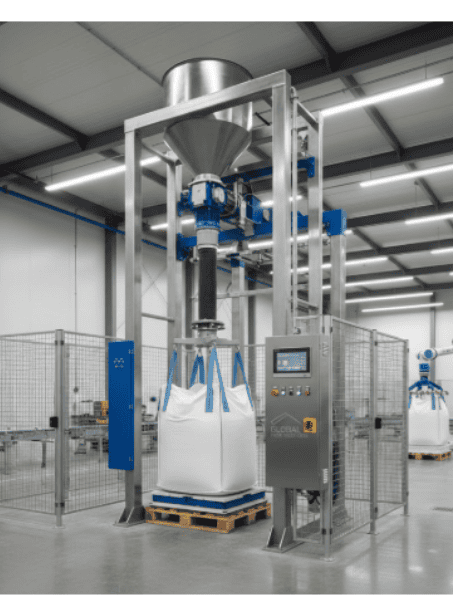
Every plant manager who has watched a manual bagging line choke under the weight of bulk orders knows the real cost of slow filling: missed dispatch windows, inconsistent bag weights, and labor that simply can't keep pace with demand. An Jumbo bag filling machine advanced jumbo bag filling machine solves this exact problem by automating the weighing, filling, and discharge of bulk material into FIBC (Flexible Intermediate Bulk Container) bags, jumbo bags, or big bags — turning a multi-person manual task into a single-operator, high-throughput operation.
This guide breaks down everything you need to know before buying one: how the machine works, the types available, the industries that depend on it, the technical specifications that matter, and what separates a reliable manufacturer from a risky one.
What Is a Jumbo Bag Filling Machine?
A jumbo bag filling machine (also called a big bag filler, FIBC filling machine, or bulk bag filling station) is industrial equipment designed to fill large flexible bags — typically ranging from 500 kg to 2000 kg capacity — with powders, granules, pellets, or free-flowing bulk solids. The system integrates a weighing mechanism, a filling spout, a bag-holding frame, and a discharge or densification unit to ensure each bag is filled to an accurate, consistent weight before being sealed and moved to storage or transport.
Unlike small-bag packing lines that handle 25 kg or 50 kg sacks, jumbo bag fillers are engineered for bulk-scale operations — cement plants, chemical processing units, fertilizer manufacturers, food grain handlers, and mineral processing facilities that need to move large volumes of material quickly without sacrificing weighing precision.
How a Bulk Bag Filling Machine Works
Understanding the filling sequence helps you evaluate which machine fits your production line:
- Bag Placement – An empty FIBC bag is mounted onto the bag-holding frame, with the loops secured to hooks and the inlet spout aligned to the filling nozzle.
- Material Feed – Bulk material is fed from a hopper, screw conveyor, or pneumatic conveying system into the weighing hopper above the filling head.
- Weighing & Dosing – Load cells measure the material in real time, triggering coarse and fine feed gates to hit the target weight with minimal overshoot.
- Filling & Densification – The material drops into the bag through the spout. Many systems include a vibrating table or bag-tapping mechanism that settles and densifies the contents, preventing air pockets and ensuring a stable, uniform bag shape for stacking.
- Discharge – Once filled, the bag is lowered onto a pallet or conveyor, the frame releases the loops, and the bag moves to sealing, stitching, or strapping.
This cycle, when automated end-to-end, can fill anywhere from 6 to 20+ bags per hour depending on material flow characteristics and machine configuration.
Types of Jumbo Bag Filling Machines
Not every operation needs the same configuration. Manufacturers typically offer several variants:
Semi-Automatic Jumbo Bag Filler
Requires an operator to position the empty bag and trigger the fill cycle manually, while weighing and discharge are automated. This is the most cost-effective entry point for mid-volume operations.
Fully Automatic Jumbo Bag Filling Machine
Integrates bag placement, filling, vibration/densification, and discharge into a continuous automated cycle with minimal human intervention — ideal for high-throughput plants running multiple shifts.
Rotary or Multi-Spout Bulk Bag Filler
Uses a rotating turret with multiple filling stations to maximize output in facilities with very high daily tonnage requirements.
Valve Bag and Open-Mouth Bag Filling Systems
For operations that also need to handle smaller-format bags, many manufacturers extend their range to include an effective paper valve bag filling machine, used for cement, plaster, chemical powders, and similar fine materials that flow through a valve-style spout rather than an open top. This is often paired with the jumbo bag line so a single plant can switch between bulk FIBC bags and palletized valve bags depending on the order.
Industries That Rely on Jumbo Bag Filling Machines
- Cement and Building Materials – bulk cement, sand, plaster, ready-mix powders
- Chemicals and Fertilizers – urea, DAP, NPK blends, industrial powders, resins
- Food and Agriculture – grains, flour, sugar, animal feed, seeds
- Minerals and Mining – sand, silica, ores, aggregates
- Plastics and Polymers – PVC resin, masterbatch, pellets
Each of these sectors has different flow behavior — dusty fine powders behave very differently from free-flowing granules — so the right machine configuration (spout design, dust collection, vibration intensity) depends heavily on your specific material.
Key Features to Evaluate Before You Buy
When comparing jumbo bag filling machines from different manufacturers, look closely at:
Weighing Accuracy – Look for load-cell based systems with accuracy tolerances of ±0.5% or better. Inconsistent weight delivery directly affects compliance and customer trust, especially for export-grade bulk shipments.
Bag Frame Adjustability – The frame should accommodate varying FIBC bag sizes and loop configurations (2-loop, 4-loop) without manual retrofitting.
Dust Containment – For fine powders, an enclosed filling head with dust extraction is essential for both worker safety and material loss prevention.
Densification System – Vibrating tables or bag-shakers that compact the fill ensure stable stacking during storage and transport, reducing bag tipping or bursting risk.
Throughput Rate – Match the machine's bags-per-hour rating against your actual production targets, not just nameplate specs.
Build Material and Compliance – Stainless steel contact parts for food-grade or chemical-sensitive applications, along with PLC-based controls for traceability and batch reporting.
After-Sales Support – Spare parts availability, load cell calibration service, and installation support matter as much as the machine itself.
Why the Manufacturer You Choose Matters
A jumbo bag filling machine is a long-term capital investment, which means the company behind it matters just as much as the machine specifications. A genuine manufacturer of packaging machine equipment — rather than a trading intermediary — typically offers:
- In-house engineering and fabrication, allowing customization for specific bag sizes, material flow rates, or plant layouts
- Direct access to spare parts and load cell replacements without third-party delays
- On-site installation, commissioning, and operator training
- Faster turnaround on after-sales service and troubleshooting
- The ability to integrate the bulk bag filler with upstream conveying systems or downstream palletizing and wrapping lines
Buying directly from a manufacturer also typically reduces total cost of ownership, since you avoid markup layers and gain a single point of accountability for warranty and service claims.
Jumbo Bag Filling Machine vs Manual Bagging: The ROI Case
Manual bulk bagging usually requires 2–3 workers per line, inconsistent weight control (often 1–3% variance), and exposes staff to repetitive strain and dust exposure. A semi-automatic or fully automatic jumbo bag filler typically:
- Cuts labor requirement to a single operator per line
- Tightens weight variance to under 0.5%
- Increases hourly bag output by 3–5x
- Reduces material giveaway (overfilling losses) that erodes margins over a year of operation
For most mid-to-large bulk producers, the payback period on a jumbo bag filling machine falls within 12–18 months when measured against labor savings and reduced product giveaway alone.
Installation and Integration Considerations
Before finalizing your purchase, map out:
- Upstream feed – whether material arrives via screw conveyor, belt conveyor, pneumatic transfer, or gravity from a silo
- Floor space and headroom – jumbo bag fillers often need vertical clearance for the bag frame and overhead hoist or gantry
- Power and pneumatic supply – automatic systems need compressed air for pneumatic valves and bag-clamping mechanisms
- Downstream handling – pallet conveyors, stretch wrapping, and forklift access for filled bags weighing up to a tonne or more
A capable manufacturer will typically conduct a site assessment or ask for a layout drawing before finalizing the machine configuration, ensuring the filling station integrates smoothly rather than becoming a bottleneck elsewhere in the line.
Maintenance Tips to Extend Machine Life
- Calibrate load cells on a fixed schedule (monthly or per a defined tonnage threshold) to preserve weighing accuracy
- Inspect and clean the filling spout and dust collection filters regularly, especially with fine or hygroscopic powders
- Check pneumatic seals and valve actuators for wear, since these parts cycle thousands of times per shift
- Keep the bag frame's loop hooks and clamps lubricated and free of material buildup
- Maintain a log of fill-cycle times to catch early signs of mechanical slowdown before it affects output
Frequently Asked Questions
What bag sizes can a jumbo bag filling machine handle? Most systems are designed for standard FIBC bags from 500 kg to 1500 kg, with some heavy-duty models supporting up to 2000 kg, depending on frame and hoist capacity.
Can the same machine fill both jumbo bags and smaller valve bags? Not on the same filling head, but many manufacturers offer combined production lines where a jumbo bag filler operates alongside a paper valve bag filling machine, letting one facility serve both bulk and palletized bag formats.
How accurate is automatic weighing on bulk bag fillers? Modern load-cell based systems typically achieve accuracy within ±0.5%, far tighter than manual weighing methods.
Is dust collection necessary for all materials? It's essential for fine powders like cement, fertilizer blends, or chemical powders, but less critical for coarse granules or pellets with minimal airborne dust generation.
What's the typical lead time for installation? This varies by manufacturer and customization level, but most industrial filling machines are installed and commissioned within a few weeks of delivery, assuming site readiness.
Conclusion
A jumbo bag filling machine isn't just a piece of equipment — it's the backbone of consistent, scalable bulk packaging for any operation moving serious tonnage. Whether you're filling cement, fertilizer, grains, or industrial powders, the right machine delivers tighter weight control, lower labor dependency, and a faster path to meeting large-volume orders without quality slippage.
Before you commit, evaluate weighing accuracy, dust handling, frame flexibility, and throughput against your actual production needs — and just as importantly, choose a manufacturer of packaging machine equipment that can support you with genuine engineering expertise, spare parts, and service long after installation. If your plant also handles smaller bag formats, ask about pairing your bulk line with a paper valve bag filling machine so your facility is equipped to handle every order type that comes through the door.
Ready to upgrade your bulk packaging line? Get in touch for a tailored machine recommendation based on your material, bag size, and throughput requirements.