Laser Skin Whitening for Inner Thighs: How It Works, Risks, and Recovery
-

- Published Updated
- 814 views
Intent: Informational
Introduction
Laser skin whitening for inner thighs is a clinical approach used to reduce localized darkening (hyperpigmentation) caused by friction, post-inflammatory changes, hormonal factors, or topical irritants. This guide explains how treatments work, which candidates are most likely to benefit, typical lasers and settings, recovery expectations, safety checkpoints and realistic outcomes.
- Laser therapies (Q-switched, Nd:YAG, picosecond) target melanin to reduce inner-thigh darkening.
- Best for focal hyperpigmentation; not always effective for genetic or diffuse pigment changes.
- Expect 2–6 sessions, modest lightening, and a recovery window of days to weeks depending on intensity.
- Risks include burns, hypopigmentation, and PIH — follow a safety checklist and qualified provider guidance.
What is inner-thigh hyperpigmentation and how lasers target it
Inner-thigh hyperpigmentation covers a range of causes: post-inflammatory hyperpigmentation (PIH), friction-induced darkening, hormonal melasma-like changes, or dermal pigment deposits. Lasers used for lightening selectively heat melanin or induce controlled epidermal turnover. Types include Q-switched (nanosecond), picosecond, and long-pulse Nd:YAG systems; fractional lasers may be combined with topical agents for better remodeling.
Who is a good candidate?
Appropriate candidates are adults with localized hyperpigmentation confined to the inner thighs, realistic expectations, and no active infection, open sores, or recent isotretinoin use. Darker skin tones require cautious protocols (test spots, lower fluence) because of higher risk for paradoxical hyperpigmentation or long-term hypopigmentation.
Treatment options and trade-offs
Common laser choices
- Q-switched Nd:YAG (532/1064 nm): effective for epidermal pigment; 1064 nm safer for darker skin.
- Picosecond lasers: faster pulse duration may fragment pigment with fewer sessions for some lesions.
- Fractional ablative/non-ablative lasers: useful when textural changes or thickened skin are present but increase downtime.
Trade-offs to consider
Stronger settings or ablative approaches often yield faster lightening but increase risks and downtime. Gentler, multiple-pass non-ablative treatments reduce acute risk yet may require more sessions and maintenance. Topical lighteners and physical measures (friction reduction) are low-risk but slower and often incomplete alone.
Procedure, recovery timeline, and expected results
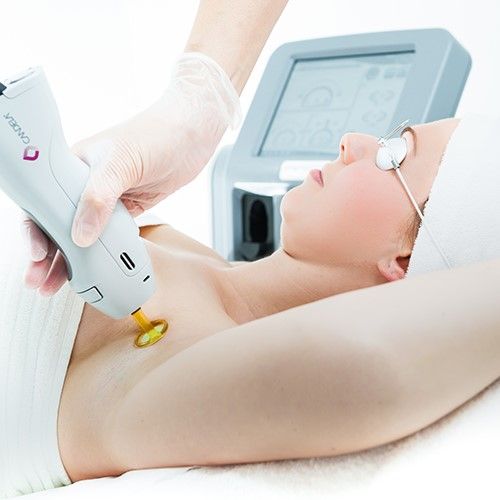
Typical in-office sessions last 15–45 minutes. A provider will clean the area, apply cooling or topical anesthetic when needed, and deliver laser pulses across the target zones. Mild redness and a sensation like a sunburn are common immediately afterward.
Recovery timeline
- 0–48 hours: erythema, mild swelling, and pinpoint crusting possible.
- 3–7 days: superficial crusts heal; sunscreen and gentle care advised.
- 2–6 weeks: pigment may temporarily darken before fading; repeat sessions typically spaced 4–8 weeks apart.
Realistic results: many patients see moderate lightening (20–60%), not complete normalization. Multiple treatments plus topical maintenance often delivers best long-term improvement.
Safety checklist: LASER SAFETY checklist
Use this named checklist before proceeding with treatment:
- Look for a qualified clinician with laser training and documented experience.
- Ask for before-and-after photos of similar skin tones and areas.
- Schedule a test spot to assess pigment response and side effects.
- Discuss medical history: recent isotretinoin, keloid tendency, active infections, pregnancy.
- Agree on an aftercare plan: sunscreen, emollients, and follow-up dates.
Common mistakes and trade-offs
Common mistakes that worsen outcomes include:
- Skipping a test spot before full treatment—raises risk for severe PIH or hypopigmentation.
- Choosing overly aggressive settings to chase quick results—higher chance of scarring and pigment loss.
- Neglecting friction and topical irritants—laser alone won't stop recurrence if mechanical causes persist.
Practical tips for better results
- Use sun protection and avoid intentional sun exposure to the area before and after sessions to reduce PIH risk.
- Reduce friction: switch to breathable fabrics, apply barrier creams, and consider weight or gait adjustments if friction is mechanical.
- Start with conservative fluences and increase only after assessing a test spot response.
- Combine topical agents (retinoids, azelaic acid, or prescribed depigmenting creams) under clinician supervision for maintenance.
- Keep realistic expectations: plan for multiple sessions and a maintenance regimen to prevent recurrence.
Named framework in practice: an example scenario
Scenario: A 32-year-old patient with friction-related inner-thigh darkening after weight fluctuations. After counseling and a documented test spot using 1064 nm Nd:YAG at low fluence, the patient undergoes four sessions spaced six weeks apart. Topical azelaic acid is added for maintenance, and clothing adjustments reduce friction. Result: noticeable lightening (approx. 40%) and improved texture after six months; minor transient redness resolved within one week of each session.
Core cluster questions
- How many laser sessions are usually needed for inner-thigh hyperpigmentation?
- What are the risks of laser treatment on darker skin tones?
- How should aftercare be managed to reduce post-inflammatory hyperpigmentation?
- Can topical creams replace laser treatment for inner-thigh darkening?
- Which lasers are safer for epidermal versus dermal pigment?
Evidence and professional guidance
For clinical guidance on pigment disorders and procedural safety, consult resources from dermatology professional bodies. Evidence-based summaries and patient resources are available from organizations such as the American Academy of Dermatology: https://www.aad.org/public/diseases/color-problems/hyperpigmentation.
When to avoid laser whitening of inner thighs
Postpone or avoid if there is active dermatitis, infection, recent isotretinoin use (within 6–12 months depending on provider), pregnancy, or unrealistic expectations. In many cases, conservative measures and topical therapies are safer first-line options.
Conclusion
Laser skin whitening for inner thighs can provide moderate improvement for targeted hyperpigmentation when performed by an experienced clinician and combined with friction reduction and maintenance therapy. Careful patient selection, test spots, conservative settings for darker skin, and adherence to aftercare are essential to minimize complications and optimize outcomes.
Frequently asked questions
Is laser skin whitening for inner thighs safe for darker skin tones?
Safety depends on laser choice, settings, and test-spot results. Long-pulse 1064 nm Nd:YAG and conservative protocols are often recommended for darker skin, but higher risks for paradoxical hyperpigmentation exist; a patch test and experienced provider are essential.
How many sessions are needed for laser treatment for inner thigh hyperpigmentation?
Most patients need 2–6 sessions spaced 4–8 weeks apart. The number varies by pigment depth, laser type, and individual response.
What is the typical thigh whitening laser recovery time?
Recovery ranges from a few days with non-ablative treatments to 1–3 weeks with more aggressive or ablative lasers. Expect initial redness and possible light crusting for several days.
Will laser whitening permanently remove inner-thigh pigmentation?
Lasers can reduce pigment but rarely guarantee permanent, complete removal. Maintenance, friction reduction, and topical care influence long-term results and recurrence risk.
Can topical creams replace laser treatment for inner-thigh darkening?
Topical agents (hydroquinone alternatives, retinoids, azelaic acid) may improve mild pigment and are lower risk; however, they often act slower and may be less effective for thicker or dermal pigment compared with combined laser approaches.