Master Slope Game: Essential Tips, Controls, and Advanced Techniques
-

- Published Updated
- 2,311 views
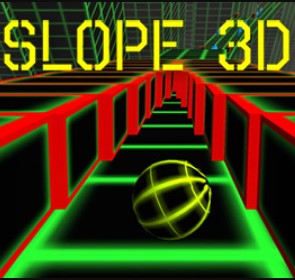
The Slope Game challenges players to guide a rolling ball down a fast 3D course, testing reaction time, steering precision, and an understanding of in-game physics. This guide explains core controls, movement mechanics, and practical tips to improve speed and consistency in the Slope Game while addressing browser performance and practice routines.
- Learn core controls and how momentum affects turns
- Use camera angles, smooth steering, and braking to survive tricky sections
- Practice targeted drills and optimize browser performance for consistent frame rates
Slope Game basics and controls
Standard controls
Controls are simple but require precision: use left and right arrow keys (or A/D on many setups) to steer, and sometimes additional keys or touch gestures to influence speed or camera. On mobile devices, touch and tilt controls may be available; consistency in control input is critical to avoid overcorrection.
Understanding physics and momentum
The game simulates basic physics: gravity increases speed down inclines, inertia carries the ball through turns, and collisions with edges or obstacles reduce velocity or end the run. Smooth, anticipatory steering preserves momentum and reduces the risk of sudden crashes.
Camera and visual cues
Camera angle affects depth perception. Use peripheral visual cues such as track curvature and object spacing to anticipate obstacles. Some players benefit from slightly zoomed-out views for earlier reaction windows, while others prefer tighter focus for precise steering.
Key strategies to improve
Smooth steering and micro-adjustments
Avoid sharp joystick or key taps. Small, incremental inputs keep the ball stable and preserve speed. Practice reducing amplitude of corrections rather than correcting late with large inputs.
Speed management and controlled braking
High speed is advantageous for time but increases risk on technical sections. Learn to reduce speed before complex turns or crowded obstacle fields to maintain control, then re-accelerate on straight stretches to regain time.
Line selection and hazard avoidance
Choose lines that minimize sharp direction changes and avoid predictable trap zones. If the game features moving obstacles, time passes to clear patterns before committing to a path.
Using practice runs and level memorization
Repeated runs develop muscle memory for common sequences. Memorize recurring sections, memorize safe lines, and break a level into short segments to practice high-difficulty portions individually.
Practice drills and progression
Segmented practice
Isolate difficult parts of a course by restarting at checkpoints or using respawn mechanics where available. Focused repetition on a single segment accelerates learning compared with full-run repetition alone.
Reaction time and peripheral training
Drills that train reaction speed and visual scanning, referenced in literature about perceptual-motor skills (see research in human factors and sport psychology), can improve responsiveness during fast sections. The International Game Developers Association (IGDA) publishes design and usability guidance relevant to player training and interface clarity.
Technical tips for browser performance and consistency
Frame rate and input latency
Stable frame rate reduces perceived input lag and physics inconsistencies. Close unnecessary tabs and background apps to free processing resources. Use wired input devices when possible to reduce wireless latency.
Browser and graphics settings
Many versions of the Slope Game run in HTML5/WebGL. For best stability, use an up-to-date browser and enable hardware acceleration where appropriate. For details on browser graphics APIs and performance considerations, consult a developer resource such as the Mozilla Developer Network overview of WebGL and related technologies: WebGL on MDN.
Device-specific adjustments
On mobile, reduce background refresh and disable battery-saving modes that throttle CPU. On desktop, adjust graphics quality settings if available to increase frame stability.
Progress tracking and improvement
Use leaderboards and replay analysis
Compare times on leaderboards to identify realistic goals. When replay or recording features exist, review mistakes and note repeated failure points to prioritize practice.
Set measurable goals
Define short-term goals such as reducing mistakes in a segment, and long-term goals like improving overall run time. Track runs and improvements objectively to avoid plateaus.
Common mistakes and how to avoid them
Oversteering
Reacting too late and oversteering tends to send the ball off course. Anticipatory inputs and smaller adjustments prevent oscillation and loss of speed.
Ignoring camera adjustments
Failing to change camera settings or ignoring perspective cues can lead to misjudged turns. Adjust view to balance speed of perception and precision.
Neglecting performance consistency
Variations in frame rate or input device performance cause inconsistent runs. Prioritize a stable setup when practicing to ensure skills transfer to competitive attempts.
FAQs
How can beginners improve at Slope Game?
Beginners should focus on mastering basic controls, practicing smooth steering, and learning to manage speed through technical sections. Short, segmented practice and consistent hardware settings help accelerate skill development.
Are there hardware or browser settings that improve performance?
Yes. Use an up-to-date browser with hardware acceleration enabled, close background processes, and prefer wired input devices. Reducing graphics quality where available can stabilize frame rate.
What is the best way to practice difficult sections?
Isolate the section and repeat it until consistent. Focus on a single variable each session, such as steering amplitude or braking timing, and slowly integrate improvements into full runs.
Do professional resources exist for improving reaction time and motor skills?
Research in sports psychology and human factors addresses reaction time and perceptual-motor training. Organizations such as the American Psychological Association publish relevant studies on skill acquisition and attention that can inform practice strategies.