Medical Cleaning Service in Manchester: Essential Practices for Maintaining Healthcare Standards
-
- Published Updated
- 65 views
Clean surroundings are an important part of running a healthcare facility successfully. Patients expect medical offices to be orderly and hygienic, while healthcare professionals need workspaces that support their daily responsibilities. Maintaining these standards requires a planned approach to cleaning, suitable equipment, and staff who understand the needs of healthcare environments. A dependable medical cleaning service in Manchester can help clinics and medical practices manage these responsibilities more consistently.
Healthcare buildings experience regular movement throughout the day. Patients enter waiting rooms, staff move between departments, and shared surfaces are used repeatedly. Without a suitable cleaning routine, dirt and contamination can accumulate in areas that require frequent attention. A structured cleaning programme helps facilities manage these challenges while supporting a comfortable experience for everyone who enters the premises.
Understanding the Cleaning Demands of Medical Buildings
Healthcare facilities are not all alike. A private doctor's office may have a small reception area and a few consultation rooms, whereas a larger clinic may include several treatment spaces, staff rooms, and specialist facilities. Their cleaning requirements will depend on the activities performed, the number of visitors, and the procedures established by the healthcare provider.
A professional cleaning assessment can help identify the areas that need routine maintenance, more frequent attention, or specialized procedures. This assessment should consider flooring, furniture, frequently touched surfaces, washrooms, and any areas subject to additional infection prevention requirements.
Choosing a medical cleaning service in Manchester should involve more than arranging for someone to clean the floors and empty bins. Healthcare managers need a provider that understands the importance of following instructions, respecting clinical boundaries, and delivering consistent results.
Establishing a Practical Cleaning Plan
A written cleaning plan helps ensure that important tasks are not overlooked. It should identify the spaces covered by the service, explain which activities are required, and establish how frequently each task should be completed.
For example, high-traffic areas may need attention several times during the working day, while some administrative spaces may require less frequent cleaning. Clinical areas should follow the cleaning and disinfection procedures set by the facility, taking into account the activities performed in each room.
A useful plan should include:
The rooms and surfaces included in the service.
The expected frequency of routine cleaning.
Procedures for cleaning and disinfecting relevant surfaces.
Responsibilities for restocking supplies and removing ordinary waste.
Instructions for reporting spills, damage, or missed tasks.
Arrangements for periodic detailed cleaning and inspections.
Clear instructions make it easier for cleaning teams and facility managers to understand their respective responsibilities. They also provide a reference point when services need to be reviewed or adjusted.
Maintaining Reception Areas and Public Spaces
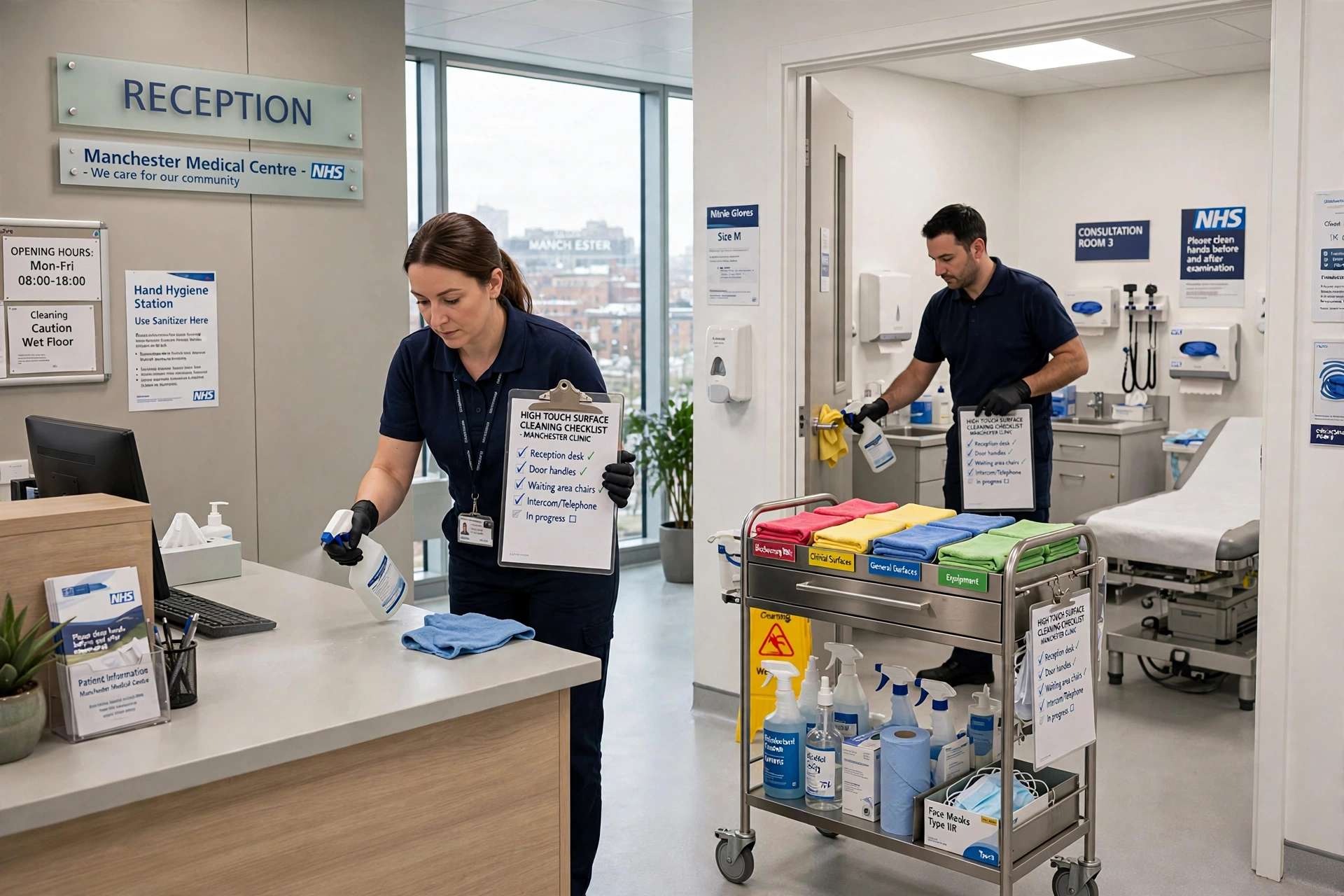
Reception and waiting areas are often among the busiest parts of a medical facility. Patients may sit for extended periods, use shared furniture, and come into contact with doors, counters, and other frequently touched surfaces.
Regular maintenance should address visible dirt, dust, floor debris, and the condition of commonly used furniture. High-touch surfaces should be cleaned and disinfected as required by the facility's procedures, using products appropriate for the materials involved.
Floor care is equally important. Dirt carried in from outside can build up near entrances, while spills may create slip hazards if they are not addressed promptly. Suitable cleaning methods and warning signs can help maintain safe walkways.
A well-maintained reception area also contributes to the overall impression of the practice. Neat surroundings, clean seating, and orderly surfaces can help patients feel more comfortable when arriving for appointments.
Keeping Examination Rooms Ready for Use
Examination rooms require careful coordination because they may be used by multiple patients during the same day. Cleaning responsibilities should be clearly defined so that appropriate surfaces and fixtures receive attention between appointments and at other intervals specified by the facility.
Work surfaces, examination furniture, handles, and other relevant touchpoints should be managed according to established clinical procedures. The correct product and contact time are important when disinfection is required. Staff should follow product instructions rather than assuming that every surface can be treated in the same way.
Medical instruments and specialized equipment require particular care. General cleaning personnel should not handle clinical equipment unless they have been specifically trained and authorized to do so. The healthcare facility should establish which tasks belong to clinical staff and which can be assigned to the cleaning team.
When responsibilities are clear, rooms can be maintained more systematically without unnecessary interference with patient care.
Using Cleaning Products Responsibly
The selection and use of cleaning products can influence both hygiene results and workplace safety. Healthcare facilities may contain different flooring materials, upholstered seating, electronic equipment, and surfaces that require specific cleaning methods.
Cleaning teams should use products approved for the intended task and follow the instructions provided by the manufacturer. Where disinfection is required, the team should observe the specified application method and contact time. Using excessive chemicals or mixing products can create hazards and should be avoided.
Other important considerations include safe storage, accurate dilution where applicable, suitable ventilation, and the use of appropriate personal protective equipment.
Equipment must also be maintained properly. Cloths, mops, buckets, and other reusable tools should be cleaned, stored, and replaced according to the facility's procedures. Where colour-coded equipment is used, staff should follow the assigned system to help prevent cross-contamination between different areas.
A reliable medical cleaning service in Manchester should be prepared to explain its product choices and demonstrate that its staff understand the required safety procedures.
Managing Hygiene in Washrooms and Staff Areas
Washrooms need a regular maintenance routine because they are shared by patients, visitors, and employees. Cleaning should cover toilets, basins, taps, dispensers, floors, and frequently touched fixtures. Supplies such as soap and paper products should be checked according to the agreed service plan.
Staff kitchens and break rooms also deserve attention. Food preparation surfaces, tables, sinks, and shared appliances can become dirty during busy shifts. A suitable cleaning schedule helps keep these spaces orderly and more comfortable for employees.
Cleaning materials used in washrooms should be managed according to the facility's procedures and kept separate from tools assigned to other areas where necessary. This supports a more organized approach to hygiene throughout the building.
Facility managers should also establish a clear process for reporting plumbing issues, damaged fixtures, persistent odours, or supply shortages. Prompt communication allows these problems to be addressed before they create greater inconvenience.
Coordinating Cleaning With Daily Healthcare Operations
Cleaning must fit around the practical demands of a medical practice. Appointments, consultations, staff handovers, and unexpected patient needs can make it difficult to follow a rigid schedule.
A flexible plan can identify tasks that are best completed before opening, during quieter periods, between appointments, or after the facility closes. The precise arrangement will depend on the building's operating hours and the level of service required.
Some duties may need to be carried out throughout the day, while more extensive cleaning can be scheduled for suitable periods. However, cleaning schedules should never override required clinical procedures or delay urgent responses to contamination.
Regular communication between cleaning supervisors and healthcare managers helps both sides respond to changing circumstances. If patient numbers increase or additional rooms come into use, the plan can be reviewed to determine whether more time or resources are necessary.
Handling Waste According to Facility Procedures
Waste management is another important consideration when maintaining healthcare premises. Ordinary office rubbish, general facility waste, and clinical waste may have different handling and disposal requirements.
Cleaning personnel should understand which waste categories fall within their assigned duties and how they must be managed. Sharps, potentially infectious materials, and other hazardous waste should only be handled by appropriately trained and authorized personnel in accordance with applicable procedures.
The facility should provide clear instructions about waste segregation, container replacement, storage arrangements, and the reporting of damaged or overflowing containers. These details help prevent confusion and reduce the risk of inappropriate handling.
A cleaning contract should clearly distinguish general waste duties from specialized clinical waste responsibilities. This allows healthcare managers to check that every task has an assigned owner.
Measuring Service Quality and Consistency
A cleaning service should be reviewed regularly rather than assessed only when a problem occurs. Quality checks help determine whether agreed tasks are being completed and whether the results meet the facility's expectations.
Useful monitoring methods may include completed checklists, supervisor inspections, scheduled reviews, and records of corrective action. The exact system should be proportionate to the size and complexity of the healthcare facility.
When an issue is identified, the provider should investigate the cause and agree on a suitable response. A missed task might require clearer instructions, a scheduling adjustment, or additional staff training. Repeated problems may indicate that the original cleaning plan needs to be reconsidered.
Feedback from healthcare employees can also be valuable. Staff may notice areas that become dirty more quickly than expected or identify scheduling conflicts that are not obvious during a formal inspection.
Regular review encourages accountability and makes it easier to maintain service standards over time.
Choosing the Right Medical Cleaning Company
Selecting a cleaning provider requires careful consideration of experience, reliability, training, and communication. A company should be able to explain how it will meet the facility's requirements instead of relying on broad promises.
Before appointing a provider, healthcare managers can ask about previous experience in comparable settings, staff supervision, product selection, and procedures for handling concerns. They should also confirm relevant insurance coverage and determine whether the company can meet the facility's scheduling requirements.
It is useful to request a written service proposal that describes the work included, the frequency of visits, and any duties that are excluded. This helps prevent misunderstandings about clinical cleaning, equipment handling, and waste disposal.
Facilities searching for a medical cleaning service in Manchester should also confirm the exact location covered by the provider. Manchester can refer to different locations, so service availability should be checked before arranging an assessment or agreeing to a contract.
Price is one consideration, but the lowest quote may not offer the most suitable arrangement. A provider that supplies clear procedures, trained personnel, dependable communication, and meaningful quality checks may be better equipped to support a healthcare facility's long-term needs.
Conclusion
Maintaining a hygienic healthcare environment involves careful planning, appropriate cleaning methods, trained personnel, and ongoing supervision. Every area, from public waiting spaces to examination rooms and staff facilities, has its own requirements that should be addressed through a consistent programme.
Working with a suitable medical cleaning service in Manchester can help healthcare providers organize routine tasks, maintain clear responsibilities, and monitor the quality of cleaning throughout their premises. By assessing service requirements, confirming staff training, and establishing reliable communication, medical facilities can create a cleaner and more welcoming environment while supporting their wider hygiene procedures.
The best cleaning arrangement is one that fits the facility's daily operations, respects clinical responsibilities, and delivers dependable results through a clearly defined process.