How Can Mobile Application Development Solutions Help Your Business Grow?
-
- Published Updated
- 4,017 views
Smartphones have changed the way people discover businesses, shop for products, book services, make payments, and communicate with brands. For businesses, this creates a valuable opportunity to connect with customers directly through mobile applications.
A well-built mobile app can do much more than provide another way for customers to access your services. It can improve customer experience, automate daily operations, increase sales, provide useful business insights, and create new revenue opportunities.
This is where mobile application development solutions can help businesses turn their ideas into practical digital products that support long-term growth.
What Are Mobile Application Development Solutions?
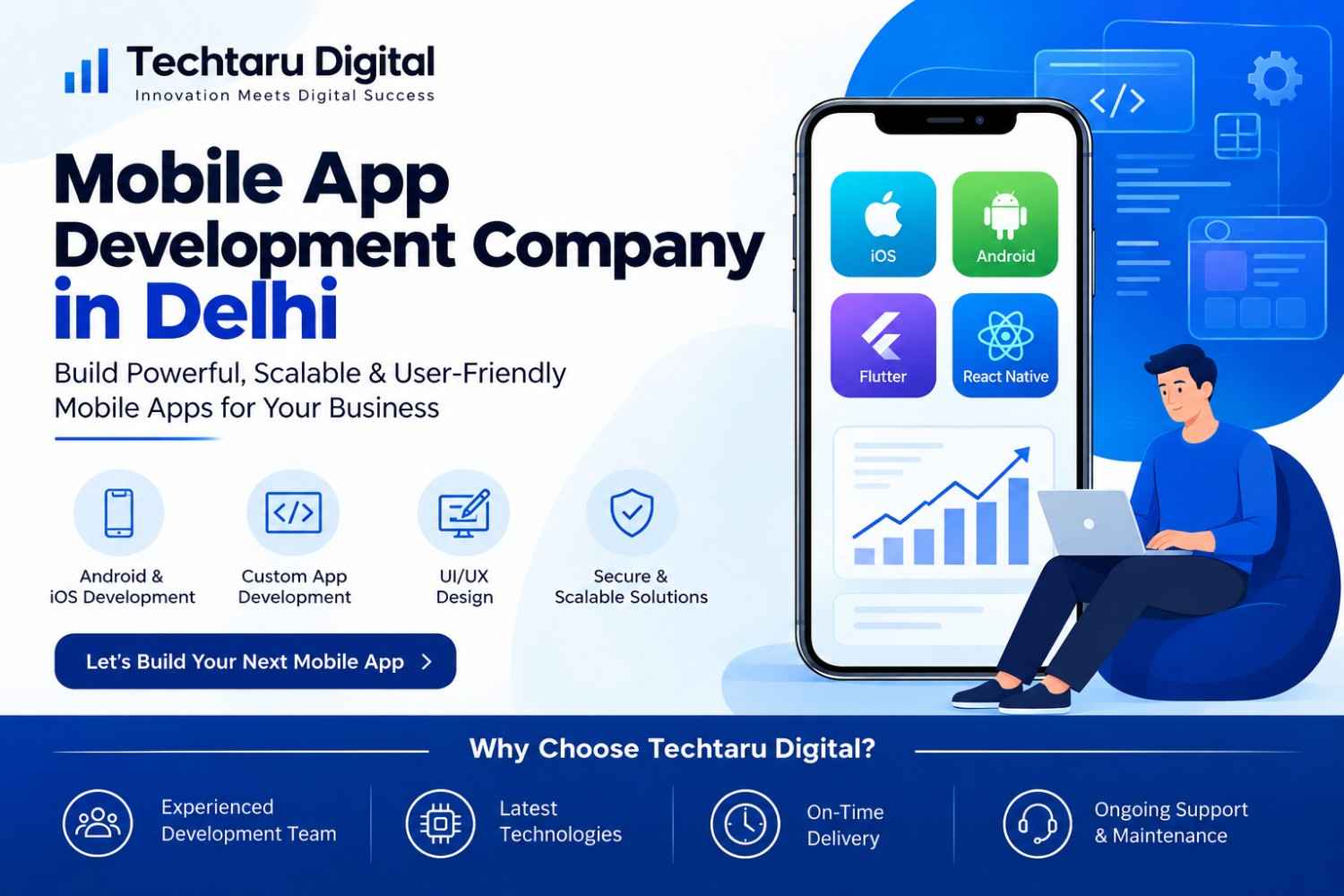
Mobile application development solutions cover the complete process of creating and managing mobile applications for businesses. This can include planning, UI/UX design, application development, backend development, API integration, testing, deployment, security, and ongoing maintenance.
Depending on the business requirements, an application can be developed for Android, iOS, or both platforms. Businesses can also choose between native development and cross-platform technologies such as React Native or Flutter.
The right approach depends on factors such as the target audience, required features, budget, performance requirements, and future expansion plans.
For example, an eCommerce company may need product catalogs, shopping carts, payment gateways, order tracking, and personalized recommendations. A logistics company may need GPS tracking, driver management, route planning, and real-time notifications.
What Is Custom Mobile App Development?
One common question businesses ask is, what is custom mobile app development?
Custom mobile app development means building an application specifically around the needs of a particular business. Instead of using a generic application with limited customization, businesses can decide which features, design elements, integrations, and workflows they actually need.
For example, a healthcare business may require appointment scheduling, online consultations, prescription management, and secure patient communication. A restaurant may need online ordering, table reservations, loyalty programs, and delivery tracking.
With custom app development, the application is designed around these specific requirements.
This approach can also make it easier to expand the application later. New features, integrations, and services can be added as the business grows.
How Can Mobile Apps Help Businesses Grow?
1. Improve Customer Experience
Customers want quick and convenient ways to interact with businesses. A mobile application can put important services directly on their smartphones.
Instead of repeatedly visiting a website or calling customer support, users can book a service, place an order, make a payment, check an account, or track a delivery through the app.
A simple interface, fast performance, and easy navigation can make the overall customer journey more convenient. A better experience can also encourage customers to return to the application.
2. Increase Customer Engagement
A mobile application gives companies a direct line of communication.
Push notifications can be used to send order updates, appointment reminders, new product announcements, special offers, and other useful information. Businesses can also create loyalty programs, rewards, and personalized offers to encourage repeat purchases.
However, notifications should be relevant. Sending too many unnecessary messages can frustrate users and may result in them disabling notifications or uninstalling the application.
3. Create New Revenue Opportunities
A mobile application can open additional ways for businesses to generate revenue.
For example, an eCommerce company can sell products directly through its app. A food delivery business can accept orders and payments. A subscription company can provide premium services through a mobile application.
Businesses can also introduce membership programs, in-app purchases, premium features, or personalized services depending on their business model.
The easier it is for customers to discover, select, and purchase a product or service, the more opportunities a business has to increase conversions.
4. Automate Business Operations
Mobile applications can also benefit employees and internal teams.
A custom application can automate tasks such as booking management, employee communication, inventory updates, delivery tracking, field-service reporting, and customer notifications.
For example, a field-service company can provide employees with an app where they can see assigned jobs, update their status, upload photos, collect customer signatures, and submit reports.
This can reduce paperwork and manual processes while helping managers monitor operations more efficiently.
5. Use AI for Smarter Applications
AI is becoming an important part of modern mobile application development. Businesses can use artificial intelligence to create more personalized and automated experiences.
An AI software development company can help integrate features such as AI chatbots, recommendation engines, intelligent search, predictive analytics, voice assistants, fraud detection, and automated workflows.
For example, an online shopping app can use AI to recommend products based on customer behavior. A transportation app can analyze demand patterns to support better route planning and pricing decisions.
The goal should not be to add AI simply because it is popular. AI should be introduced where it provides measurable value to customers or improves business operations.
6. Understand Customer Behavior
Mobile apps can generate useful data about customer interactions.
Businesses can track metrics such as frequently viewed products, popular services, purchase behavior, app engagement, conversion rates, and customer retention.
These insights can help businesses understand what customers like and where they face problems.
For example, if many users leave the application during the checkout process, the business can investigate whether the payment process is complicated or whether users are experiencing technical problems.
Using this information, businesses can continuously improve the application and customer experience.
7. Build a Scalable Digital Product
Businesses do not always need to launch an application with dozens of features.
For startups especially, launching an MVP can be a practical way to test an idea with real users. The first version can focus on the most important features, while additional functionality can be introduced based on customer feedback.
A custom mobile app development company can help design the application's architecture with future growth in mind. As the user base increases, the application can be upgraded with additional features, integrations, languages, platforms, and security capabilities.
This makes the development process more flexible and reduces the need to rebuild the entire application from scratch.
Why Work With a Custom Mobile App Development Company?
Choosing the right technology partner is an important part of a successful app project.
A professional custom mobile app development company should understand your business objectives instead of focusing only on coding. The team can help evaluate your idea, identify the necessary features, select suitable technologies, design the user experience, and develop the application.
A complete development partner can typically support:
- Business and technical requirement analysis
- UI/UX design
- Android and iOS development
- Backend and API development
- Third-party integrations
- Cloud solutions
- Application testing
- Security implementation
- App Store and Google Play deployment
- Post-launch maintenance
This end-to-end approach can make the development process easier to manage and provide better long-term support.
Choosing the Right Mobile App Development Service
Before choosing a mobile app development service, businesses should look beyond the initial development cost.
Consider the company's experience, technical expertise, previous projects, communication process, development methodology, testing standards, security practices, and post-launch support.
It is also important to clearly define what you want the application to achieve.
Are you trying to increase sales? Improve customer service? Automate internal processes? Launch a new digital service? Understanding the primary objective helps determine which features are actually necessary.
A good development team can then recommend a suitable technology stack and development strategy based on those goals.
How Software Development and Services Support Mobile Apps
A mobile application rarely works alone. Behind the app, businesses may need databases, APIs, cloud infrastructure, admin dashboards, payment systems, analytics tools, CRM platforms, and third-party services.
This is why software development and services are important when creating a complete digital ecosystem.
For example, an online retail app may need to connect with inventory software, payment gateways, shipping platforms, CRM systems, and analytics tools. All these systems need to communicate properly for the application to work smoothly.
A development partner with broader software capabilities can help businesses build and connect these systems while keeping the application secure and scalable.
Final Thoughts
A mobile application can become a valuable growth tool when it is built around genuine customer and business needs. From improving customer experience and increasing engagement to automating operations and introducing AI-powered capabilities, the possibilities are broad.
The key is not to build an app simply because competitors have one. Start by identifying a real business problem, understand what your customers need, and then choose the right development approach.
Whether you need custom app development, AI-powered features, or complete mobile application development solutions, the right technology partner can help turn your idea into a scalable digital product.
With a clear strategy, user-focused design, reliable technology, and continuous improvements after launch, a mobile application can become an important part of your business growth strategy.