Offshore Software Development: A Strategic Approach for Scaling Global Engineering Teams
-
- September 07th, 2026
- 4,609 views
In today’s rapidly evolving digital landscape, businesses are under constant pressure to build software faster, reduce operational costs, and access high-quality engineering talent. One of the most effective strategies that has emerged to address these challenges is offshore software development.
What was once considered simply a cost-saving outsourcing tactic has now evolved into a strategic global delivery model. Companies across the United States, Europe, and Asia are increasingly leveraging offshore teams to scale engineering capacity, accelerate product delivery, and maintain competitiveness in highly dynamic markets.
What is Offshore Software Development?
Offshore software development refers to the practice of hiring a software engineering team located in another country to handle software design, development, testing, and maintenance.
Unlike traditional outsourcing, modern offshore development focuses on building dedicated teams that function as an extension of the client’s internal engineering organization. These teams are fully integrated into workflows, tools, and product roadmaps.
Typical services include:
- Web application development
- Mobile app development
- Cloud engineering and DevOps
- AI and data-driven systems
- Software testing and QA
- Legacy system modernization
The key idea is not just delegation, but long-term collaboration and shared ownership of product outcomes.
Why Offshore Software Development is Growing
Several global trends are driving strong adoption of offshore development models:
1. Global Talent Shortage
Many developed markets are facing a shortage of experienced software engineers, especially in areas such as AI, cloud architecture, and cybersecurity. Offshore teams help bridge this gap by expanding access to global talent pools.
2. Rising Development Costs
Hiring senior developers locally has become increasingly expensive. Offshore development provides access to high-quality engineers at more optimized cost structures without sacrificing output quality.
3. Faster Time-to-Market
Offshore teams enable continuous development cycles across multiple time zones. This often results in faster release cycles and improved product iteration speed.
4. Distributed Engineering Model
Modern software companies are shifting toward remote-first and distributed engineering structures. Offshore development naturally fits into this model.
Key Benefits of Offshore Software Development

Cost Efficiency
One of the most significant advantages is cost optimization. However, modern offshore development is no longer about cheap labor. It is about improving overall engineering efficiency through structured processes and senior-level expertise.
Access to Specialized Talent
Offshore teams often include engineers with deep expertise in:
- Cloud platforms such as AWS, Azure, and Google Cloud
- AI and machine learning systems
- Scalable backend architectures
- DevOps automation and CI/CD pipelines
This allows companies to quickly assemble expert teams without long recruitment cycles.
Scalability and Flexibility
Businesses can scale teams up or down based on project requirements. This flexibility is especially valuable for startups and enterprises undergoing rapid digital transformation.
Focus on Core Business
By delegating execution to offshore teams, internal teams can focus more on product strategy, customer experience, and business growth.
Common Offshore Development Models
Dedicated Team Model
A full-time offshore team works exclusively on one client’s project. This model is best for long-term product development and deep integration.
Staff Augmentation
Individual engineers are added to an existing in-house team to fill specific skill gaps.
Project-Based Model
The offshore provider delivers a complete project with defined scope, timeline, and budget.
Offshore Development Center (ODC)
A long-term setup where a dedicated engineering unit operates as a satellite extension of the client’s organization.
Each model serves different business needs depending on complexity, scale, and internal capability.
Challenges and How to Overcome Them
While offshore development offers many advantages, it also comes with challenges that must be managed carefully:
Communication Barriers
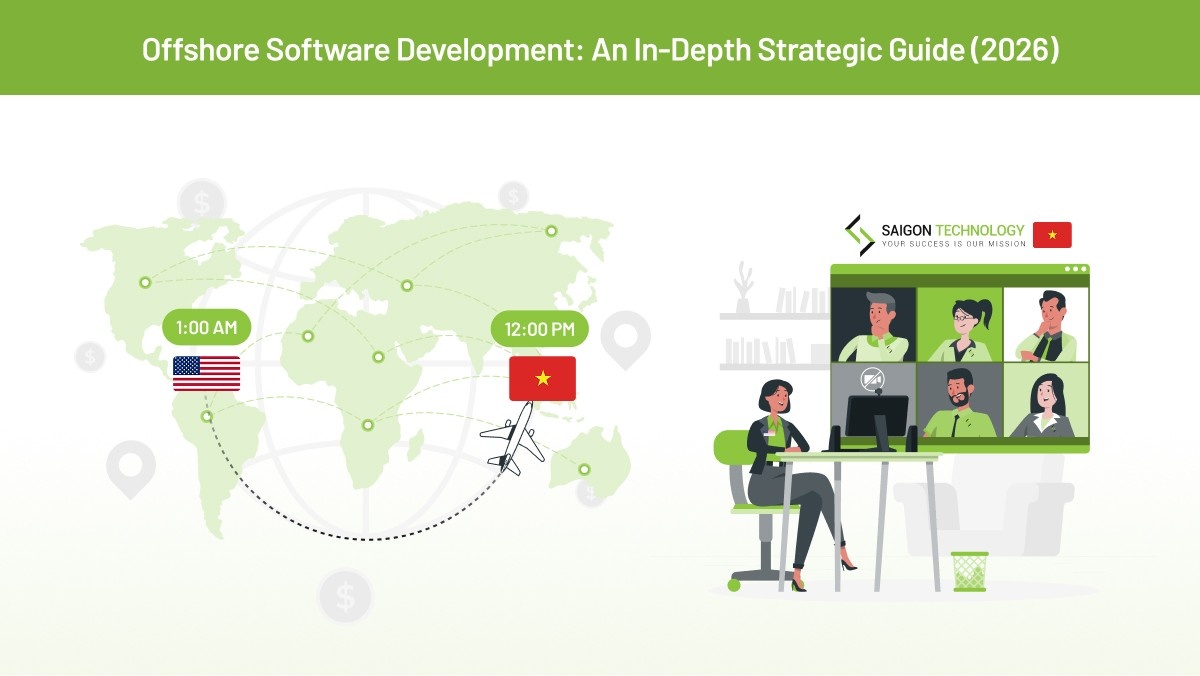
Time zone differences and communication gaps can lead to misunderstandings. This can be solved through structured communication tools, overlapping working hours, and clear documentation.
Cultural Differences
Different work cultures may affect collaboration styles. Strong onboarding and shared engineering practices help reduce friction.
Quality Control
Without proper processes, output quality may vary. Agile methodology, code reviews, and continuous integration pipelines help maintain consistency.
Requirement Misalignment
Unclear requirements often lead to delays. Detailed documentation and frequent feedback loops are essential for success.
Why Businesses Choose Saigon Technology
Saigon Technology is a trusted offshore software development partner delivering high-quality engineering services to global clients. The company specializes in building dedicated development teams that integrate seamlessly with client organizations.
Key strengths include:
- Strong senior engineering talent
- Proven experience across global markets
- Expertise in AI, cloud, and enterprise systems
- Agile delivery and transparent workflows
- ISO-certified development processes
Offshore development becomes significantly more effective when supported by a partner that understands both technical execution and product strategy.
Conclusion
Offshore software development has evolved into a powerful global engineering model that enables businesses to scale efficiently, reduce costs, and access world-class talent.
When implemented correctly, it provides not just cost advantages but also strategic benefits such as faster time-to-market, flexibility in scaling, and access to specialized expertise.
Companies that treat offshore development as a core part of their engineering strategy rather than a short-term outsourcing solution are the ones that achieve sustainable long-term success.