Onion Farming in India: Production & Process
-
- Published Updated
- 7,644 views
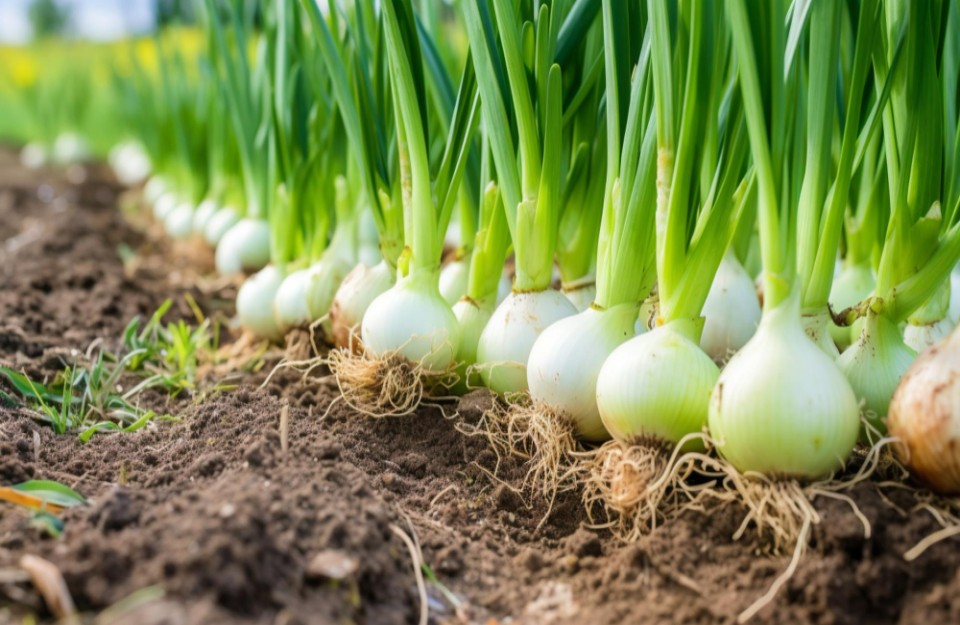
Onion farming is one of the most profitable vegetable farming businesses in India. Onion is an important ingredient in Indian kitchens and is widely used in cooking, food processing, pickles, and salads. Due to its year-round demand and export potential, onion cultivation has become an important source of income for farmers. India is among the top onion-producing countries in the world. Indian states, Maharashtra, Karnataka, MP, Gujarat, Rajasthan, and UP are the leading states.
Modern farm mechanisation is also improving onion cultivation practices in India. Many farmers prefer using an Escort Tractor for land preparation, ridging & transportation. The tractor is well recognised because of its fuel-efficient performance. Proper soil preparation, irrigation management, and pest control play a major role in increasing onion yield and quality.
Process of Growing Onion Farming
The complete procedure of growing onion involves certain steps. The initial one begins with preparing the land and choosing the right seeds and concludes on harvesting. This blog will explain the step-by-step procedure.
Climate & Soil Requirements
Onion is mainly a cool-season crop that performs best under moderate climatic conditions. The crop needs cool weather during early growth stages and dry weather during bulb maturity and harvesting. Excessive rainfall and high humidity can negatively affect bulb quality and storage life.
The suitable temperature for onion cultivation ranges between 13°C to 25°C. A moderate winter season supports healthy vegetative growth. While warmer temperatures during maturity help proper bulb development. Farmers should avoid cultivating onions in areas with heavy waterlogging because excessive moisture can damage the roots and bulbs.
For better production, onions grow best in fertile sandy loam or well-drained loamy soil rich in organic matter. Soil with a pH range of 6.0 to 7.5 is good for healthy bulb growth. Proper drainage is very important because onions are highly sensitive to standing water conditions.
Major Onion Growing Seasons in India
Onion farming in India is generally carried out in three major seasons: Kharif, Late Kharif, and Rabi. Among these, the Rabi season crop is considered the most important because of its higher yield and better storage capacity.
Kharif Onion
Nursery sowing: May to June
Transplanting: July to August
Harvesting: October to December
Late Kharif Onion
Nursery sowing: August to September
Harvesting: January to March
Rabi Onion
Nursery sowing: October to November
Harvesting: March to May
Rabi onions are highly preferred in the market because they can be stored for longer durations and usually fetch better prices.
Land Preparation
Proper land preparation is one of the most important steps in onion farming because loose and well-prepared soil supports healthy bulb formation. Farmers usually plough the field three to four times to make the soil fine and friable. All weeds, stones, and crop residues should be removed before planting.
Organic manure such as farmyard manure (FYM) or compost is added at the time of land preparation to improve soil fertility and moisture retention capacity. Raised beds and ridges are commonly prepared to improve drainage and make irrigation easier. Well-levelled land also helps in uniform bulb growth and efficient water distribution.
Nursery Raising & Transplanting
Onions are mainly cultivated through transplanting methods. Healthy seedlings are first prepared in nursery beds before being shifted to the main field.
Seeds are sown on raised nursery beds and covered lightly with soil and organic manure. Proper irrigation is necessary during the nursery stage to ensure uniform germination. Generally, seedlings become ready for transplanting within 6–8 weeks.
During transplanting, farmers maintain proper spacing between rows and plants to allow healthy bulb development and air circulation. Recommended spacing is usually:
Row-to-row distance: 15 cm
Plant-to-plant distance: 10 cm
Proper spacing helps reduce disease infestation and improves bulb size.
Irrigation
Right after transplanting, light irrigation is necessary to establish the seedlings properly. Later, irrigation should be provided at regular intervals depending on soil type and weather conditions. Excess irrigation must be avoided during bulb maturity because it can reduce storage life and increase disease risk.
Nowadays, many farmers are adopting drip irrigation systems in onion farming. Drip irrigation not only saves water but also improves fertiliser efficiency and reduces weed growth.
Fertilizer & Nutrient Supply
Balanced fertilisation is required for obtaining healthy onion bulbs and higher productivity. Onion crops need nutrients like nitrogen, phosphorus, potassium, and sulphur for proper growth and bulb development.
Organic manure improves soil health and increase water retention capacity. Nitrogen application is generally given in split doses because excessive nitrogen at later stages may reduce bulb storage quality. Proper nutrient management also improves bulb size, colour, and shelf life.
Removal of Weed, Pest & Disease
Weeds compete heavily with onion crops for nutrients, sunlight, and moisture. Timely weed management is important during the early growth stages. Farmers use hand weeding, mulching, and intercultural operations to control weed growth effectively.
Several pests and diseases also affect onion farming in India.
Common Pests
Thrips
Onion maggot
Common Diseases
Purple blotch
Downy mildew
Basal rot
Harvesting
Onion harvesting begins when the tops of the plants begin to dry and bend near the neck area. This stage indicates proper bulb maturity.
The crop is uprooted manually and left in the field for curing. Curing is a process where onion bulbs are dried for several days to improve storage life and reduce moisture content. Proper harvesting and curing are essential to minimise post-harvest losses.
Yield & Profit in Onion Farming
The average onion yield depends on factors like variety selection, irrigation, fertilisation, climate, and pest management practices. Under proper cultivation methods, onion farming can produce around 200–300 quintals per hectare. Hybrid varieties and scientific cultivation techniques may provide even higher productivity.
Onion farming is considered highly profitable because of its regular market demand and export opportunities. However, market price fluctuations can affect farmer profits, so proper storage and market planning are important.
Modern Equipment Used in Onion Farming
Modern agricultural machinery is helping farmers improve efficiency and reduce labour dependency in onion cultivation. Tractors and implements are widely used for ploughing, ridging, spraying, transportation, and intercultural operations.
Implements like cultivators are especially useful for weed control and soil preparation between crop rows. Many farmers compare cultivator price before purchasing it, as it helps to reduce manual labour. The price of cultivators mainly depends on build quality, working width, and tractor compatibility.
Conclusion
Onion farming in India is a profitable and high-demand agricultural business. With proper land preparation, irrigation management, fertilisation, pest control, and scientific harvesting practices, farmers can achieve better yield and improved bulb quality.
The adoption of modern farming methods and agricultural machinery is further helping onion growers increase productivity. By following proper cultivation techniques and post-harvest management practices, onion farming can become a sustainable and profitable source of income for Indian farmers.
Related Articles