How Accurate Are Online IQ Tests for Career and Hiring Assessments
-
- Published Updated
- 4,547 views
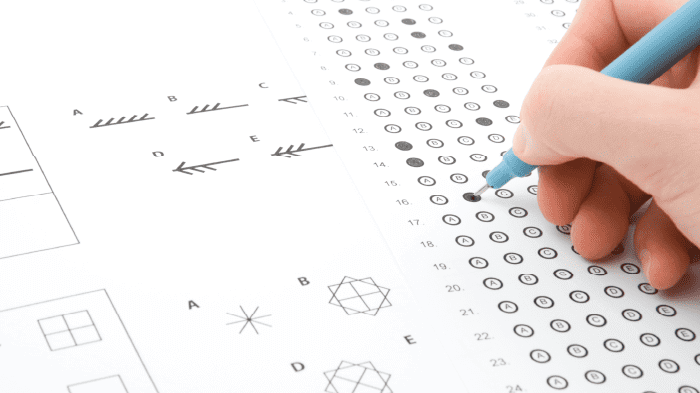
Online IQ tests are increasingly used by individuals who want to understand their cognitive abilities and by organizations looking for ways to evaluate potential employees. Employers may use online assessments to measure reasoning, problem-solving, numerical ability, verbal comprehension, and other skills that could be relevant to a particular job. This has made cognitive testing an important part of some modern recruitment processes.
However, a major question remains: how accurate are online IQ tests for career and hiring assessments?
The answer depends on the quality, purpose, administration, and validation of the test. A carefully designed cognitive assessment can provide useful information about job-related abilities. A casual online IQ quiz, on the other hand, may have little value for making employment decisions. Understanding the difference is essential for both employers and job seekers.
What Are Online IQ Tests?
Online IQ tests are assessments delivered through a website, application, or digital testing platform. They typically contain questions designed to evaluate specific cognitive skills. These may include logical reasoning, pattern recognition, numerical reasoning, verbal reasoning, spatial awareness, memory, and processing speed.
Some online tests are designed for entertainment and personal curiosity. Others are developed as formal cognitive assessments and may be used as part of educational, psychological, or employment evaluations.
The fact that a test is online does not automatically determine whether it is accurate. Digital delivery is simply a method of administering an assessment. What matters more is how the test was developed, whether it has been scientifically evaluated, and whether it measures abilities that are relevant to the purpose for which it is being used.
How Accurate Are Online IQ Tests?
When asking how accurate are online iq tests it is important to distinguish between professionally developed online assessments and general internet quizzes.
A well-designed online cognitive test can potentially provide reliable information about certain mental abilities. Professional assessments are typically developed using research, statistical analysis, standardized scoring, and validation studies.
By contrast, many free online IQ quizzes have not undergone the same level of scientific evaluation. They may provide a numerical score without explaining how the score was calculated or whether the test has been validated against an appropriate population.
This difference becomes particularly important in hiring. A person taking an online quiz for entertainment can treat the result as an interesting estimate. An employer using a cognitive assessment to make hiring decisions has a much greater responsibility to ensure that the assessment is reliable, relevant, and appropriate.
Why Employers Use Cognitive Assessments
Employers may use cognitive assessments because many jobs require employees to learn information, solve problems, understand instructions, identify patterns, and make decisions.
For example, a technical position may require strong logical and numerical reasoning. A financial role may involve quantitative analysis and attention to complex information. A management position may require decision-making and the ability to process information efficiently.
Cognitive assessments can provide employers with additional information beyond resumes and interviews.
A resume describes a person's education and experience, while an interview provides an opportunity to evaluate communication and interpersonal qualities. A cognitive assessment can add another type of information by examining how a candidate approaches standardized problems.
However, a cognitive test should generally be viewed as one component of a broader assessment process rather than a complete representation of an applicant.
Accuracy Depends on Validity
One of the most important factors in determining whether an online IQ test is useful for hiring is validity.
Validity refers to whether an assessment actually measures what it claims to measure and whether the results are appropriate for the intended purpose.
For employment purposes, a test should ideally have evidence showing that the abilities it measures are relevant to job performance.
A generic IQ quiz may measure someone's ability to solve abstract puzzles without demonstrating that the score predicts performance in a particular workplace.
This is why employers should avoid assuming that a high IQ score automatically means someone will be a successful employee. Job performance depends on many factors, including knowledge, experience, motivation, communication, personality, teamwork, and practical skills.
Reliability Is Also Important
Reliability refers to the consistency of test results.
If an assessment is reliable, a candidate's performance should generally remain reasonably stable when the test is administered under comparable conditions. A test that produces dramatically different results each time may not provide a dependable basis for decision-making.
Online testing can introduce several sources of variation. Candidates may take assessments using different devices, internet connections, environments, and levels of concentration. Some may be interrupted while others complete the test in a quiet room.
Professional testing platforms can reduce some of these issues by controlling testing conditions and using standardized procedures.
Employers should therefore examine whether an online assessment has evidence supporting its reliability before using it as part of a hiring process.
Testing Conditions Can Affect Results
Online assessments are often completed remotely, which can be convenient for employers and candidates. However, remote testing can create inconsistencies.
A candidate might complete an assessment late at night after working a long shift. Another candidate might take the same test in the morning when they are rested and focused.
Technical problems can also interfere with performance. Slow internet connections, browser issues, screen problems, or interruptions can affect the experience.
Some assessments use strict time limits, making testing conditions even more important. Stress and distractions can influence how quickly a person processes information.
These factors do not mean online assessments are inherently inaccurate. They simply demonstrate why standardized administration is important when test results are used for employment decisions.
Online IQ Scores Should Not Be the Only Hiring Factor
One of the biggest mistakes an employer can make is treating an IQ score as a complete measure of job suitability.
An employee may have excellent reasoning skills but lack communication skills required for a customer-facing position. Another candidate may have an average cognitive test score but possess extensive industry knowledge and exceptional practical experience.
Similarly, creativity, emotional intelligence, adaptability, leadership, reliability, and teamwork can be important contributors to workplace success.
A responsible recruitment process should therefore consider multiple sources of information.
Cognitive assessments can complement interviews, work samples, skills tests, qualifications, experience, and structured evaluations. Combining different methods can provide a more balanced view of a candidate.
Online IQ Tests and Job Seekers
For job seekers, online IQ tests can be useful for practicing common cognitive assessment formats.
Many recruitment assessments include questions involving sequences, patterns, numerical reasoning, verbal logic, or abstract problem-solving. Practicing these question types can help candidates become more comfortable with the format.
However, candidates should be cautious about interpreting practice-test scores as official measures of their intelligence.
Different websites can use different scoring systems. A score of 120 on one online test may not be directly comparable to a score of 120 on another.
Practice can also improve performance because candidates become familiar with the question formats. Therefore, a higher practice score does not necessarily mean that someone's underlying cognitive ability has changed.
Why Different Tests Produce Different Scores
It is common for people to receive different scores from different online IQ tests.
This can happen because tests use different questions, difficulty levels, scoring systems, time limits, and comparison groups.
One assessment may emphasize visual reasoning, while another may focus more heavily on vocabulary or numerical problems. A candidate's strengths can therefore affect performance differently across tests.
The same principle applies to workplace assessments. An employer should not compare a candidate's score from a random online IQ quiz with a score from a professionally developed employment assessment.
The two numbers may represent completely different measurements.
The Importance of Job Relevance
A good hiring assessment should be relevant to the position.
Suppose an employer is hiring for a job that requires advanced numerical analysis. A numerical reasoning assessment may be highly relevant. If the job involves interpreting written information, verbal reasoning may be more useful.
The assessment should be connected to actual job requirements rather than selected simply because it produces an impressive-looking score.
This approach helps employers focus on capabilities that matter in the workplace.
It also gives candidates a clearer understanding of why they are being tested and what the assessment is intended to evaluate.
Privacy and Fairness Considerations
Online hiring assessments also raise questions about privacy and fairness.
Candidates may provide personal information when completing an online assessment. Employers should understand how assessment data is stored, processed, and protected.
Fairness is equally important. A test should be evaluated to determine whether it creates unnecessary barriers for particular groups of candidates.
Employers should also consider accessibility. Candidates with disabilities or other legitimate needs may require reasonable accommodations during assessments.
The goal of testing should be to evaluate relevant abilities, not to introduce unrelated disadvantages.
What Makes an Online Assessment More Credible?
Employers evaluating an online cognitive assessment should look for evidence of professional development and validation.
Important questions include:
Who developed the assessment?
What cognitive abilities does it measure?
Has the test been scientifically validated?
Is there evidence that scores are reliable?
How were scoring standards established?
Is the assessment relevant to the job?
How is candidate information protected?
Can the assessment be administered consistently?
Does the provider explain the limitations of the test?
A credible assessment provider should be willing to explain its methodology rather than relying solely on marketing claims.
Candidates should also be skeptical of websites that promise to reveal an exact level of intelligence after a handful of questions.
Professional Assessments Versus Casual IQ Quizzes
There is a significant difference between a professional cognitive assessment and a casual online IQ quiz.
A casual quiz may be designed to entertain users and encourage them to compare their scores with friends. It can be fun and challenging, but it may not have the reliability or validity required for important decisions.
A professional assessment is developed with a specific measurement purpose. It generally involves research, standardized scoring, carefully designed questions, and evidence supporting its use.
For hiring purposes, employers should favor assessments specifically designed and validated for workplace applications rather than relying on generic internet IQ tests.
Can IQ Predict Career Success?
Cognitive ability can be relevant to job performance, particularly in positions that involve learning, reasoning, analysis, and complex problem-solving. However, it is not a guarantee of career success.
Career achievement depends on numerous factors.
Education, professional experience, communication, motivation, emotional skills, persistence, adaptability, interpersonal relationships, and organizational culture can all influence outcomes.
A candidate with a very high cognitive score may not necessarily perform well in a role that requires strong teamwork or customer relationships. Conversely, a candidate with an average cognitive score may thrive because of excellent practical knowledge, dedication, and interpersonal skills.
This is why employers should avoid reducing candidates to a single number.
Final Thoughts
So, how accurate are online IQ tests for career and hiring assessments? The answer depends on the assessment itself and how it is used.
A scientifically developed online cognitive assessment can provide valuable information about specific abilities and may contribute to a well-designed recruitment process. However, a casual online IQ quiz should not be treated as a reliable predictor of workplace performance.
Employers should consider reliability, validity, job relevance, fairness, accessibility, and data protection before introducing online cognitive testing into recruitment.
For job seekers, online IQ tests can be useful for practicing reasoning questions and becoming familiar with assessment formats. However, scores from different websites should not be treated as directly comparable.
Ultimately, the most effective hiring process uses cognitive assessments as one source of evidence rather than the sole basis for employment decisions. A person's ability to succeed at work involves much more than an IQ score. The strongest recruitment strategies combine appropriate testing with structured interviews, relevant skills assessments, qualifications, experience, and consideration of the qualities required for the specific role.