Organoids Market Insights Revealing New Possibilities in Biomedical Research
-

- Published Updated
- 123 views
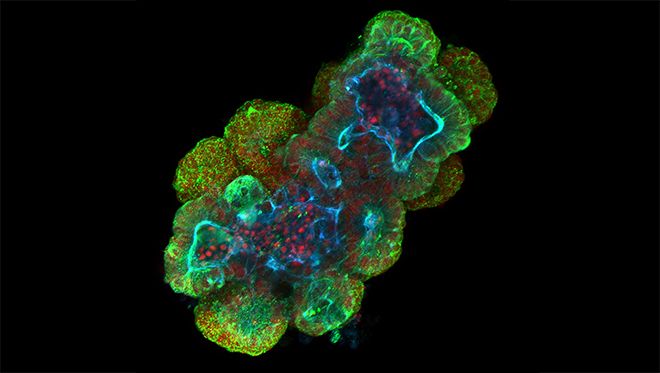
Organoids are transforming biomedical research by providing three-dimensional cellular models that replicate important structural and functional characteristics of human organs. Developed from stem cells or specialized tissue cells, these miniature biological systems allow researchers to investigate disease mechanisms, evaluate drug responses, and explore new therapeutic approaches under controlled laboratory conditions. Their growing relevance reflects the need for research models that more accurately represent human biology than conventional two-dimensional cell cultures.
The organoids market is gaining attention as pharmaceutical companies, biotechnology firms, academic institutions, and healthcare researchers seek more predictive and adaptable experimental tools. By offering a closer representation of human tissues, organoids can help bridge the gap between laboratory experiments and clinical outcomes. Although they do not fully reproduce the complexity of an entire organ or human body, their capabilities create valuable opportunities across drug discovery, disease modeling, toxicology, and personalized medicine.
Understanding the Scientific Value of Organoids
One of the most important insights into organoid technology is its ability to preserve selected biological features of the tissues from which it originates. Unlike flat cell cultures, organoids grow in three-dimensional structures that support interactions between cells and their surrounding environments. These interactions can influence cellular behavior, differentiation, and responses to experimental treatments.
Researchers can develop organoids representing tissues such as the intestine, liver, brain, lungs, kidneys, and stomach. Each model offers specific research advantages depending on the biological question being investigated. Intestinal organoids, for example, can support studies of digestive disorders and host-microbe interactions, while liver organoids can help researchers examine metabolism and potential drug-related toxicity.
However, the quality of an organoid model depends on the source cells, culture conditions, maturation level, and reproducibility of the manufacturing process. Understanding these variables is essential for selecting appropriate models and interpreting experimental results accurately.
Drug Discovery Creates Significant Opportunities
Drug development remains an important application area for organoid technology. Traditional preclinical models may not consistently predict how a treatment will behave in humans, contributing to costly development failures. Organoids provide another experimental option by enabling researchers to study drug responses in biologically relevant tissue structures.
Pharmaceutical companies can use these models to evaluate candidate compounds, investigate mechanisms of action, and identify potential safety concerns earlier in development. Organoids can also help researchers compare responses across different tissue models, allowing more informed decisions about which compounds deserve further investigation.
The organoids market benefits from this growing interest in improving preclinical research efficiency. Nevertheless, organoid experiments cannot replace every established testing method. Their greatest value often emerges when they complement biochemical assays, animal studies where appropriate, computational models, and other laboratory techniques.
Personalized Medicine and Patient-Specific Models
Another important insight is the potential to create organoids from individual patient samples. Patient-derived organoids may retain selected characteristics of the original tissue, including certain genetic alterations and disease-associated cellular behaviors. This makes them useful for investigating differences in treatment response.
In oncology, for example, tumor organoids can be used to evaluate how cancer cells respond to different therapeutic compounds. Researchers may compare experimental responses across treatment options and investigate mechanisms associated with resistance. Similar approaches are being explored for inherited disorders, inflammatory diseases, and other conditions.
Personalized applications remain dependent on practical factors such as sample availability, culture success, turnaround time, and the relationship between laboratory findings and actual patient outcomes. Clinical adoption will require stronger evidence demonstrating when organoid-based testing can meaningfully improve treatment decisions.
Technology Improvements Strengthen Research Capabilities
Advances in stem cell biology, biomaterials, imaging, and laboratory automation are expanding the capabilities of organoid platforms. Improved culture media and extracellular matrices can support more consistent growth, while automated handling systems can reduce repetitive manual work and help standardize laboratory procedures.
Microfluidic devices and organ-on-chip technologies can introduce controlled fluid movement, mechanical forces, and interactions between different cell types. Combining organoids with these systems may help researchers study biological processes that are difficult to reproduce in conventional culture environments.
Artificial intelligence and image-analysis tools are also becoming relevant. Automated systems can quantify organoid size, shape, growth patterns, and responses to experimental treatments. When combined with reliable experimental data, these tools can improve screening efficiency and support more objective comparisons between samples.
These developments demonstrate that progress depends not only on the organoids themselves but also on the supporting technologies that make experiments measurable, repeatable, and scalable.
Key Challenges Affecting Commercial Adoption
Despite their promise, organoid systems face several challenges. Reproducibility is a major concern because differences in cell sources, laboratory protocols, culture materials, and operator techniques can produce inconsistent outcomes. Standardized procedures and validated quality-control measures are therefore essential for wider commercial and clinical use.
Production costs can also limit adoption, particularly for smaller research laboratories. Specialized media, growth factors, equipment, skilled personnel, and lengthy culture procedures can increase the expense of experiments. Scaling production without compromising biological quality remains another important technical challenge.
Furthermore, many organoids lack certain components found in fully developed human organs, such as mature vascular networks, complete immune-cell populations, or complex interactions with other organ systems. Researchers must recognize these limitations when interpreting results. Regulatory expectations, data consistency, and validation requirements may also differ according to the intended application.
Addressing these barriers will require cooperation among biotechnology developers, pharmaceutical companies, research institutions, equipment suppliers, and regulatory stakeholders.
Competitive Strategies and Commercial Opportunities
Companies participating in the organoids market can strengthen their positions by developing reliable culture products, specialized tissue models, automated workflows, and application-specific services. Solutions that reduce experimental variability and simplify laboratory operations may appeal to organizations seeking dependable research outcomes.
Partnerships between technology developers and pharmaceutical companies can help align product development with practical drug discovery requirements. Collaborations with academic institutions can support new disease models, while contract research organizations can expand access for customers that lack in-house organoid capabilities.
Commercial opportunities also exist in quality-control products, cell culture materials, imaging systems, data-analysis software, and standardized organoid platforms. Rather than competing solely on model complexity, providers can differentiate themselves through consistency, technical support, documentation, and demonstrated performance in clearly defined applications.
Future Outlook for Organoid Technology
The future development of organoid technology will likely depend on improving reproducibility, increasing automation, and demonstrating measurable value in real research settings. More sophisticated models may incorporate multiple cell types, tissue interfaces, and physiological conditions to address questions that simpler systems cannot adequately answer.
As researchers gain a better understanding of model limitations, organoids may become increasingly integrated into established drug discovery workflows and translational research programs. Progress in patient-derived models could also support more individualized investigations, provided that clinical evidence confirms their practical benefits.
Overall, the organoids market reflects a broader movement toward human-relevant experimental systems. Its long-term potential will depend on scientific reliability, affordable production, standardized methods, and credible evidence of improved research outcomes. By combining biological innovation with scalable laboratory technologies, organoids can contribute to a more precise and informative approach to biomedical research.