How Real Estate Tokenization Is Quietly Rebuilding the Global Property Market From the Ground Up
-

- March 25th, 2026
- 7,697 views

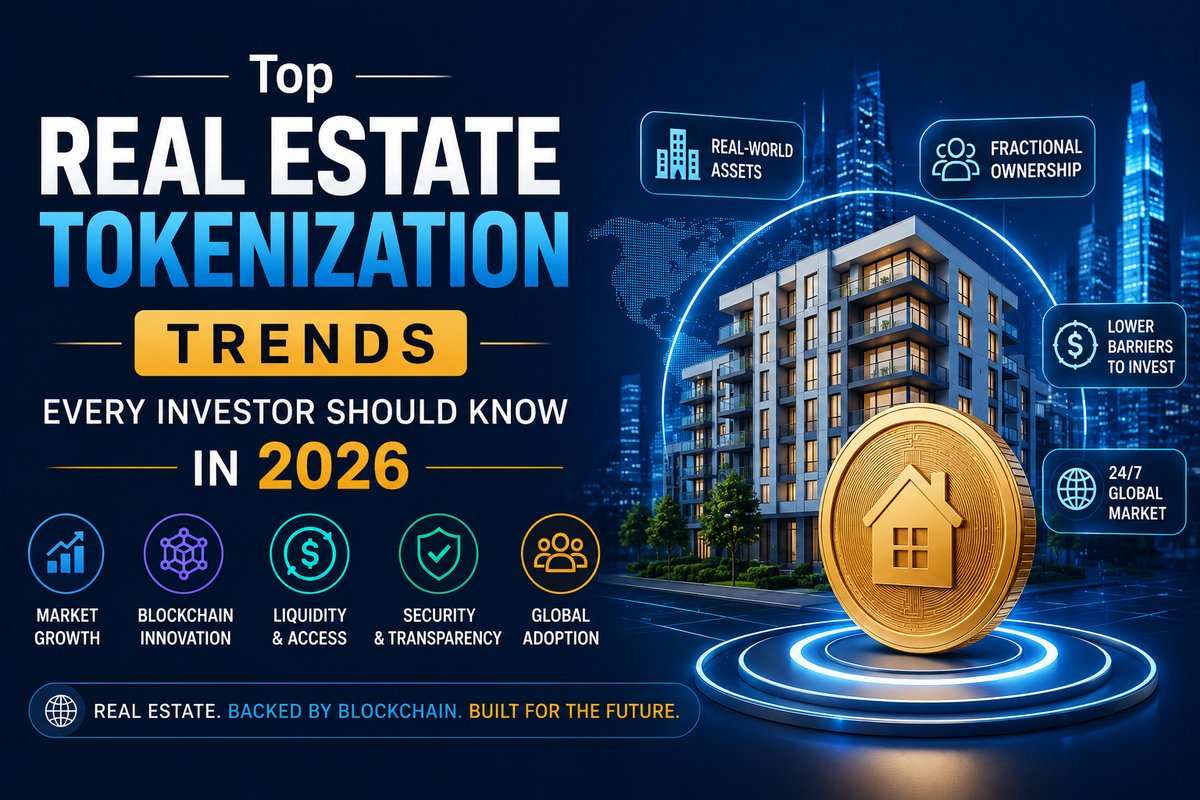
The global real estate market has always been the domain of the wealthy, the well-connected, and the geographically privileged. A Mumbai professional cannot easily own a slice of a Dallas apartment complex. A Dubai investor cannot hold fractional stakes in Bengaluru's booming IT corridor without navigating years of legal complexity. A London pension saver cannot access Manila commercial yields without institutional intermediaries taking significant cuts. That reality is changing with a speed that most mainstream financial commentary has not yet caught up with. The engine of that change is real estate tokenization, and the firms building this infrastructure are rewriting the rules of global capital allocation one token at a time.
What Nobody Is Telling You About Why Tokenization Is Accelerating Right Now
The public narrative around real estate tokenization focuses almost entirely on accessibility. Fractional ownership, lower minimums, global reach. These are real benefits, but they are not the primary driver of the current acceleration in adoption among institutional players. The real driver is settlement efficiency.
Traditional real estate transactions in every major market involve title searches, escrow processes, notarial verification, registry updates, and correspondent banking chains. A cross-border property transaction between a Singapore buyer and a US seller can involve eleven separate intermediaries, each charging fees and adding days to the settlement timeline. Blockchain-based tokenization compresses this to a single smart contract execution that settles in minutes and records ownership changes simultaneously across all relevant parties. For institutional investors managing portfolios of hundreds of assets, this efficiency gain is measured in millions of dollars annually.
Every serious real estate tokenization development company operating at institutional scale today is building settlement infrastructure, not just investment portals. The distinction matters because settlement efficiency is what will ultimately drive the trillions of dollars in traditional real estate assets toward on-chain structures over the coming decade.
The SPV Model and Why It Is Both Brilliant and Underappreciated
The legal architecture underpinning most tokenized real estate today is the Special Purpose Vehicle structure. A property is transferred into an SPV, a ring-fenced legal entity. Ownership interests in the SPV are then tokenized and issued on a blockchain. Each token represents a fractional beneficial interest in the SPV, which holds the physical asset with all its cash flow rights intact.
This structure is more sophisticated than it first appears. The SPV creates legal isolation between the property and any financial difficulties of the token issuer or platform operator. If the platform fails, the property and its income stream continue to exist within the SPV, protected from the platform's creditors. This structural protection is something that equity crowdfunding platforms, which sell shares in the operating company rather than ring-fenced asset vehicles, cannot offer.
Sophisticated real estate tokenization development services today include full SPV structuring, legal opinion letters, jurisdictional selection analysis, and token issuance documentation as integrated offerings rather than separate professional service engagements. This bundled approach is compressing the time-to-market for new tokenized offerings from eighteen months to under six in the most advanced markets.
The Three Blockchain Properties That Make Real Estate Work On-Chain
Not every blockchain is suitable for real estate tokenization at institutional scale, and the selection of chain architecture is one of the most consequential technical decisions a tokenization project makes. Three properties matter above all others.
The first is programmable compliance. Real estate securities require KYC verification, accredited investor checks, jurisdiction-specific transfer restrictions, and ongoing reporting obligations. These cannot be bolted on after token issuance. They must be embedded in the token contract itself, creating transfer rules that execute automatically and cannot be overridden by any party.
The second is deterministic finality. Financial applications require certainty that a settled transaction cannot be reversed. Probabilistic finality, where transactions are considered final only after a certain number of block confirmations, creates settlement risk that institutional custodians cannot accept. Chains with instant deterministic finality eliminate this risk entirely.
The third is institutional custody compatibility. Tokens representing real-world assets must be storable in regulated custodial infrastructure approved by financial regulators. This requirement immediately eliminates many chains from consideration regardless of their technical merits.
Any credible real estate tokenization development solutions provider today must demonstrate expertise across all three of these properties, not just the user-facing investment experience.
What the Data Is Already Showing About Yield Enhancement Through Tokenization
Early performance data from markets where tokenized real estate has been operating for two or more years is beginning to reveal a counterintuitive pattern. Tokenized properties are not simply matching the performance of their non-tokenized equivalents. In several documented cases, they are outperforming them.
The mechanism is liquidity premium capture. Traditional real estate carries an illiquidity discount, meaning buyers demand a lower price to compensate for the difficulty of exiting. When secondary token markets provide genuine liquidity, this discount partially disappears, benefiting existing holders through price appreciation that has nothing to do with the underlying property's fundamentals. This is a one-time structural gain that early tokenization adopters are currently capturing as the market reprices tokenized assets upward toward their true liquid value.
The Regulatory Convergence That Will Define the Next Three Years
The most significant near-term development in real estate tokenization is not technological. It is regulatory. The United States, European Union, United Kingdom, UAE, and Singapore are all in active regulatory formation phases for real estate security tokens, and their frameworks are converging around common principles faster than most observers anticipated.
The emerging global consensus recognises tokenized real estate interests as regulated securities requiring licensed issuance, licensed secondary trading, and investor protection standards equivalent to those applied to traditional listed securities. This is positive news for serious institutional participants who have been waiting for regulatory clarity before committing significant capital. The next three years will see the compliance infrastructure that leading real estate tokenization development company platforms have already built become the mandatory baseline for all market participants.
The silent revolution will not remain silent much longer. The infrastructure is built. The regulatory frameworks are converging. The institutional capital is waiting. Real estate tokenization is not a future possibility. It is a present reality accelerating toward its inflection point.