Robotic Surgery in Madurai: Understanding Advanced Surgical Care
-

- Published Updated
- 31 views
Medical technology has changed significantly in recent years, giving surgeons access to advanced tools that can support precision, visualization, and minimally invasive procedures. One of the important developments in modern surgery is robotic-assisted surgery, which combines sophisticated technology with the skill and decision-making of trained surgeons.
For patients exploring Robotic Surgery in Madurai, understanding how the technology works, where it may be used, and what factors should be considered before surgery can help them have more informed discussions with their medical team.
What Is Robotic Surgery?
Robotic surgery is a minimally invasive surgical technique in which a surgeon operates using a robotic-assisted surgical system. The system translates the surgeon's movements into precise instrument movements and provides a magnified, high-definition view of the surgical area.
Importantly, the robot does not independently decide or perform surgery. According to Devadoss Hospital, the surgeon remains in control throughout the procedure, while the robotic system assists with visualization, instrument control, dexterity, and precision.
Depending on the procedure and the patient's condition, robotic-assisted surgery may allow surgeons to perform certain operations through smaller incisions compared with some traditional approaches.
How Robotic-Assisted Surgery Works
A robotic surgical system generally consists of several components that work together.
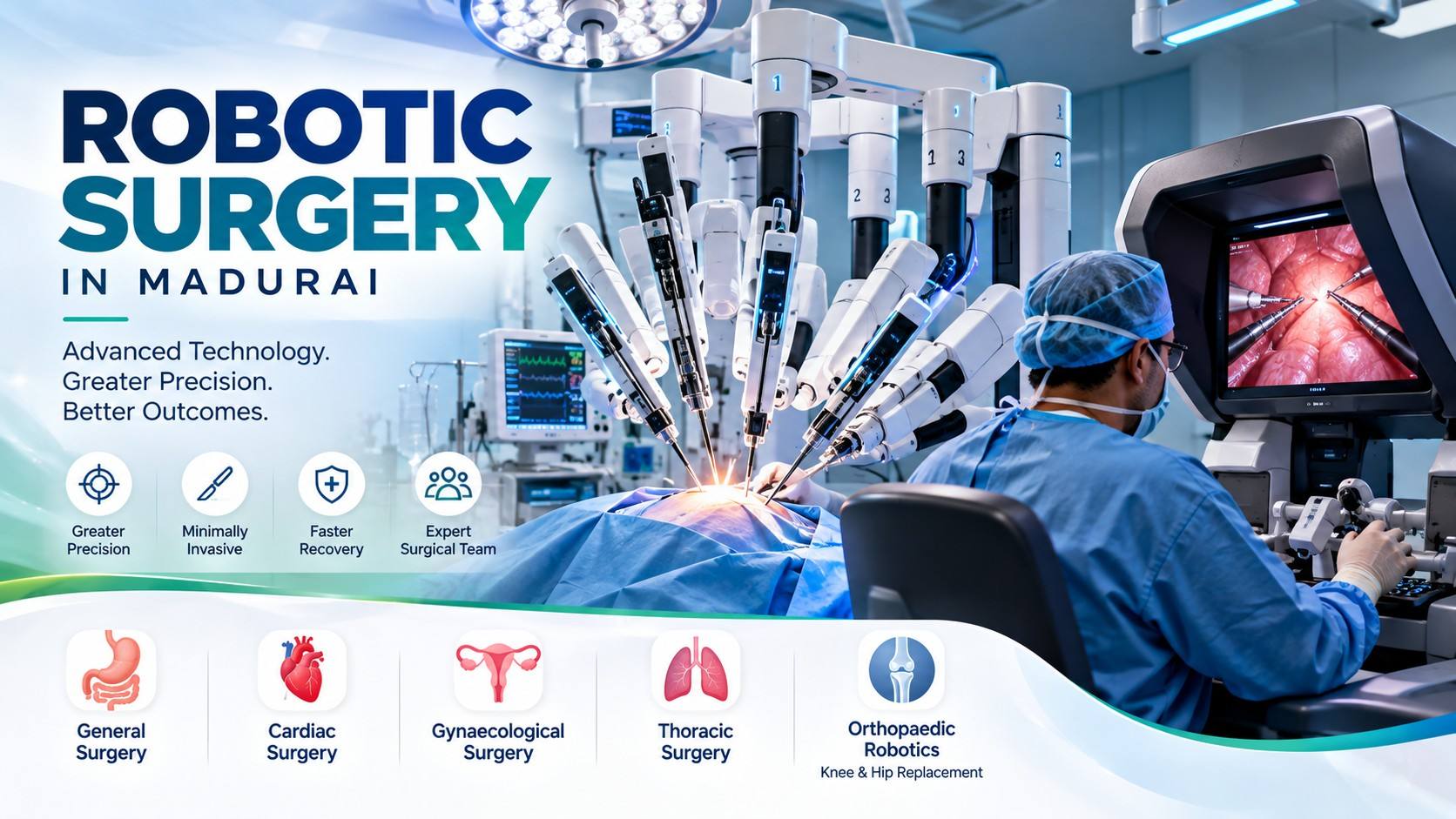
The surgeon controls the robotic instruments from a specialized console. A high-definition 3D camera provides an enlarged view of the surgical area, while robotic instruments can provide a greater range of motion and controlled movements.
The technology can support surgeons in accessing areas that may be difficult to reach through conventional approaches. However, the suitability of robotic surgery depends on the specific procedure, the patient's medical condition, and the surgeon's clinical assessment.
Robotic Surgery in Madurai
Devadoss Hospital has developed robotic-assisted surgical services as part of its broader multispecialty healthcare facilities. Its website states that the hospital has more than 21 years of experience in computer-assisted surgeries and has completed more than 500 robotic-assisted orthopaedic procedures. It also states that the hospital has introduced the SSI Mantra General Surgical Robotic System for robotic-assisted procedures across multiple specialties.
The hospital also provides a separate robotic orthopaedic program using the CUVIS Joint Robotic System for knee and hip replacement procedures.
Areas Where Robotic Surgery May Be Used
Robotic-assisted surgery is not limited to one medical specialty. Different robotic systems and surgical techniques may be used for different procedures.
Devadoss Hospital lists robotic-assisted procedures across several areas, including general surgery, cardiac surgery, gynaecology, thoracic procedures, and orthopaedic joint replacement.
General Surgery
The hospital lists procedures such as gallbladder removal, hernia repair, appendectomy, bariatric surgery, colorectal procedures, pancreatic surgery, and other complex operations among its robotic general-surgery procedures.
The suitability of robotic assistance varies according to the patient's condition and the specific surgical procedure.
Cardiac Surgery
Robotic-assisted cardiac procedures can be used for selected patients and procedures. Devadoss Hospital lists procedures including robotic totally endoscopic coronary artery bypass, mitral valve replacement, atrial septal defect repair, and other cardiac surgical procedures.
Cardiac surgery is highly specialized, and the appropriate surgical approach must be determined by the treating cardiac team after evaluating the patient's condition.
Gynaecological Surgery
Robotic technology may also be used for selected gynaecological procedures. Devadoss Hospital lists procedures including hysterectomy, myomectomy, endometriosis treatment, ovarian cyst removal, pelvic organ prolapse repair, and other procedures.
Thoracic Procedures
Thoracic robotic procedures involve operations affecting structures within the chest. The hospital lists procedures such as thymectomy, lobectomy, robotic bullectomy, and selected oesophageal and lung procedures.
Robotic Knee and Hip Replacement
Orthopaedic robotics is another important application. Devadoss Hospital describes its robotic joint replacement program for knee and hip procedures and states that the CUVIS Joint Robotic System supports 3D CT-based pre-planning, precise cutting, real-time gap checks, and monitoring during surgery.
Potential Benefits of Robotic-Assisted Surgery
Robotic technology can provide surgeons with several technical advantages. These can include high-definition 3D visualization, enhanced instrument dexterity, precise movements, and access to difficult-to-reach areas.
For selected minimally invasive procedures, smaller incisions may also be possible. Depending on the procedure and individual patient factors, minimally invasive approaches can be associated with reduced tissue trauma, less postoperative discomfort, and faster recovery.
However, these benefits should not be considered guaranteed for every patient. The outcome depends on the type of surgery, the patient's health, the surgeon's experience, and other clinical factors.
Why Surgical Expertise Matters
Advanced technology is only one part of successful surgical care. The surgeon's experience, preoperative evaluation, surgical planning, anesthesia support, nursing care, postoperative monitoring, and rehabilitation all contribute to the overall treatment process.
Devadoss Hospital describes its robotic surgery program as combining robotic technology with trained surgical specialists and multidisciplinary medical support.
The hospital's wider infrastructure includes modular operating theatres, intensive care facilities, diagnostic services, and specialized departments across multiple medical disciplines.
Is Robotic Surgery Suitable for Everyone?
Robotic surgery is not automatically the appropriate choice for every patient.
The decision depends on factors such as:
The patient's diagnosis
Type and complexity of the procedure
Previous surgeries
Overall health
Anatomy and medical history
Availability of an appropriate robotic technique
Surgeon's clinical assessment
Patients should discuss the available surgical approaches with their doctor and understand the expected benefits, limitations, risks, recovery period, and alternatives before making a treatment decision.
Devadoss Hospital also notes in its recent educational content that robotic surgery may provide advantages for selected procedures but is not universally superior to conventional laparoscopy or other surgical approaches.
Choosing Robotic Surgery in Madurai
Patients researching Robotic Surgery in Madurai can consider several practical factors before selecting a hospital or surgical program.
These include the experience of the surgical team, type of robotic system available, procedures performed using the technology, supporting critical-care facilities, diagnostic infrastructure, postoperative care, rehabilitation services, and the availability of multidisciplinary specialists.
It is also useful to ask the surgical team whether robotic-assisted surgery is appropriate for the particular condition and how it compares with other available approaches.
Conclusion
Robotic-assisted surgery represents an important development in modern minimally invasive surgical care. By combining advanced visualization and instrument control with the expertise of trained surgeons, robotic systems can support selected complex procedures across several medical specialties.
For patients considering Robotic Surgery in Madurai, Devadoss Hospital offers robotic-assisted services in general surgery, cardiac surgery, gynaecology, thoracic procedures, and orthopaedic joint replacement. Its website also provides information about the SSI Mantra General Surgical Robotic System and CUVIS Joint Robotic System.
Patients should discuss their individual condition with a qualified surgeon to determine whether robotic-assisted surgery is appropriate and understand all available treatment options.