How SaaS Will Evolve: AI Integration, Automation, and Vertical Expansion — A Practical Guide
-

- Published Updated
- 469 views

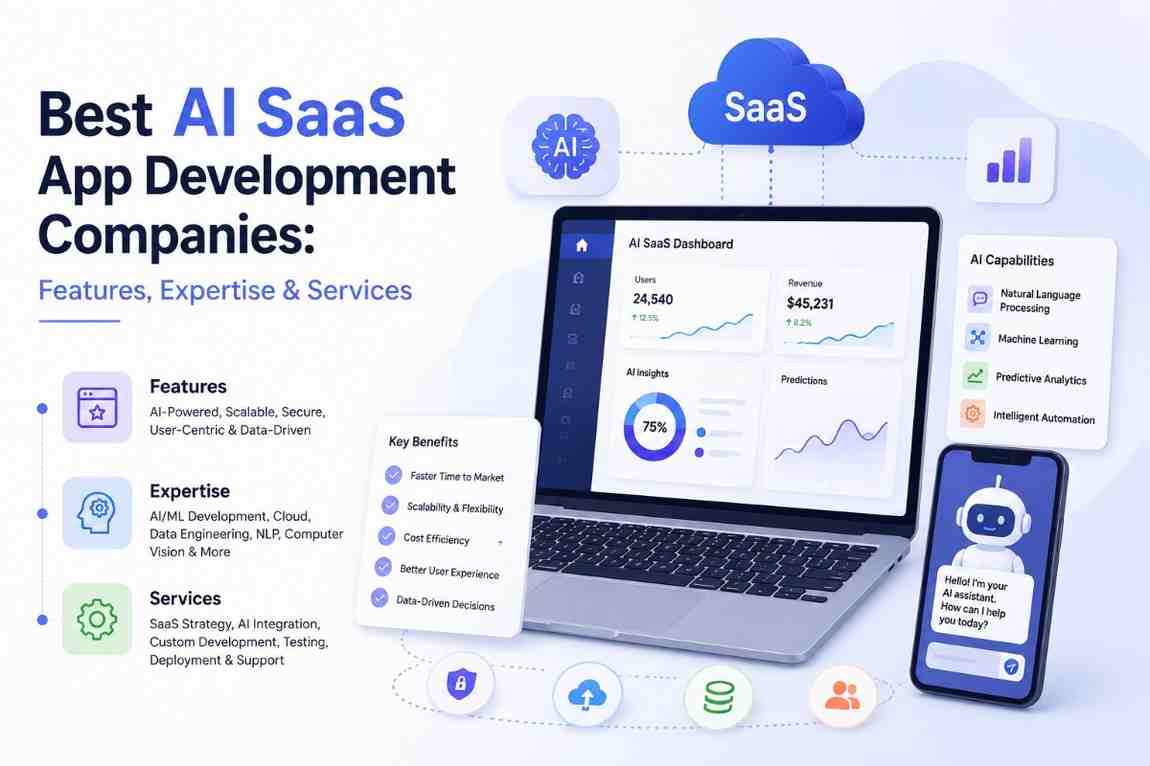
The future of SaaS will be shaped by tighter AI integration, deeper automation, and more aggressive vertical expansion as vendors move from horizontal tools to industry-specific platforms. This article explains practical steps product and business teams can take to adapt, with a framework, checklist, example scenario, and actionable tips for implementation.
- AI integration in SaaS will drive higher value per customer through personalization and automation.
- Automation reduces operational load but increases integration and data-quality requirements.
- Vertical SaaS expansion boosts customer lifetime value but demands domain expertise and compliance capabilities.
Future of SaaS: core shifts to expect and plan for
What changes are underway
The industry is moving from generic, one-size-fits-all platforms to composable, AI-enabled systems that automate cognitive tasks and embed industry workflows. Expect product roadmaps to emphasize three priorities: AI integration, workflow automation, and vertical specialization (industry-specific features, taxonomies, and compliance).
Key terms defined
- AI integration in SaaS — embedding machine learning models and inference services into product features (recommendations, extraction, prediction).
- SaaS automation strategies — end-to-end automation of repetitive or decision-based work inside the app and across integrations.
- Vertical SaaS expansion — tailoring product, pricing, and go-to-market to a specific industry (healthcare, legal, construction, etc.).
VAST framework: a practitioner model for prioritizing investments
Introduce the VAST framework to guide decisions: Verticalization, Automation, Security & Compliance, and Trust & Data. The VAST framework helps prioritize features, tech debt, and go-to-market moves.
VAST checklist (actionable)
- Verticalization — map top 2 industries, capture domain workflows, and build 3 industry-specific templates.
- Automation — instrument key workflows, measure time saved, and add API hooks for orchestration.
- Security & Compliance — perform data classification, logging, and role-based access for sensitive fields.
- Trust & Data — document model provenance, provide explainability for predictions, and enable human-in-the-loop controls.
Product strategy: combining AI, automation, and vertical expansion
Roadmap signals to watch
Prioritize low-latency inference, robust observability, and data pipelines that support both feature-level personalization and cross-customer analytics. For vertical SaaS expansion, embed domain taxonomies and regulatory workflows early; those are expensive to retrofit.
Technical investments
Invest in feature stores, model monitoring, and orchestration layers. Use modular automation components (workflows and connectors) so vertical templates can be assembled without deep engineering each time. For guidance on AI risk management and best practices, consult the NIST AI resources (NIST AI Risk Management).
Real-world example: HR SaaS moving into healthcare hiring
Example scenario: A mid-market HR SaaS adds AI-powered candidate screening and automation for credential checks. To expand into healthcare (vertical SaaS expansion), the product team builds a compliance module for license verification, templates for role-specific assessments, and automated background-check orchestration that integrates with hospital vendor APIs. Outcome: onboarding time drops 40%, new contracts have higher ACV because the product reduces credential risk for buyers.
Practical tips for teams implementing these changes
Actionable tips (3–5 points)
- Start with data: instrument and catalog critical data elements before training models or automating workflows.
- Ship small, measure impact: release one AI feature per quarter tied to a clear KPI (time saved, conversion uplift, churn reduction).
- Invest in explainability: provide UI context for predictions so users can override and learn from mistakes.
- Modularize integrations: build connectors and workflow templates that can be re-used across verticals.
- Align GTM: pair product verticals with specialized sales and customer success teams early to capture domain knowledge.
Trade-offs and common mistakes
Trade-offs to weigh
- Speed vs. safety: Rapid AI feature rollout can increase risk—balance with model validation and monitoring.
- Generality vs. depth: Horizontal features scale broadly, but vertical features can command higher price; choose based on target market size and sales motion.
- Build vs. buy: Building custom models and connectors delivers control but costs more; buying managed services accelerates time-to-market but may limit customization.
Common mistakes
- Skipping data quality work and then blaming models for poor outcomes.
- Assuming automation eliminates human oversight—regulatory and edge cases still need human review.
- Expanding into verticals without dedicated domain experts or compliance plans.
Measuring success and KPIs
Track adoption metrics (feature DAU/MAU), business impact metrics (time saved, revenue per seat), and reliability metrics (model drift, false-positive rates). For vertical plays, measure ACV uplift, win rate in targeted industries, and time-to-value for the new vertical templates.
Implementation checklist (2-minute health check)
- Data: schema cataloged and access controls in place.
- Models: versioned, monitored, and explainable.
- Automation: key workflows instrumented and reversible.
- Vertical readiness: templates, compliance, and GTM mapped.
Conclusion
The future of SaaS is practical and incremental: combine AI integration with automation to increase user value, while using vertical expansion to capture industry-specific demand and pricing power. Use the VAST framework and the checklists above to prioritize work, and measure impact before scaling.
FAQ: What readers ask most
How will the future of SaaS affect pricing and packaging?
Expect tiered pricing that charges for AI-driven usage (per inference or per saved-hour) and vertical premium bundles that include templates, compliance features, and specialized support.
When should a company prioritize AI integration in SaaS versus vertical expansion?
Prioritize AI integration when data and user workflows can be measurably improved by predictions or automation. Pursue vertical expansion when a segment demonstrates distinct workflows, higher willingness to pay, and regulatory differentiation that competitors can't easily match.
What are the main security and compliance considerations for adding AI?
Focus on data lineage, consent, model explainability, and monitoring for bias. Implement access controls and audit logging and align with standards such as those recommended by NIST for AI risk management.
How can teams avoid common mistakes during SaaS automation projects?
Start with small pilots, instrument every step, keep humans in the loop for edge cases, and ensure rollback options are in place. Maintain clear KPIs and iterate based on measured outcomes.
Is adopting vertical SaaS expansion necessary for growth in the next five years?
Vertical SaaS expansion is not strictly necessary for every company, but it is a high-leverage path for vendors seeking higher ACV and defensibility. Evaluate based on market size, sales model, and the cost of developing domain expertise.