How to Select Countertops That Complement Any Interior Style: A Practical Guide
-

- March 15th, 2026
- 199 views
Choosing the right surface is part design decision and part practical planning; selecting countertops that match an interior theme starts with clarifying style, daily use, and budget. This guide explains materials, color and pattern choices, edge profiles, and maintenance so a confident decision can be made for kitchens, bathrooms, and other surfaces.
- Dominant intent: Commercial Investigation
- Primary action: follow the S.T.O.N.E. framework to match material, color, edge, and durability to an interior theme
- Includes a materials comparison, a checklist, practical tips, and a short real-world example
Selecting Countertops: a step-by-step process
Start by documenting the room's interior theme, lighting, and how the surface will be used. The process of selecting countertops should consider aesthetics (color, pattern, edge), performance (scratch, heat, and stain resistance), and maintenance (sealing, daily care). The following sections break these factors into actionable decisions.
Materials and how they influence the interior theme
Common materials and characteristics
- Granite — Natural stone with strong veining and heat resistance; requires periodic sealing.
- Quartz (engineered stone) — Consistent patterns, low maintenance, high stain resistance.
- Marble — Elegant veining and soft light-reflecting tones; softer and more porous than granite.
- Butcher block / wood — Warmth and texture ideal for rustic or Scandinavian themes; needs oiling and is susceptible to scratches.
- Laminate — Cost-effective with many printed patterns; lower durability but easy to replace.
- Solid surface (acrylic) — Seamless appearance, repairable scratches, limited heat resistance.
- Concrete — Industrial or modern look; can be custom-colored but may crack and needs sealing.
Related terms and entities
When evaluating options, consider manufacturers, industry standards for countertop installation, NSF-approved surfaces for food preparation, and finish options (polished, honed, matte). Materials like quartz, granite, laminate, and butcher block appear frequently in design portfolios and retailer catalogs.
The S.T.O.N.E. framework for decision-making
Use the S.T.O.N.E. framework as a checklist at planning stage:
- Style — Match finish, color temperature, and pattern scale to the interior theme (modern, traditional, coastal, farmhouse).
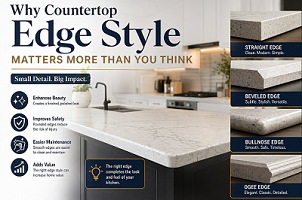
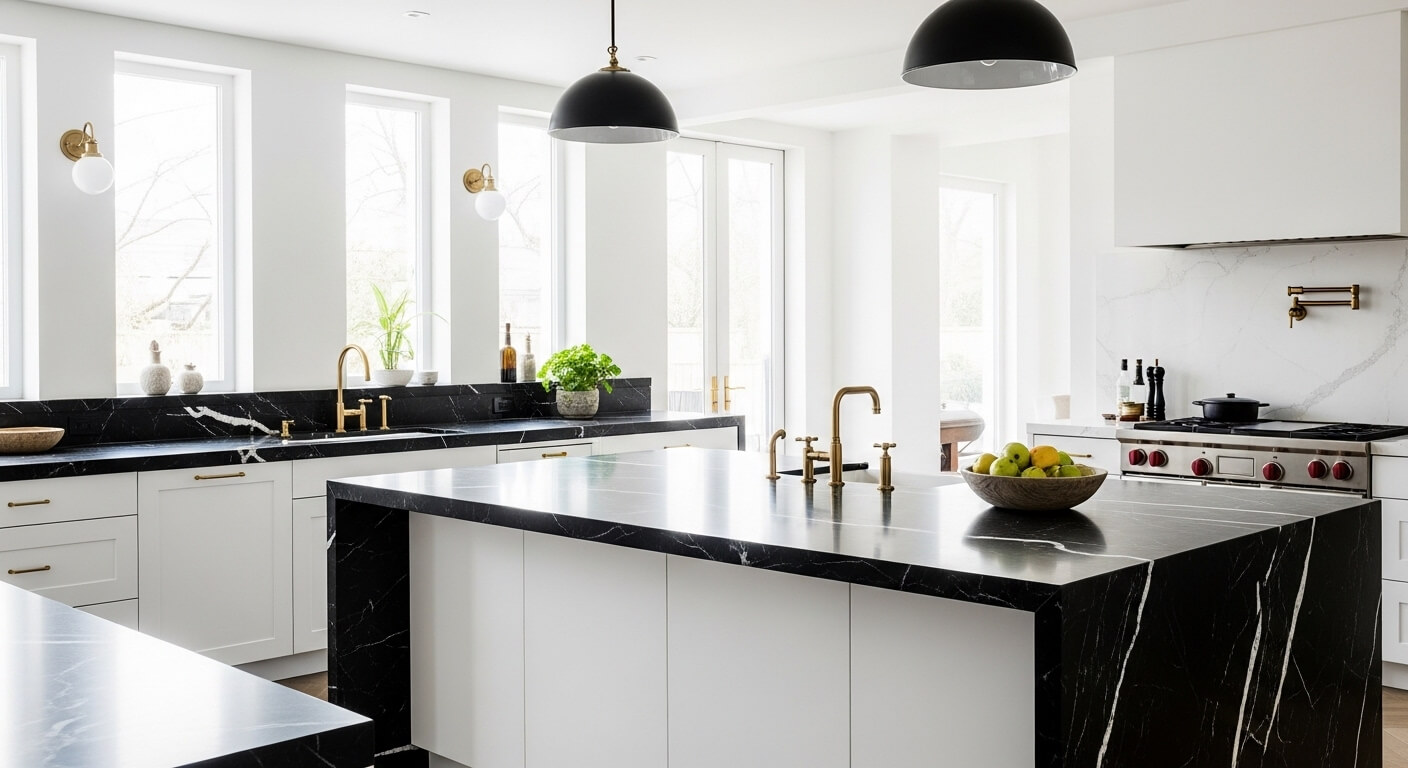
- Thickness & edge — Choose edge profiles and thickness that read correctly in the space (thin for minimalist, thick or waterfall for dramatic statement).
- Operation (use) — Consider daily activities: heavy cooking, food prep, or decorative use only.
- Needs (budget & maintenance) — Balance upfront cost against lifecycle costs for sealing, repairs, and replacement.
- Environment — Consider lighting, surrounding cabinetry color, and backsplash to ensure the countertop complements the overall palette.
Countertop color, pattern, and lighting: matching to themes
Color and pattern scale affect perceived space. For small kitchens, lighter, low-contrast surfaces visually expand the room. High-contrast countertops create focal points in neutral interiors. Matte finishes reduce reflections in high-gloss rooms, while polished surfaces amplify light in darker spaces.
Countertop materials comparison
Compare materials by performance and appearance: quartz offers predictable color and low upkeep (good for busy households), while granite or marble provides unique natural patterns. Laminate and solid surface are budget-friendly but trade off heat and scratch resistance.
Practical considerations: size, installation, and standards
Account for seam placement, sink type (drop-in, undermount, integrated), and edge profile compatibility with cabinetry. Standard countertop height guidelines from industry groups inform ergonomic decisions; for reliable guidance on kitchen planning and recommended dimensions, consult the National Kitchen & Bath Association design resources: NKBA.
Trade-offs and common mistakes
Common mistakes include choosing a surface solely for looks without checking durability, failing to order samples to view in actual light, and ignoring maintenance needs. Trade-offs typically involve:
- Appearance vs. durability — Natural stone may look unique but can require more maintenance.
- Cost vs. convenience — Engineered quartz costs more upfront but reduces long-term sealing and repair needs.
- Authenticity vs. budget — Laminate can mimic stone but will not match longevity or resale value of real stone.
Practical tips for selecting countertops
- Order physical samples and view them at different times of day under the room's lighting before deciding.
- Mock up edge profiles and backsplashes at full scale using cardboard or thin plywood to check visual weight and flow.
- Prioritize high-use zones (near stove and sink) for more durable materials and reserve decorative surfaces for islands or low-impact counters.
- Confirm lead times, warranty coverage, and whether the installer provides sealing or finishing services.
- Keep a small budget for future repairs or refinishing when selecting softer materials like wood or marble.
Real-world example
Scenario: A family kitchen with a coastal-modern theme, medium natural light, frequent cooking, and a moderate budget. Using S.T.O.N.E.: Style = clean lines and soft, cool greys; Thickness & edge = slim profile with eased edge; Operation = heavy daily use; Needs = low-maintenance; Environment = ample indirect light. Result: an engineered quartz in a subtle light-grey tone for durability and low maintenance, paired with a warm wood island top (butcher block) to add texture and soften the palette.
Core cluster questions
- Which countertop materials require the least maintenance?
- How to match countertop color with cabinet finishes?
- What are the installation considerations for undermount sinks and quartz?
- When does a waterfall countertop make sense for overall design?
- How to protect and reseal natural stone countertops?
Common mistakes to avoid when choosing countertops
Avoid ordering solely from photos, neglecting seam visibility, and underestimating maintenance. Confirm sample appearance under real-light conditions and ask installers about movement joints and potential for hairline cracks in large-format slabs.
Next steps checklist
- Collect room photos and a short brief describing the interior theme and daily use.
- Request and compare physical samples in place.
- Get written quotes including fabrication, installation, and expected seam placement.
- Confirm maintenance schedule and warranty details.
Final considerations
Selecting countertops that complement an interior theme requires balancing aesthetics with practical needs. Use the S.T.O.N.E. checklist, view samples in the intended environment, and weigh trade-offs before committing to a slab or material. A thoughtful choice will coordinate with cabinetry, backsplash, and lighting to reinforce the room's design while standing up to daily use.
FAQ: What to know about selecting countertops
How does selecting countertops affect overall room design?
Countertops set scale, color, and texture; they can either blend with cabinetry to create a cohesive look or contrast to provide a focal point. The material and finish influence the perceived brightness and cleanliness of the space.
Which materials are best for high-use kitchens?
Engineered quartz and certain granites are top choices for heavy use because of their resistance to stains and scratches. Consider installers' recommendations and manufacturer care guides for a final decision.
How to choose countertop color with limited natural light?
Choose lighter, low-contrast countertops to avoid a heavy visual effect; select finishes that reduce glare if artificial lighting is prominent.
What maintenance is required for natural stone vs. engineered surfaces?
Natural stone often needs periodic sealing and gentle cleaners; engineered surfaces are typically non-porous and require only mild soap and water for maintenance.
Where can designers find recommended kitchen dimension standards?
Industry resources and associations like the National Kitchen & Bath Association publish ergonomic and planning guidelines that inform countertop heights, clearances, and workflow layouts. See NKBA for reference: NKBA.