Top 10 Self Hosted Video Conferencing Software in 2026
-

- Published Updated
- 8,115 views
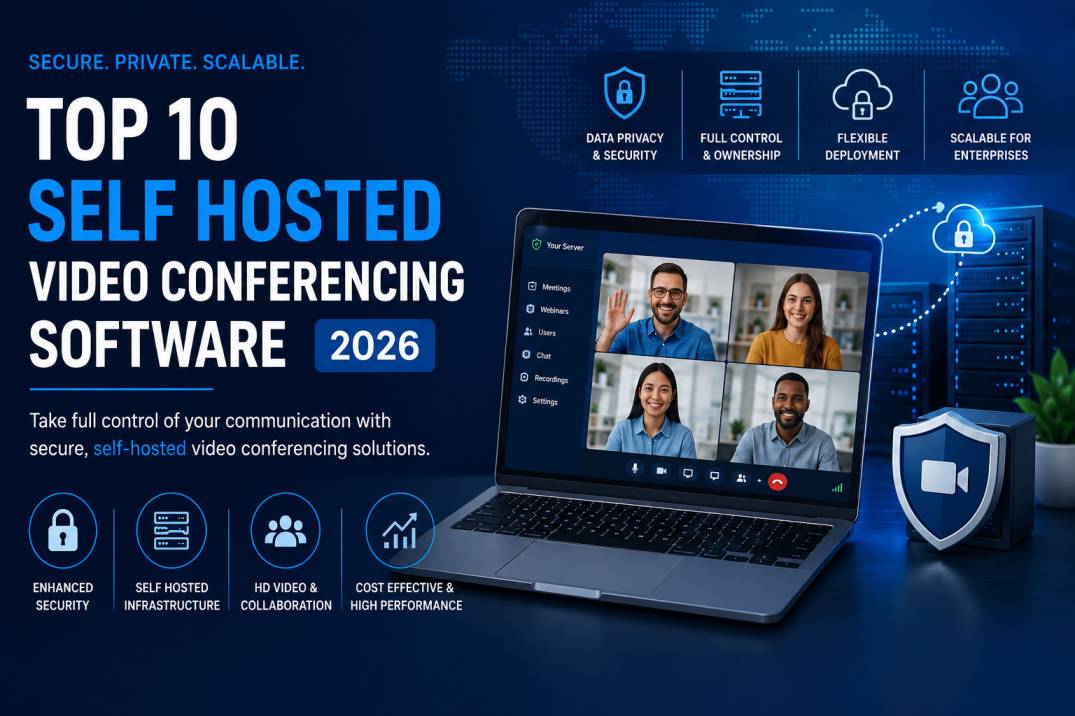
As businesses continue prioritizing privacy, cybersecurity, compliance, and infrastructure ownership, self-hosted video conferencing software has become one of the most important communication technologies for enterprises in 2026. Organizations across healthcare, government, finance, education, legal services, and enterprise sectors are increasingly moving away from fully public cloud communication platforms and adopting self-hosted communication infrastructure for greater control and security.
Unlike traditional cloud-based meeting platforms, self-hosted video conferencing solutions allow organizations to deploy communication infrastructure on private servers, dedicated cloud environments, or on-premise data centers. This gives businesses complete ownership over meeting data, user management, security configurations, recordings, and compliance management.
In this article, we explore the top 10 self-hosted video conferencing software platforms in 2026 and examine the features, benefits, and enterprise use cases driving adoption across industries.
What Is Self Hosted Video Conferencing?
Self-hosted video conferencing refers to communication software deployed and managed within an organization’s private infrastructure rather than relying entirely on third-party cloud providers.
Organizations can host these platforms on:
- Private servers
- Dedicated cloud infrastructure
- Virtual private clouds
- On-premise environments
- Hybrid cloud systems
Self-hosted communication platforms provide greater control over:
- Data privacy
- Security policies
- Infrastructure management
- Compliance requirements
- Meeting recordings
- User authentication
These systems are especially important for organizations handling sensitive information or operating under strict regulatory frameworks.
Why Businesses Are Choosing Self Hosted Video Conferencing
Enhanced Security
Organizations gain more control over encryption, authentication, firewall policies, and network protection.
Better Data Privacy
Meeting data remains within the organization’s infrastructure instead of being stored on external public cloud servers.
Compliance Management
Self-hosted platforms support regulatory requirements such as:
- HIPAA
- GDPR
- SOC 2
- Government security standards
Infrastructure Ownership
Businesses can customize deployment, integrations, branding, and communication architecture.
Reduced Third-Party Dependency
Organizations maintain operational independence from external cloud providers.
Top 10 Self Hosted Video Conferencing Software Platforms in 2026
1. JupiterMeet Pro
JupiterMeet Pro is one of the leading self-hosted enterprise video conferencing platforms designed for businesses, healthcare organizations, educational institutions, enterprises, and government agencies.
The platform offers highly scalable communication infrastructure with advanced deployment flexibility and enterprise-grade security controls.
Key Features
- Self-hosted deployment support
- HD video conferencing
- Webinar and virtual event functionality
- End-to-end security features
- Role-based access management
- Screen sharing and collaboration tools
- Meeting recording
- Cross-platform compatibility
- Custom branding
- Enterprise scalability
JupiterMeet Pro is especially suitable for organizations seeking secure communication infrastructure with flexible deployment options and enhanced privacy management.
2. Jitsi Meet
Jitsi Meet is one of the most widely used open-source self-hosted video conferencing platforms globally.
The platform provides browser-based communication with flexible deployment capabilities.
Features
- Open-source architecture
- Browser-based meetings
- Encryption support
- Screen sharing
- Chat functionality
- Community-driven development
Jitsi is popular among startups, educational institutions, and organizations prioritizing open-source communication systems.
3. BigBlueButton
BigBlueButton is specifically designed for online education and virtual classroom communication.
It is widely used by:
- Universities
- Schools
- Online learning platforms
- Training organizations
Core Features
- Interactive whiteboards
- Breakout rooms
- Polling tools
- Virtual classroom management
- Presentation sharing
- LMS integration
BigBlueButton is highly optimized for e-learning environments.
4. Nextcloud Talk
Nextcloud Talk combines self-hosted communication with enterprise collaboration and file management capabilities.
Advantages
- Secure communication
- File sharing integration
- Team collaboration
- Self-hosted cloud infrastructure
- Video conferencing
- Chat and messaging
Organizations already using Nextcloud ecosystems often adopt Nextcloud Talk for integrated collaboration.
5. Rocket.Chat
Rocket.Chat is a secure communication platform supporting:
- Messaging
- Video conferencing
- Collaboration
- Omnichannel communication
Key Features
- Self-hosted deployment
- Enterprise messaging
- Secure team collaboration
- Communication integrations
- Administrative controls
Rocket.Chat is commonly used by enterprises and government organizations.
6. TrueConf Server
TrueConf Server offers enterprise-grade self-hosted video conferencing with strong support for large organizations.
Features
- 4K video conferencing
- Conference recording
- Corporate communication tools
- LAN deployment
- Secure enterprise meetings
The platform is designed for enterprises requiring advanced conferencing infrastructure.
7. OpenMeetings
Apache OpenMeetings is an open-source conferencing platform supporting:
- Meetings
- Webinars
- Online collaboration
- Training sessions
Features
- Whiteboards
- File sharing
- Audio and video conferencing
- User moderation
- Recording capabilities
The platform supports various deployment environments for organizations and educational institutions.
8. Element (Matrix)
Element is a decentralized communication platform built on the Matrix protocol.
Benefits
- Decentralized architecture
- End-to-end encryption
- Self-hosted communication
- Secure messaging and conferencing
- Federated communication
Element is popular among privacy-focused enterprises and developer communities.
9. Cisco Webex Dedicated Hosting
Cisco Webex provides enterprise communication infrastructure with private deployment options for large organizations.
Enterprise Features
- AI-powered collaboration
- Secure meetings
- Webinar capabilities
- Compliance management
- Enterprise administration
Webex is widely used in enterprise and government sectors.
10. Zoom Private Infrastructure
Zoom offers dedicated infrastructure and private hosting configurations for enterprise customers requiring enhanced communication security and infrastructure management.
Features
- Enterprise meeting management
- Large webinar support
- AI collaboration tools
- Administrative controls
- Hybrid communication environments
Zoom remains one of the most recognized enterprise communication platforms globally.
Important Features to Look for in Self Hosted Video Conferencing Software
Security & Encryption
Look for:
- End-to-end encryption
- Secure authentication
- Access controls
- Firewall compatibility
- MFA support
Scalability
Enterprise communication platforms should support:
- Large meetings
- Global teams
- Virtual events
- High participant volumes
Collaboration Tools
Modern conferencing platforms should include:
- Screen sharing
- Whiteboards
- File sharing
- Chat
- Breakout rooms
Many organizations require:
- Webinar hosting
- Virtual conferences
- Registration systems
- Event analytics
Deployment Flexibility
Businesses should evaluate:
- On-premise deployment
- Private cloud hosting
- Hybrid infrastructure
- Dedicated servers
Industries Using Self Hosted Video Conferencing
Healthcare
Healthcare providers use secure communication systems for telemedicine and HIPAA-compliant virtual consultations.
Government
Government agencies require encrypted communication and infrastructure control for secure operations.
Financial Services
Banks and financial institutions prioritize compliance, privacy, and secure communication environments.
Education
Educational institutions deploy self-hosted communication systems for online learning and remote collaboration.
Enterprises
Large organizations use private communication infrastructure for internal collaboration and global communication management.
Benefits of Self Hosted Communication Infrastructure
Better Infrastructure Control
Organizations can manage:
- Servers
- Security policies
- Updates
- Data storage
- Access permissions
Reduced Privacy Risks
Self-hosted systems minimize exposure to third-party data management risks.
Compliance Optimization
Organizations can configure infrastructure according to industry-specific compliance requirements.
Long-Term Flexibility
Businesses can scale infrastructure and customize communication systems based on operational needs.
Challenges of Self Hosted Video Conferencing
Despite its benefits, self-hosted infrastructure also requires:
- Technical expertise
- Infrastructure maintenance
- Security monitoring
- Initial deployment costs
- IT management resources
Organizations should assess internal capabilities before deployment.
Future Trends in Self Hosted Video Conferencing
AI-Powered Collaboration
AI features are increasingly integrated into communication platforms through:
- Automated transcription
- Meeting summaries
- Smart scheduling
- Real-time translation
Hybrid Cloud Infrastructure
Organizations are combining private infrastructure with cloud scalability through hybrid deployment models.
Advanced Security Architecture
Future platforms will increasingly focus on:
- Zero-trust security
- Enhanced encryption
- Identity management
- Compliance automation
Decentralized Communication Systems
Decentralized communication protocols are gaining attention for improved privacy and infrastructure resilience.
Conclusion
Self-hosted video conferencing software has become a critical communication solution for organizations prioritizing privacy, security, compliance, and infrastructure ownership. As remote work, digital collaboration, virtual events, and hybrid communication continue expanding globally, businesses are increasingly investing in private communication infrastructure.
Platforms like JupiterMeet Pro, Jitsi Meet, BigBlueButton, Nextcloud Talk, Rocket.Chat, and TrueConf provide organizations with secure and scalable communication environments suitable for enterprise operations.
The best self-hosted video conferencing platform ultimately depends on:
- Security requirements
- Infrastructure preferences
- Compliance needs
- Collaboration goals
- Scalability requirements
As enterprise communication continues evolving in 2026, self-hosted conferencing solutions are expected to play an increasingly important role in secure digital collaboration.
FAQs
1. What is self hosted video conferencing software?
Self-hosted video conferencing software is deployed on private infrastructure controlled by the organization instead of relying entirely on public cloud providers.
2. Why do businesses choose self hosted video conferencing?
Businesses choose self-hosted platforms for better security, privacy, compliance, and infrastructure control.
3. Is self hosted video conferencing more secure?
Yes. Organizations can implement custom security policies, encryption, and access controls.
4. Which industries use self hosted communication platforms?
Healthcare, government, finance, education, legal services, and enterprises commonly use self-hosted communication systems.
5. What are the benefits of self hosted video conferencing?
Benefits include:
- Better privacy
- Infrastructure ownership
- Compliance management
- Custom deployment
- Advanced security
6. What is the difference between cloud and self hosted conferencing?
Cloud platforms are managed by third-party providers, while self-hosted systems are managed internally by organizations.
7. Can self hosted platforms support webinars?
Yes. Many self-hosted platforms support webinars, virtual conferences, and online events.
8. Is technical expertise required for self hosted deployment?
Yes. Organizations typically need IT resources for setup, maintenance, and security management.
9. Can self hosted video conferencing scale for enterprises?
Yes. Enterprise-grade platforms support large organizations and global communication requirements.
10. What security features are important in self hosted conferencing?
Important features include:
- Encryption
- MFA authentication
- Access controls
- Firewall compatibility
- Secure storage
11. Which is the best self hosted video conferencing platform?
The best platform depends on organizational requirements. Popular options include JupiterMeet Pro, Jitsi Meet, BigBlueButton, and Rocket.Chat.
12. What is the future of self hosted video conferencing?
Future trends include AI collaboration, hybrid cloud deployment, stronger encryption, and decentralized communication systems.