Slice Master Game: Complete Guide to Controls, Scoring, and Winning Strategies
-

- Published Updated
- 2,674 views
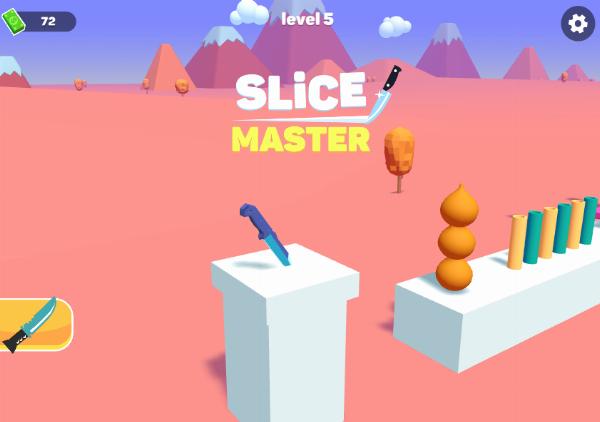
The slice master game is a fast-paced action puzzle where timing, precision, and pattern recognition determine success. This guide explains basic controls, common mechanics, scoring principles, and practical strategies to improve accuracy and consistency while playing.
- Objective: slice targets quickly and accurately without missing or hitting hazards.
- Controls: typically touch swipes, mouse dragging, or keyboard input for desktop play.
- Focus areas: timing, combos, power-ups, and adaptive practice drills.
- Performance: reduce input latency, adjust sensitivity, and use practice mode.
How to play slice master game
The core objective in the slice master game is to cut or swipe through designated targets while avoiding hazards that penalize score or lives. Targets often appear in patterns; the player must respond with quick gestures or clicks to register a clean slice. Game rounds are typically short and emphasize streaks, combos, and increasingly complex target arrangements.
Core mechanics and scoring
Target types and responses
Common target types include single targets, multi-part targets, moving targets, and hazardous objects. Each target type requires a different response: a single target needs a quick swipe, multi-part targets may require longer or multi-directional swipes, and moving targets require anticipation of trajectory. Hazards should be deliberately avoided to prevent score loss or penalties.
Scoring and combos
Scoring typically rewards accuracy, speed, and chain reactions. A combo multiplier increases when targets are hit consecutively without a miss; maintaining a combo is critical for high scores. Some games include time bonuses or streak-based power-ups that activate after a set number of successful slices.
Controls and settings
Touchscreen controls
Swipe gestures on touch devices are often the default control method. Short, confident swipes register best; consider adjusting touch sensitivity or smoothing options in settings if available. Haptic feedback can provide useful timing cues when enabled.
Mouse and keyboard
On desktop, mouse dragging or click-and-drag motions simulate swipes. Some players prefer keyboard shortcuts or arrow-based controls if supported. Reduce mouse acceleration and ensure pointer precision settings are optimized for consistent input.
Accessibility options
Look for adjustable difficulty, larger target modes, slower game speed, or alternative input schemes in settings. Accessibility features improve playability for users with motor control differences or visual impairments.
Strategies and tips for better play
Timing and rhythm
Consistency is built on rhythm. Many successful players treat the game like a rhythm exercise: focus on cadence rather than reacting to each target individually. Audio cues and consistent frame timing can assist with establishing that rhythm.
Positioning and planning
Anticipate target patterns and position the input finger or cursor in a neutral zone that allows quick movement in any direction. Planning two steps ahead (next target after the visible one) reduces hesitation and preserves combos.
Use of power-ups and risk management
Activate power-ups strategically—save score multipliers for dense target waves and shields for unavoidable hazards. Understand the trade-off between attempting risky multi-target slices and maintaining a safe combo streak.
Practice methods and drills
Focused repetition
Practice specific patterns repeatedly until muscle memory forms. Short, frequent sessions—10 to 20 minutes—help consolidate timing and precision without inducing fatigue.
Slow-motion rehearsal
If the game offers a slowed or practice mode, use it to learn complex sequences. Gradually increase speed until performance at full tempo becomes reliable.
Analyze mistakes
Track common errors: missed start, overswipe, or poor angle approach. Adjust practice drills to target those errors and modify sensitivity or control settings if the input hardware contributes to mistakes.
Accessibility, safety, and ratings
When playing online or downloading games, check content ratings and privacy policies. For guidance on game ratings and age-appropriate content, refer to official regulators such as the Entertainment Software Rating Board (ESRB). The ESRB provides classification information and consumer guidance on interactive content and in-game purchases. ESRB
Beyond ratings, consider ergonomic practices: rest hands regularly, maintain good posture, and reduce screen glare. For players with sensory or motor considerations, seek out settings that allow visual contrast adjustments, simplified controls, or assistive input devices. Academic research in human-computer interaction (HCI) explores gesture recognition and accessibility design principles that inform these features.
Troubleshooting and performance
Reduce input latency
Lower latency improves timing accuracy. Close background apps, use a wired connection where possible, and select low-latency display modes. For touchscreens, keep the display clean and calibrated.
Adjust sensitivity and frame rate
Increase or decrease swipe sensitivity and target hitbox size if settings permit. A stable frame rate reduces perceived lag and avoids inconsistent hit registration.
Common hardware issues
Unresponsive input can result from screen protectors, faulty mice, or touch digitizer issues. Test controls in other apps to isolate hardware causes.
Final notes
Improvement in the slice master game comes from a mix of practiced motor skills, strategic decision-making, and optimal settings. Regular, focused practice and small hardware or setting adjustments can yield steady score gains.
FAQ
How do I improve at slice master game?
Improve by practicing short sessions focusing on timing and consistency, using practice modes for complex sequences, tuning sensitivity, and reducing input latency. Work on rhythm-based drills and analyze mistakes to target weak points.
What are the best controls for desktop play?
Most players find a stable mouse with pointer precision enabled effective; disable mouse acceleration and use smooth drag gestures. If keyboard input is supported, experiment with alternate bindings to find a comfortable layout.
Are there accessibility options to make the game easier?
Look for larger targets, slower game speed, simplified control modes, and visual contrast settings. Many games include accessibility features; consult the game settings or support pages for available options.
Why do some slices not register?
Unregistered slices often stem from input latency, incorrect swipe angle, insufficient swipe length, or low hitbox sensitivity. Calibrate touch input, check hardware, and adjust in-game sensitivity if available.
Can playing frequently cause strain?
Extended play without breaks can cause hand, wrist, or eye strain. Use ergonomic posture, take regular breaks, and perform stretching exercises recommended by occupational health guidelines for repetitive tasks.