The Secret Weapon in Speech Therapy: Why Books Are More Than Just Stories
-
- Published Updated
- 4,341 views
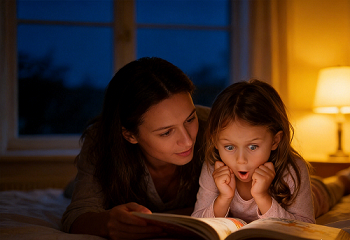
When people think of speech therapy, they often picture flashcards, repetition drills, and perhaps a speech pathologist guiding a child through the pronunciation of a tricky "r" sound. While those elements certainly have their place, some of the most powerful tools in a speech-language pathologist’s (SLP) toolkit are far more colorful and engaging: children’s picture books. Whether used in a clinic, classroom, or teletherapy session, books serve as the ultimate "secret weapon" for fostering communication and literacy skills .
Why Books Work Magic in Therapy
Books are uniquely suited for speech therapy because they bridge the gap between structured exercises and natural, meaningful communication. A child who might be reluctant to practice a specific sound in isolation often forgets they’re "working" when they are focused on the antics of a silly monster or the excitement of a character’s adventure.
**Language in Context**: Most critically, books provide a rich context for language. Instead of drilling past tense verbs in abstract exercises, an SLP can read a story like *If You Take a Mouse to School* to model "present progressive" and subject-verb agreement naturally . Students hear grammar and syntax used in a way that makes sense, which facilitates better retention.
**Targeting Multiple Goals**: One of the biggest challenges for school-based SLPs is managing "mixed groups"—where students have vastly different goals. A single picture book is a fantastic tool to address this. One student might be working on answering "Wh" questions about the story, another on articulation sounds embedded in the text, and a third on story retell and sequencing . This versatility makes planning far more efficient.
**Engagement and Social Connection**: Books also create a natural opportunity for social interaction. Stories with repetitive, predictable lines—like the classic "clomp, clomp" in *The Little Old Lady Who Wasn't Afraid of Anything*—encourage choral participation and turn-taking . This social contingency keeps students engaged while targeting rhythm, prosody, and joint attention.
Awards and Recommendations: What to Look For
Not every book is created equal in the eyes of an SLP. The best therapeutic books are those that invite interaction, feature vivid illustrations, and include rich, descriptive language. In fact, the quality of children's literature for communication is so important that organizations like Speech Pathology Australia host annual Book of the Year Awards to recognize "books that promote oral language development and literacy" .
Highlights from the 2025 winners include:
- For the youngest readers (Birth to 3): Where is Cheeky Monster? by Mike Lucas, which uses rhyme and repetition to explore opposites .
- For emotional development (3–5 years): *Don’t Worry, Felix* by Yohann Devezy, a story that uses a red balloon to help children understand and manage big feelings .
- For early readers (5–8 years): *Willow’s Gumboots* by Beverley McWilliams, praised for its playful use of alliteration and onomatopoeia .
Practical Applications for Specific Goals
For Morphology and Grammar
If a child struggles with plurals, pronouns, or verb tenses, picture books are a fantastic resource. For instance, books like *In the Tall, Tall Grass* are excellent for modeling the plural "-s," while stories like *Knuffle Bunny* provide natural repetition of pronouns like "she" and "her" . Research suggests that embedding these morphological rules into stories, rather than isolated drills, leads to more effective learning .
For Articulation
Detailed picture books are a "goldmine" for students with speech sound disorders. Using the "complexity approach," SLPs can use books to target challenging sound combinations naturally. A book about Halloween, for example, might offer practice for "s-blends" with words like *spooky*, *skeleton*, and *scary*, far more effectively than a word list .
For Building Complex Syntax
For older students, books that follow a character through multiple events allow the SLP to model and teach temporal conjunctions (e.g., "after," "before," "when"). This helps students develop complex narrative skills and connect ideas logically .
For Specific Populations
Books are also being used to address specific conditions. For example, *The New Ways We Talk* by Dr. Brielle C. Stark is a picture book designed to help children understand a parent's aphasia following a stroke . This shows how stories can be used not just for language skills, but for social-emotional learning and family support.
Conclusion
Children’s books are far more than a fun break from routine—they are the backbone of an engaging, research-backed speech therapy practice. By choosing the right titles and employing interactive reading strategies, SLPs can turn a simple story into a powerful vehicle for growth. So, next time you see a picture book, remember: inside its pages lies a world of communication possibilities just waiting to be unlocked