
A Home Cook's Guide to Spice Blends (And Why Freshness Changes Everything)
-
- Published Updated
- 3,209 views
If you've ever wondered why your homemade biryani or chaat doesn't taste like the version at your favorite Indian restaurant, the answer is usually simple: fresh, well-balanced spice blends. A great blend isn't just powders shaken together — it's whole spices, correctly proportioned, kept whole or ground close to the moment you cook. That's the whole idea behind how we build ours at Zaica Life, from our Ann Arbor kitchen using spices sourced from small regenerative farms.
Below, we're answering the questions we hear most from home cooks who are ready to move past the dusty jar in the back of the pantry.
What Actually Makes a Spice Blend "Good"?
A good spice blend uses whole or freshly ground spices, correctly proportioned, with no fillers.
Most supermarket spice blends are made from whatever ground spice was on hand months (sometimes years) ago, then bulked up with salt or anti-caking agents to stretch the batch. That's why they smell faint and taste flat. A well-made blend starts with real whole spices — cumin, coriander, cardamom, cinnamon — proportioned deliberately, either left whole for slow-cooked dishes or ground fresh for finishing. The difference is immediate: you use less, and the flavor is rounder, not just hotter or saltier.
Why Does a Spice Mill Matter More Than People Think?
A spice mill preserves the essential oils that carry flavor, which pre-ground powder loses within weeks.
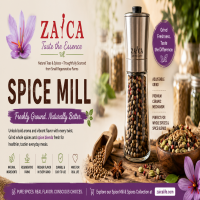
Whole spices hold their aromatic oils inside a tough outer shell. The moment they're ground, those oils start evaporating — which is why a jar of pre-ground cinnamon smells like almost nothing after a few months, while a cinnamon stick can sit on your shelf for a year and still snap fragrant. That's the thinking behind our Alba Cinnamon in Mill: rolled Alba (Ceylon) cinnamon, cultivated in the low ranges of Idukki, Kerala, in the heart of the Western Ghats, loaded whole into a stainless-steel and glass grinder so you're cracking it open right over the pan instead of scooping powder that's been losing potency for months. It's a small habit shift — grind, don't scoop — but it's one of the biggest upgrades you can make to everyday cooking.
How Is a Spice Mill Different From a Regular Ground Spice Jar?
A mill keeps the spice whole until the second you use it; a jar starts losing flavor the moment it's opened.
Once cinnamon, pepper, or cumin is ground, oxygen and light go to work on it right away. A mill format — like the ceramic-mechanism mills we use across our spice mill collection — delays that process until you actually twist and grind, which means the last use tastes as bright as the first.
What Goes Into a Proper Biryani Masala?
A proper biryani masala is a whole-spice blend — cassia, cardamom, cloves, star anise, bay-style aromatics — meant to warm slowly in oil or ghee rather than dissolve instantly like a powder.
Biryani is a layered dish, and the masala's job is to season every layer without shouting over any of them. Our Biryani Masala is built around that idea: dried onions, lemon garlic salt, black and green cardamom, cumin, Kashmiri chilies, dried ginger, black pepper, star anise, whole mace, fennel seed, Alba cinnamon, coriander seed, cloves, and curry leaves — left whole rather than ground, so the oils release gradually as the dish cooks instead of scorching in the pan. If you're working through the details of spices for biryani for the first time, the short version is this: warm the whole masala in oil or ghee near the beginning of cooking, alongside your onions and aromatics, so the flavor has time to build through every layer of rice and meat or vegetables.
Do You Need Different Spices for Chicken vs. Vegetable Biryani?
The core masala stays the same; only the cooking time and marinating shift.
The blend itself doesn't need to change between a chicken, mutton, or vegetable biryani — the same whole-spice ratio works across proteins. What changes is timing: vegetables need less time to absorb the masala than meat, so a shorter marinate and gentler layering work best.
What's the Difference Between Biryani Masala and Chaat Masala?
Biryani masala is a whole-spice blend cooked into the dish; chaat masala is a finely ground finishing spice sprinkled on after.
This trips up a lot of home cooks. Biryani masala is left whole and cooks alongside your rice and protein, building flavor over heat. Chaat Masala is the opposite — it's freshly ground from heritage spices and never cooked. Ours gets its tang from amchoor (dried mango) and anardana (pomegranate seed), a touch of sweetness from shakkar (crushed jaggery), and heat from black and red pepper. You sprinkle it on after the food is plated: over fruit, roasted potatoes, popcorn, or of course actual chaat. If biryani masala is a foundation, chaat masala is the last five seconds before you eat.
How Should You Store Spice Blends to Keep Them Fresh Longer?
Keep spice blends in a sealed container, away from your stove, out of direct light.
Heat, humidity, and light are the three things that age spices fastest — which is exactly why so many home kitchens keep their spice rack right next to the stove, the worst possible spot. A cool, dark cabinet will keep a blend tasting good for months longer than a shelf above a hot burner. And with a mill format, you're only exposing the small amount you grind at a time, so the rest stays protected until you need it.
Which Blend Should You Start With?
If you're new to cooking with spice blends, we'd point you toward two starting points: our Biryani Masala for anyone building a weeknight rice dish, and our Chaat Masala for finishing snacks, fruit, and salads. Pair either with the Alba Cinnamon in Mill for baking or chai, and you've got a small but genuinely versatile shelf of fresh spices to work from — browse the full spice mill lineup to see the rest.
FAQ
Is Zaica Life's cinnamon organic? We describe our spices as natural, sourced from small regenerative farms — we don't use the term "organic" unless a product carries formal certification.
Can I use a whole-spice blend the same way I'd use a regular jarred powder? Not quite — a whole-spice blend like our Biryani Masala is meant to warm in oil or ghee early in cooking, not stir in at the end the way you would a powder. Ground finishing blends like Chaat Masala, on the other hand, go on raw, right at the end.
How long do whole spices in a mill actually stay fresh? Whole spices in a sealed mill generally hold their flavor far longer than pre-ground powder, since the essential oils stay locked inside until grinding.
Is chaat masala spicy? Not really — it's tangy and salty first, from amchoor and anardana, with black and red pepper adding warmth rather than serious heat.
Do I need a separate biryani masala for every type of biryani? No. One well-balanced biryani masala works across chicken, mutton, and vegetable versions — what changes is cook time and how the layers are marinated.
Zaica Life is a small tea and spice brand based in Ann Arbor, Michigan, sourcing from small regenerative farms and blending spices in small batches for freshness.
