Spice Mills: A Practical Guide to Fresher Flavor, Better Cooking, and Smarter Seasoning
-
- Published Updated
- 3,263 views
A good kitchen upgrade does not always have to be expensive or complicated. Sometimes, it is as simple as grinding a spice right before you use it.
For home cooks in the U.S., a spice mill can make everyday meals more aromatic, flavorful, and customizable. Instead of keeping every seasoning in powdered form, you can mill selected whole spices as you cook and adjust the texture to suit the dish.
This matters because aroma is a major part of how we experience flavor. Freshly milled spices can release aromatic oils at the moment they are needed, making everything from roasted vegetables and grilled meats to rice dishes and baked goods more expressive.
Zaica Life’s spice mill collection is built around this simple idea: make fresh seasoning practical for everyday kitchens. Its collection includes refillable mills, adjustable grinding options, and ready-to-use products such as Alba Cinnamon in Mill and other seasoned mill selections.
Why Does Grinding Spices Freshly Make a Difference?
The biggest advantage of milling whole spices at home is timing.
Once a spice is ground, more of its surface area is exposed to air. Over time, aroma and flavor can become less pronounced. Whole spices generally hold their character longer, which is one reason many experienced cooks prefer grinding them close to when they are needed.
That does not mean every pre-ground seasoning is inferior. A well-made seasoning can still be extremely useful, particularly for busy weeknight cooking. But when a recipe depends heavily on aroma—think freshly cracked pepper on steak, cinnamon in oatmeal, or cumin in a lentil dish—the difference can be noticeable.
Recent food-storage guidance similarly recommends using whole spices when possible and grinding them fresh to maximize flavor, while keeping ground spices protected from heat, light, air, and moisture.
For American home cooks, this makes a mill particularly useful because it bridges the gap between convenience and freshly prepared seasoning.
What Should You Look for in a Spice Mill?
Not every mill is designed for the same job. Before buying one, consider how you actually cook.
1. Adjustable grind settings
An adjustable mechanism lets you choose a finer or coarser texture.
A coarse grind can work well as a finishing seasoning, while a finer texture may be better when you want the spice to distribute evenly throughout a recipe.
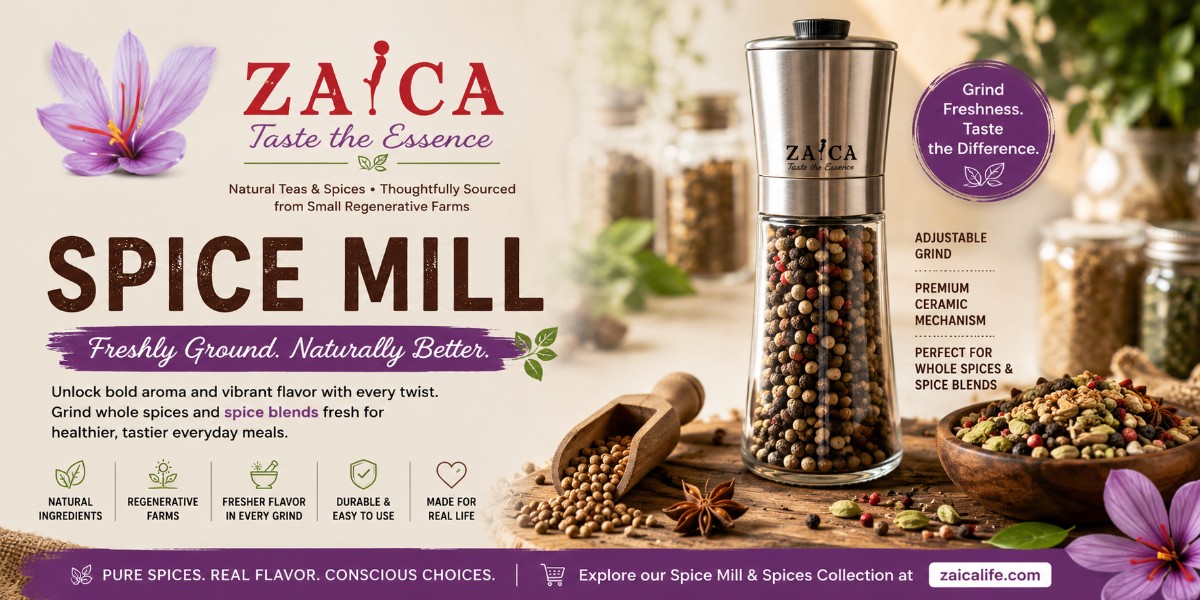
Zaica Life's medium mill uses an adjustable ceramic milling mechanism, allowing users to control the fineness rather than being limited to one grind size.
2. Food-contact materials
The mill is going to sit directly over your food, so construction matters.
Look for durable, food-appropriate materials that are easy to clean and designed for repeated kitchen use. Zaica Life's medium model combines lead-free glass with food-grade stainless steel and a ceramic grinding mechanism.
3. Refillable design
A refillable model is more practical than a disposable grinder if you cook regularly.
You can replace the contents when needed instead of buying a new container every time. It also gives you more control over what you keep in your kitchen.
4. Comfortable handling
A mill should be easy to hold, turn, and store.
For everyday cooking, a compact design can be especially useful because you may reach for it several times during meal preparation.
5. Manual or electric operation
Manual mills are straightforward and do not require batteries or charging. They are excellent for small amounts and finishing dishes.
Electric models can be useful when speed and convenience matter, particularly when cooking for a larger household or preparing several dishes at once.
Zaica Life's Electric Spice Mill has adjustable fineness settings, a refillable design, a glass body, and rechargeable operation.
Which Spices Work Well in a Mill?
One of the best things about a mill is experimentation.
Black pepper is an obvious starting point, but it is far from the only option. Depending on the grinder's design and the manufacturer's recommendations, whole spices can add interesting layers to both sweet and savory recipes.
Consider:
Peppercorns for steaks, eggs, salads, and roasted vegetables
Cinnamon for oatmeal, coffee, baked apples, and desserts
Allspice for roasted meats, stews, sauces, and baked goods
Cumin for beans, lentils, rice, vegetables, and tacos
Whole spices used in rice dishes and South Asian cooking
Salt blends for finishing roasted vegetables, seafood, and grilled foods
The key is to match the mill with the ingredient. Very hard, sticky, oily, or unusually shaped ingredients may not be appropriate for every grinder, so always follow the product's intended use.
How Can a Spice Mill Improve Everyday American Cooking?
You do not need to cook elaborate international dishes to benefit from freshly milled seasoning.
Think about familiar meals.
Breakfast
Fresh cinnamon can bring more aroma to oatmeal, French toast, pancakes, or baked apples. A small amount can make a simple breakfast feel more complete without requiring a complicated recipe.
Weeknight vegetables
Roasted potatoes, carrots, squash, cauliflower, and broccoli respond well to freshly ground spices. Try combining a little cumin, pepper, or another aromatic seasoning with olive oil before roasting.
Grilled foods
Freshly ground pepper and selected spice combinations can create a more pronounced crust on grilled chicken, steak, or vegetables.
Soups and stews
Whole spices can add depth when incorporated during cooking. You can also use a mill as a finishing tool when you want a brighter aromatic note just before serving.
Baking
Freshly milled cinnamon can be especially useful in recipes where the spice is one of the main flavor notes.
Zaica Life's baking collection specifically highlights Alba Cinnamon and spice mills as useful options when the fragrance of freshly ground seasoning can make a difference.
What Makes Alba Cinnamon in Mill Interesting?
Cinnamon is often treated as a basic baking ingredient, but different cinnamon varieties can have noticeably different flavor profiles.
Zaica Life's Alba Cinnamon in Mill is made with rolled Alba, also described as Ceylon cinnamon, sourced from the Idukki region of Kerala in India's Western Ghats. The product is designed to give cooks access to cinnamon in mill form rather than relying exclusively on ready-ground powder.
That format can be useful for American kitchens because cinnamon has applications far beyond holiday baking.
Try freshly milled cinnamon with:
Oatmeal
Yogurt and fruit
French toast
Apple desserts
Coffee
Hot chocolate
Roasted sweet potatoes
Moroccan- or Middle Eastern-inspired savory dishes
A small amount can go a surprisingly long way.
Can a Mill Work With Spice Blends?
This is where things get especially interesting.
A spice blend combines multiple ingredients to create a specific flavor profile. Some blends are intended to be used as powders, while others contain whole spices that can be ground during cooking.
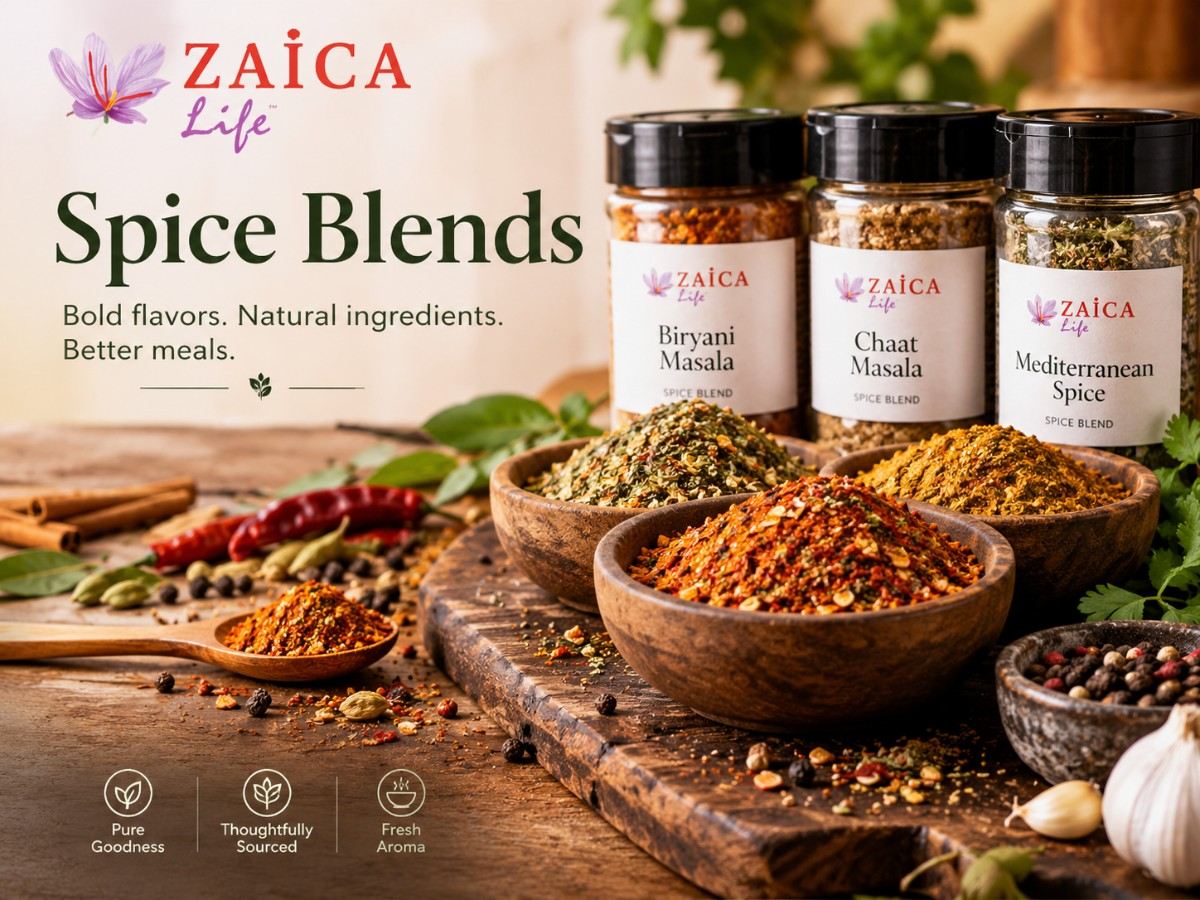
For example, Zaica Life's Biryani Masala is intentionally kept whole. Its listed ingredients include dried onions, black cardamom, cumin, Kashmiri chilies, ginger, black pepper, star anise, mace, green cardamom, fennel, Alba cinnamon, coriander, cloves, and curry leaves.
That makes the concept of grinding especially relevant.
Rather than treating every seasoning as a generic powder, cooks can think about texture and timing. A whole-spice mixture can be incorporated according to the recipe, while individual spices can be freshly milled when a dish needs a more immediate aromatic finish.
How Can You Use Biryani Masala in an American Kitchen?
You do not need to prepare a traditional biryani every time you want to use a South Asian seasoning.
A whole-spice masala can inspire a range of weeknight meals.
Try using a suitable amount in:
Rice: Add aromatic seasoning while cooking basmati or another long-grain rice.
Roasted vegetables: Combine the spices with oil before roasting cauliflower, carrots, or potatoes.
Chicken: Use the seasoning as part of a marinade or dry rub.
Lentils and beans: Add warm spices to lentils, chickpeas, or white beans for extra depth.
Grain bowls: Pair seasoned rice with roasted vegetables, yogurt, herbs, and a protein of your choice.
The important principle is balance. Strong aromatic ingredients should complement the main food rather than overwhelm it.
Where Does “The Spice Mill” Fit Into a Modern Kitchen?
The best kitchen tools are the ones you actually use.
A mill does not need to replace every jar of seasoning in your pantry. Instead, it can become a focused tool for ingredients where freshness makes the biggest difference.
You might keep everyday powdered seasonings available for speed while using your mill for pepper, cinnamon, cumin, or other whole ingredients whenever you want stronger aroma and more control.
This approach is also practical for small kitchens. Rather than purchasing a separate appliance for every task, one well-designed mill can handle selected ingredients and occupy very little counter space.
Zaica Life currently offers both manual and electric mill options, along with several ready-filled products in its Spice Mills collection.
How Should You Store Spices After Buying Them?
Good storage is just as important as good grinding.
Keep spices:
In airtight containers
Away from direct sunlight
Away from the heat of the stove
In a cool, dry part of the kitchen
Protected from moisture
Avoid shaking spices directly over a steaming pot because moisture can enter the container and encourage clumping.
Flavor is also a better indicator than simply looking at a date on the package. If a spice has lost most of its aroma, it may be time to replace it. Recent storage guidance recommends protecting ground spices from heat, light, air, and moisture to preserve quality.
Is a Spice Mill Worth It for Home Cooks?
For someone who cooks regularly, the answer can be yes—particularly if you enjoy whole spices, global cuisines, baking, grilling, or experimenting with flavor.
The value is not simply in having another kitchen gadget. It is in having greater control over when and how an ingredient is ground.
A good mill can help you:
Grind only what you need
Control texture
Release aroma close to serving time
Experiment with whole spices
Reduce dependence on pre-ground seasonings
Make simple meals more interesting
It is a small change in technique, but one that can have a noticeable effect on the cooking experience.
Final Thoughts: Start Small and Taste the Difference
You do not need to rebuild your entire pantry to start cooking with freshly milled spices.
Choose one or two ingredients you already use frequently. Pepper is an easy starting point. Cinnamon is another. From there, explore cumin, allspice, or whole-spice preparations suited to your cooking style.
For U.S. home cooks interested in practical tools and globally inspired ingredients, Zaica Life offers a range of mills and seasonings designed around freshness, aroma, and everyday usability. Its Spice Mills collection includes manual and electric options, while its broader catalog includes whole spices, seasoning mixes, and products such as Alba Cinnamon in Mill and Biryani Masala.
If you want to make freshly ground seasoning part of your routine, explore the Zaica Life Spice Mills collection and start with the spices that already have a place in your favorite recipes.
Sometimes, better flavor really does begin with one small turn of the mill.